Tag: V8 engine

  • How Many Spark Plugs Are in a v8 Engine

    How Many Spark Plugs Are in a v8 Engine

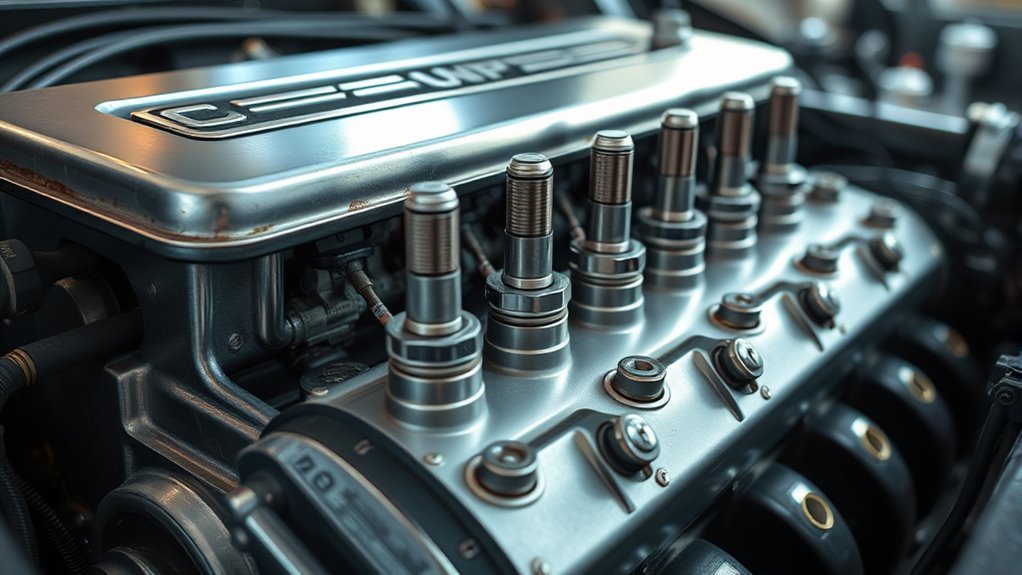
    You’ll find eight spark plugs in a V8 engine—one per cylinder—to guarantee precise ignition timing and ideal combustion. Each spark plug independently ignites the air-fuel mixture, preventing misfires and maximizing engine power, fuel efficiency, and emissions control.

    While some V8 designs might use dual plugs per cylinder for enhanced performance, the standard setup relies on one plug each. Understanding this setup helps you maintain engine balance and reliability effectively, with more insights available on variations and replacements.

    Key Takeaways

    • A typical V8 engine has eight spark plugs, one per cylinder.
    • Each spark plug independently ignites the air-fuel mixture in its cylinder.
    • Some V8 engines may feature dual spark plugs per cylinder for improved combustion.
    • Diesel V8 engines do not use spark plugs but rely on compression ignition.
    • The correct number of spark plugs ensures optimal engine performance and fuel efficiency.

    How Many Spark Plugs Are in a V8 Engine?

    A V8 engine typically has eight spark plugs, one for each cylinder. This configuration guarantees precise engine ignition, as each spark plug delivers a controlled spark to ignite the air-fuel mixture in its respective cylinder.

    When considering spark plug types for a V8, you’ll encounter options like copper, platinum, and iridium, each offering different performance and longevity characteristics.

    Copper plugs provide excellent conductivity but wear faster, while platinum and iridium types offer enhanced durability and consistent ignition under high temperatures.

    Selecting the appropriate spark plug type directly influences combustion efficiency and engine performance.

    Choosing the right spark plug type is key to maximizing combustion efficiency and boosting engine performance.

    Understanding the exact number and type of spark plugs helps you maintain ideal engine ignition timing, guaranteeing your V8 engine runs smoothly and efficiently across all operating conditions.

    Why Does Each Cylinder Need Its Own Spark Plug?

    Understanding that each cylinder in a V8 engine requires its own spark plug stems from the need for independent and timely ignition control. The spark plug function is to deliver a precise electrical spark that ignites the air-fuel mixture within the combustion chamber.

    If a single spark plug were shared across multiple cylinders, you’d lose precise timing, causing misfires and reduced combustion quality. Each cylinder operates on a distinct ignition cycle, so having its own spark plug guarantees the spark occurs exactly when needed.

    This precise ignition timing maximizes engine efficiency by promoting complete combustion, reducing fuel waste, and minimizing emissions. Consequently, individual spark plugs optimize power output and maintain smooth engine operation, which is critical for the performance and reliability of a V8 engine.

    How Do Spark Plug Setups Vary in Different V8 Engines?

    Although most V8 engines use one spark plug per cylinder, the specific spark plug setups can differ greatly based on design goals and manufacturer preferences. You’ll find variations in spark plug configurations, such as single or dual plugs per cylinder, affecting combustion efficiency and emissions.

    Ignition system variations also influence the setup, ranging from distributor-based to coil-on-plug systems. Here’s a concise comparison:

    Engine Type Spark Plug Configuration Ignition System Variation
    Standard V8 Single plug per cylinder Distributor ignition
    Performance V8 Dual plugs per cylinder Coil-on-plug ignition
    Diesel V8 No spark plugs Compression ignition
    Turbocharged V8 Dual plugs per cylinder Coil-on-plug with sensors
    Classic V8 Single plug per cylinder Points ignition

    Understanding these differences helps you optimize engine tuning and maintenance.

    Why Spark Plug Count Matters for V8 Performance

    Since spark plugs initiate the combustion process, their quantity directly influences a V8 engine’s performance characteristics such as power output, fuel efficiency, and emissions control.

    You’ll find that having the ideal number of spark plugs guarantees consistent spark plug efficiency, which is crucial for precise ignition timing across all cylinders.

    Too few spark plugs can lead to incomplete combustion, reducing engine performance and increasing fuel consumption. Conversely, configurations like dual spark plugs per cylinder improve combustion completeness, enhancing power delivery and reducing emissions.

    Insufficient spark plugs cause incomplete combustion, while dual plugs enhance power and lower emissions.

    Understanding how spark plug count impacts flame propagation and ignition reliability allows you to maximize your V8’s efficiency.

    Fundamentally, the correct spark plug count balances energy delivery and combustion stability, directly affecting overall engine performance under various operating conditions.

    When and How to Replace V8 Engine Spark Plugs

    Whenever your V8 engine exhibits signs like rough idling, misfires, or decreased fuel efficiency, it’s time to inspect and potentially replace the spark plugs.

    Typically, the spark plug lifespan ranges between 30,000 to 100,000 miles, depending on the plug type and driving conditions.

    To replace them, first disconnect the battery, then remove the ignition coils or wires. Use a spark plug socket and ratchet to unscrew each plug carefully, avoiding damage to the threads.

    Inspect each plug for wear or deposits. Excessive carbon build-up or electrode erosion signals replacement.

    Install new plugs with the manufacturer-specified gap and torque settings to guarantee peak performance.

    As a maintenance tip, replace all eight plugs simultaneously to maintain engine balance and efficiency.

    Regularly checking spark plugs prolongs engine life and prevents costly repairs.

    Frequently Asked Questions

    What Materials Are Spark Plugs Typically Made From?

    You’ll find spark plug construction uses materials like copper, nickel alloys, platinum, and iridium to enhance spark plug longevity. These metals withstand high heat and corrosion, ensuring consistent ignition and durable performance in demanding engine conditions.

    How Do Spark Plugs Affect Fuel Efficiency?

    You’ll improve fuel efficiency by ensuring spark plugs provide ideal ignition timing, promoting complete fuel combustion.

    Faulty plugs cause misfires, wasting fuel and reducing efficiency, so maintaining correct spark plug function is essential for precise engine performance.

    Can Spark Plugs Cause Engine Misfires?

    If your engine stutters during acceleration, spark plug failure likely causes ignition issues, leading to misfires. Faulty plugs disrupt the spark timing, reducing combustion efficiency.

    This can damage your engine over time if not promptly replaced.

    What Are Signs of a Faulty Spark Plug?

    You’ll notice rough idling, poor acceleration, and increased fuel consumption when a spark plug’s lifespan ends. Regular spark plug cleaning helps maintain performance, but worn or fouled plugs cause misfires and engine hesitation.

    Replace promptly.

    How Do Spark Plug Gaps Influence Engine Performance?

    You’ll find that improper spark plug gaps can reduce fuel efficiency by up to 15%. Different spark plug types affect ignition timing precision, impacting combustion quality and overall engine performance, so precise gap settings are essential for peak operation.

    Conclusion

    Now that you know a V8 engine has eight spark plugs—one per cylinder—you can appreciate how essential each plug is for peak performance. Ignoring their condition is like trying to fly a jet with paper wings; it just won’t work.

    Regularly checking and replacing spark plugs guarantees your engine runs smoothly, efficiently, and powerfully. Don’t underestimate this small but mighty component—it’s the spark that keeps your V8 roaring at its best.

    Understanding how many spark plugs are in a V8 engine helps you maintain optimal engine function and longevity.