Tag: suspension issues

  • What Do Bad Shocks Sound Like

    What Do Bad Shocks Sound Like

    What do bad shocks sound like? If your shocks are bad, you’ll likely hear clunks, knocks, or rattles when driving over bumps. These sounds signal worn mounts or internal damage.

    Squeaks or creaks usually point to dry or cracked bushings that need lubrication or replacement. Hissing or fluid leaks indicate compromised seals, which reduce shock effectiveness and safety.

    These noises mean your shocks aren’t controlling suspension movement properly, affecting ride quality. Keep reading to understand how these sounds reveal shock issues and what tests help diagnose them.

    Key Takeaways

    • Bad shocks often produce consistent clunking or knocking sounds when driving over bumps or uneven surfaces.
    • Squeaking or creaking noises typically indicate worn bushings or dry shock mounts.
    • Rattling sounds suggest shocks are failing to dampen vibrations effectively.
    • Hissing noises may signal air or gas escaping from damaged shock seals.
    • Fluid leaks near shocks produce a distinct dripping or wet sound, indicating reduced damping performance.

    What Do Bad Shocks Sound Like?

    How can you tell if your shocks are failing just by listening? Different shock absorber types, like twin-tube or monotube, may produce distinct sounds when worn out.

    During noise troubleshooting, focus on irregular clunks or rattles when driving over bumps, as these often indicate internal wear or loose mounts.

    Unlike normal suspension noise, failing shocks create consistent, repetitive sounds synchronized with wheel movement.

    Pay attention to squeaks or metallic knocks, which suggest deteriorated bushings or piston issues inside the shock body.

    By systematically isolating these noises and correlating them with specific shock absorber types, you can identify failing components without disassembly.

    This practical approach saves time and guarantees accurate diagnosis, letting you address shock problems promptly before they compromise ride quality or vehicle safety.

    Common Noises That Reveal Bad Shock Absorbers

    Identifying the specific sounds your shock absorbers make when failing can pinpoint the exact issue. Common noises include clunking, caused by loose or worn mounts, and knocking, which often signals internal damage or fluid leakage.

    Clunking indicates loose mounts, while knocking often reveals internal damage or fluid leaks in shock absorbers.

    You might also hear squeaking, indicating dry or deteriorated bushings. These sounds are critical cues during shock absorber maintenance and diagnosing suspension issues.

    If you detect a rattling noise when driving over bumps, it likely means the shocks are no longer dampening vibrations effectively. By recognizing these distinct noises, you can accurately assess wear and avoid further suspension damage.

    Regularly paying attention to these auditory signs enables timely repairs, ensuring your vehicle maintains peak handling and safety.

    How To Tell Bad Shock Noise From Other Suspension Sounds

    Why does your suspension creak or clunk when driving over uneven terrain? Distinguishing bad shock noise from other suspension sounds is vital for effective shock maintenance.

    Bad shocks typically produce a consistent, dampened thud or knocking as they fail to absorb impacts properly. In contrast, worn bushings or loose components cause sharper creaks or rattles.

    To isolate shock noise, inspect for leaks or uneven tire wear indicating suspension issues. Perform a bounce test: excessive rebound suggests shock failure.

    Suspension upgrades often reduce noise by improving damping and component durability.

    When diagnosing, focus on sound frequency and timing relative to road input. This precision helps you target repairs accurately, avoiding unnecessary replacements and ensuring your vehicle’s suspension performs reliably and quietly.

    Why Do Bad Shocks Make Clunking Or Banging Sounds?

    When shocks deteriorate, they lose their ability to properly dampen suspension movement, causing the components to collide harshly and produce clunking or banging sounds.

    You’ll notice clunking noises when worn shock mounts or bushings allow excessive play, letting metal parts strike each other during suspension travel.

    Similarly, banging sounds often result from broken internal shock components or loose bolts, which fail to absorb impacts effectively.

    These noises signal that shocks can no longer control the oscillation of springs, leading to abrupt contact between suspension elements.

    If you hear persistent clunking noises or banging sounds while driving over bumps, it’s a clear indication that your shocks need inspection or replacement to restore proper suspension function and prevent further damage.

    What Does Squeaking Or Creaking Mean For Your Shocks?

    Beyond clunking and banging, your shocks can produce squeaking or creaking sounds that indicate different issues.

    These squeaking symptoms often point to worn bushings or lack of lubrication in shock mounts. Creaking causes usually stem from metal-on-metal contact due to degraded components.

    Ignoring these noises can lead to compromised suspension performance and uneven tire wear.

    Watch for these signs:

    • Dry or cracked rubber bushings causing squeaks
    • Loose or corroded shock mounts leading to creaks
    • Lack of grease or lubrication in pivot points
    • Metal components rubbing under load

    Addressing squeaking or creaking early prevents further damage.

    Regular inspection and timely replacement of worn parts keep your shocks functioning smoothly and quietly.

    What Does Hissing Or Fluid Leaking Say About Bad Shocks?

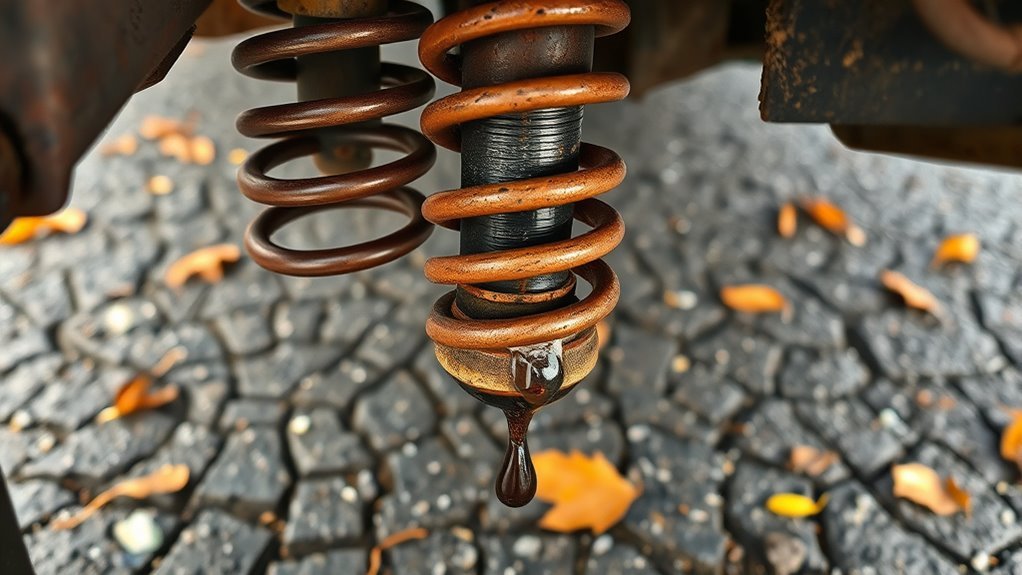
    If you notice hissing sounds or fluid leaking from your shocks, it signals a serious problem with the internal seals or valves. The hissing sound typically indicates air or gas escaping, while fluid leakage means the damping oil is escaping, reducing shock effectiveness.

    Both issues compromise your vehicle’s handling and safety, requiring immediate inspection.

    Symptom Cause Impact
    Hissing sound Worn or damaged seals Loss of gas pressure
    Fluid leakage Cracked shock body Reduced damping efficiency
    Hissing + leakage Valve malfunction Severe shock performance drop
    Fluid on shock Seal failure Corrosion risk
    Continuous leak Structural damage Complete shock failure

    Address these symptoms promptly to maintain peak suspension performance.

    How Do Bad Shocks Affect Ride Feel And Noise?

    You’ll notice increased ride harshness when shocks lose their damping ability, causing your vehicle to respond sharply to bumps.

    Pay attention to noise patterns like clunks or rattles, which often indicate worn or damaged shock components.

    Recognizing these signs helps you identify faults before they affect handling and safety.

    Ride Harshness Indicators

    When your shocks start to fail, you’ll notice a significant increase in ride harshness that directly affects both feel and noise. Reduced shock absorption compromises ride comfort, making every bump and imperfection more pronounced.

    You’ll experience:

    • Jarring impacts over uneven surfaces
    • Increased vibration transmitted to the cabin
    • A stiff, unyielding ride feel
    • Amplified rattles and clunks from suspension components

    These indicators signal that your shocks no longer control suspension movement effectively. The diminished damping allows excessive oscillations, causing the chassis to react harshly to road irregularities.

    This not only reduces comfort but also generates mechanical noises associated with suspension stress.

    Paying attention to these ride harshness indicators helps you identify failing shocks early, preserving both handling performance and noise levels before more severe damage occurs.

    Noise Patterns From Shocks

    How exactly do bad shocks influence the noise you hear and the feel you experience while driving? When shock absorber types degrade, their ability to dampen vibrations weakens, causing your suspension system to transmit more noise and harshness.

    You’ll often notice clunking or knocking sounds during bumps or turns, signaling worn or leaking shocks. These noises correlate with a rougher ride feel, as the suspension system fails to stabilize wheel movement effectively.

    Unlike good shocks that absorb impacts smoothly, bad shocks allow excessive oscillations, amplifying road noise and unsettling handling.

    Identifying these noise patterns helps you diagnose shock absorber issues early, ensuring timely replacement and maintaining ideal suspension performance for a quieter, more controlled driving experience.

    When Should You Replace Bad Shocks Based On Sound And Symptoms?

    Why does your vehicle make clunking or rattling noises over bumps? These sounds often signal worn shocks that compromise ride quality and safety.

    Proper symptom recognition is essential for determining replacement timing. Pay attention to:

    • Persistent knocking or rattling during driving
    • Excessive body bounce after hitting a bump
    • Uneven tire wear indicating poor shock absorption
    • Fluid leaks on or near the shock absorber

    Ignoring these symptoms can lead to decreased vehicle control and increased wear on suspension components.

    You should replace shocks promptly once these noises or behaviors manifest to maintain peak handling and comfort.

    Timely replacement based on sound and symptoms prevents further damage and guarantees your vehicle performs as designed under various driving conditions.

    Easy At-Home Tests To Identify Bad Shock Sounds

    Although diagnosing bad shocks might seem complex, you can perform several straightforward tests at home to identify abnormal sounds.

    Begin with a visual inspection, checking for oil leaks or damaged components.

    Next, conduct a bounce test by pressing down firmly on each corner of your vehicle and releasing; listen for prolonged, unusual noises during rebound, which indicate shock wear.

    For more precise shock testing, drive slowly over a series of small bumps or rough pavement, focusing on any clunking or rattling sounds.

    Use a helper to isolate sounds from each shock absorber.

    Sound identification is critical. Distinct knocking, squeaking, or knocking noises often signal internal shock damage.

    Frequently Asked Questions

    Can Bad Shocks Cause Uneven Tire Wear?

    Yes, bad shocks cause uneven tire wear by failing to stabilize your vehicle. Recognize shock symptoms early to maintain proper tire maintenance, ensuring even wear distribution and extending your tires’ lifespan while improving ride safety and performance.

    Do Bad Shocks Affect Braking Performance?

    You know what they say: “An ounce of prevention is worth a pound of cure.” Bad shocks reduce brake performance by increasing stopping distance and instability.

    Watch for shock symptoms like excessive bounce and uneven tire wear to stay safe.

    How Do Temperature Changes Impact Shock Absorber Sounds?

    Temperature fluctuations cause the shock absorber fluid to thicken or thin, altering shock performance. You’ll notice changes in noise, like creaks or clunks, as seals and components react differently to cold or heat during operation.

    Can Bad Shocks Damage Other Suspension Components?

    You know what they say: a stitch in time saves nine. Ignoring shock absorber maintenance can worsen your suspension system effects, causing premature wear on components like springs, bushings, and tires.

    This wear leads to costly repairs down the line.

    Are All Shock Noises Covered Under Vehicle Warranty?

    Not all shock noises fall under warranty coverage; you’ll need to review your vehicle’s specific terms. Typically, manufacturer defects are covered, but wear-related noises might not be.

    Document issues promptly for precise claims.

    Conclusion

    If you’re hearing clunking or hissing from your shocks, don’t ignore it. These noises often indicate that your shocks are failing or leaking. For example, John noticed a persistent squeaking and fluid leak on his rear shocks, which made his ride rough and unsafe.

    By identifying these sounds early, he avoided further suspension damage and costly repairs. Ignoring bad shocks can lead to more serious vehicle problems and a less comfortable driving experience.

    Trust your ears—recognizing what bad shocks sound like helps you act promptly. This ensures a smoother, safer drive and extends your vehicle’s suspension life.