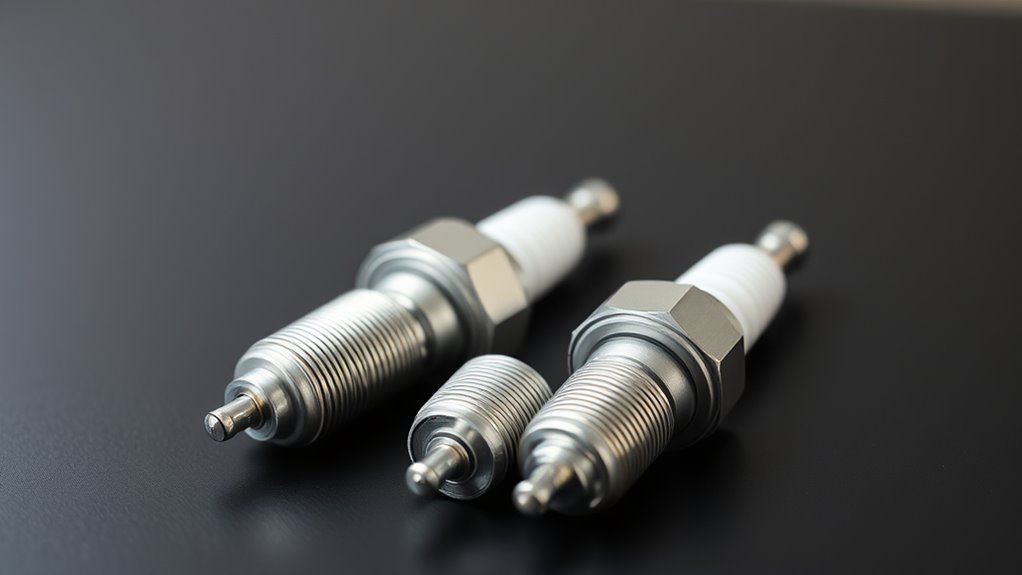
You want the best spark plugs that guarantee reliable ignition, peak combustion, and long service life. Iridium plugs often stand out due to their fine-tipped design, superior wear resistance, and up to 100,000-mile lifespan, outperforming copper and platinum options.
Choosing plugs that match your engine’s specifications and maintaining the correct gap size maximizes performance and fuel efficiency. Brands like NGK, Bosch, and Denso offer trusted quality.
Understanding compatibility, signs of wear, and installation best practices can further enhance your engine’s output and durability.
Key Takeaways
- Iridium spark plugs are best for longevity, lasting up to 100,000 miles with superior wear resistance and consistent ignition performance.
- NGK, Bosch, Denso, ACDelco, and Champion are top spark plug brands known for reliability and advanced technology.
- Platinum plugs offer a balance of durability and performance, lasting about 60,000 miles with improved electrode life.
- Proper spark plug compatibility with vehicle specifications ensures optimal combustion, avoiding misfires and engine damage.
- Regular inspection and timely replacement maintain fuel efficiency, engine power, and prevent common issues like fouling and electrode wear.
How Spark Plugs Impact Your Engine’s Performance
Although spark plugs may seem like small components, they play a critical role in your engine’s combustion process by igniting the air-fuel mixture at precisely the right moment.
The effectiveness of this ignition depends heavily on spark plug materials, which influence conductivity, durability, and heat dissipation.
Improper materials can lead to inconsistent spark delivery, affecting combustion efficiency. Additionally, ignition timing, controlled by your engine’s management system, must synchronize perfectly with the spark plug’s ability to generate a robust spark.
If timing is off, you risk incomplete combustion, resulting in reduced power, higher emissions, and increased fuel consumption.
Comparing Spark Plug Types: Copper, Platinum, and Iridium
How do you choose the right spark plug type for your engine’s needs? Understanding spark plug materials is essential.
Copper plugs offer excellent conductivity but have the shortest lifespan, typically around 20,000 miles, due to rapid electrode wear.
Platinum plugs improve durability with a platinum disc on the center electrode, extending lifespan to about 60,000 miles while maintaining good performance.
Platinum plugs boost durability with a platinum disc, lasting around 60,000 miles and ensuring reliable performance.
Iridium plugs, made with a fine iridium tip, provide superior wear resistance and can last up to 100,000 miles.
This lifespan comparison highlights durability improvements with advanced materials.
However, conductivity slightly decreases from copper to iridium, so balance your choice based on performance demands and maintenance intervals.
Why Iridium Spark Plugs Are Often the Best Choice
When you prioritize long-term engine efficiency and minimal maintenance, iridium spark plugs stand out as the ideal choice. Their fine iridium tip, with a melting point over 2400°C, offers superior durability compared to copper or platinum.
This material’s hardness reduces electrode erosion, ensuring consistent spark delivery and ignition performance. You’ll benefit from iridium benefits such as improved fuel combustion and reduced misfires, which enhance overall engine responsiveness.
The longevity advantages are significant: iridium plugs typically last up to 60,000–120,000 miles, cutting down frequent replacements.
Additionally, their precise electrode design lowers voltage requirements, promoting stable arcs even under high compression.
Signs You Need to Replace Your Spark Plugs
You’ll notice engine misfires, rough idling, or hesitation during acceleration when your spark plugs begin to fail.
These performance issues often coincide with increased fuel consumption due to incomplete combustion.
Monitoring these signs helps you determine when it’s time to replace your spark plugs for peak engine efficiency.
Engine Performance Issues
Although spark plugs are small components, their condition directly affects your engine’s performance. If you notice rough idling, misfires, or difficulty starting your vehicle, these symptoms often stem from worn or fouled spark plugs disrupting the ignition system.
Poor spark plug maintenance can lead to incomplete combustion, causing engine hesitation or reduced power output. You might also detect increased engine vibration, which signals inconsistent firing. Addressing these issues promptly guarantees ideal combustion efficiency and prevents damage to other components like the catalytic converter.
Regular inspection and replacement of spark plugs according to manufacturer guidelines maintain precise ignition timing and consistent spark delivery.
Increased Fuel Consumption
If your vehicle starts consuming noticeably more fuel than usual, faulty spark plugs could be the culprit. Spark plugs play a critical role in igniting the air-fuel mixture efficiently; worn or degraded plugs cause incomplete combustion, directly reducing fuel efficiency.
Different spark plug types, such as copper, platinum, and iridium, have varying lifespans and performance characteristics affecting how well they maintain peak combustion. For example, iridium plugs provide consistent spark energy longer, preserving fuel efficiency better than copper plugs.
When plugs wear out, misfires increase, forcing your engine to burn extra fuel to compensate. Monitoring fuel consumption trends alongside regular spark plug inspections can help you identify when replacement is necessary.
Replacing your spark plugs with the appropriate type guarantees your engine runs efficiently, preventing increased fuel consumption and maintaining overall performance.
How Often Should You Change Your Spark Plugs for Best Performance?
You should change your spark plugs according to the manufacturer’s recommended intervals, typically between 30,000 and 100,000 miles depending on the type.
Pay close attention to signs of wear like misfires, rough idling, and decreased fuel efficiency, as these indicate it’s time for replacement.
Regular maintenance guarantees peak ignition timing and combustion, directly impacting your engine’s performance and longevity.
Recommended Change Intervals
Changing your spark plugs every 30,000 to 100,000 miles, depending on the type and manufacturer specifications, guarantees peak engine performance and fuel efficiency.
The spark plug lifespan varies considerably: conventional copper plugs generally require replacement around 30,000 miles, while platinum or iridium variants can last up to 100,000 miles.
To determine the ideal replacement frequency, consult your vehicle’s service manual and consider driving conditions, as severe use may shorten the spark plug lifespan.
Adhering to recommended change intervals prevents misfires and maintains combustion efficiency.
Regularly scheduled replacement guarantees your ignition system operates within design parameters, reducing emissions and avoiding costly engine damage.
Signs of Wear
Though spark plugs are designed to last for a specified mileage range, recognizing the signs of wear is crucial to maintaining peak engine performance.
You should routinely inspect your spark plugs within the recommended spark plug lifespan to identify wear indicators such as electrode erosion, fouling, or carbon buildup.
A worn electrode decreases spark efficiency, leading to misfires. Additionally, excessive deposits or cracks on the insulator signal degradation.
Pay close attention to changes in gap size; a widened gap impairs ignition timing and combustion quality.
If you notice these wear indicators, it’s time to replace the spark plugs to guarantee optimal functioning.
Timely replacement based on observable wear, rather than just mileage, helps prevent engine inefficiencies and maintains consistent performance.
Impact on Engine Performance
Maintaining ideal engine performance hinges on replacing spark plugs at appropriate intervals tailored to your vehicle’s specifications. Over time, the degradation of spark plug materials, such as iridium or platinum, affects the electrode gap and conductivity, leading to inconsistent ignition timing.
This disruption can cause misfires, reduced fuel efficiency, and diminished power output. Typically, manufacturers recommend changing plugs between 30,000 to 100,000 miles, depending on the material and engine design. You should consult your owner’s manual to determine the best replacement schedule.
Neglecting timely replacement compromises combustion efficiency, increasing emissions and engine wear. By adhering to the specified intervals and selecting plugs with durable materials, you maintain precise ignition timing and guarantee consistent engine performance, maximizing both power and longevity.
How to Choose the Right Spark Plugs for Your Vehicle
How do you determine the ideal spark plug for your vehicle’s engine? Start by consulting your vehicle specifications, which detail the required spark plug type, heat range, and gap size.
Ensuring spark plug compatibility is critical. Select plugs that match these factory recommendations to avoid misfires or engine damage. Consider the electrode material; iridium and platinum offer longer life and better conductivity, but your vehicle’s design may favor a specific type.
Choose spark plugs matching factory specs to prevent misfires; consider electrode material for durability and performance.
Additionally, verify the thread size and reach to guarantee proper fit within the combustion chamber.
Don’t overlook the importance of the heat range, which affects operating temperature and performance.
Top Spark Plug Brands in 2024
When selecting spark plugs, you’ll want to focus on brands that consistently deliver high-quality materials, precise manufacturing tolerances, and advanced electrode designs.
NGK performance stands out with its superior iridium and platinum tips, enhancing ignition efficiency and longevity.
Bosch reliability is proven through rigorous testing and ceramic insulator technology, guaranteeing stable operation under extreme conditions.
Denso innovation shines in its patented U-groove electrode, which improves spark exposure and combustion.
ACDelco value offers dependable OEM-quality plugs that balance cost and durability, making them a practical choice.
Champion durability is synonymous with robust construction and anti-fouling coatings, providing extended service intervals.
How High-Quality Spark Plugs Boost Fuel Efficiency
You’ll notice that high-quality spark plugs enhance the combustion process by delivering a consistent and powerful spark, ensuring fuel ignites efficiently.
This precision reduces engine misfires, which directly lowers wasted fuel and emissions.
Improved Combustion Process
Although the combustion process occurs within milliseconds, the quality of your spark plugs directly influences its efficiency and consistency. High-quality spark plugs provide a stable and powerful spark, ensuring ideal ignition of the air-fuel mixture.
This precise ignition timing maximizes combustion efficiency by promoting complete fuel burn, which reduces unburned hydrocarbons and improves power output. When you use premium spark plugs with advanced electrode materials and designs, you enhance the spark’s reliability and intensity, minimizing energy loss during ignition.
This improved combustion process not only boosts fuel efficiency but also stabilizes engine performance under various operating conditions. By maintaining ideal ignition, high-quality spark plugs help your engine run cleaner and more efficiently, ultimately translating to better fuel economy and reduced emissions.
Reduced Engine Misfires
Since engine misfires disrupt the combustion cycle, using high-quality spark plugs considerably reduces their occurrence by delivering consistent, strong sparks at the correct timing.
You’ll notice that precise ignition timing is critical; premium spark plugs guarantee each spark ignites the air-fuel mixture effectively, preventing incomplete combustion.
Proper spark plug maintenance supports this by preserving electrode integrity and preventing fouling, which can cause weak or irregular sparks leading to misfires.
By minimizing misfires, you maintain engine stability, reduce unburned fuel waste, and enhance overall fuel efficiency.
Furthermore, high-quality plugs withstand extreme temperatures and stress, providing reliable performance over extended intervals.
Staying diligent with spark plug maintenance assures consistent ignition timing, keeping your engine running smoothly and efficiently while lowering emissions and fuel consumption.
How to Install Spark Plugs
Before installing new spark plugs, make sure the engine is cool to prevent damage and personal injury. Proper spark plug maintenance requires the right spark plug tools and a systematic approach.
Follow these steps:
- Use a spark plug socket and ratchet to remove old plugs carefully, avoiding damage to threads.
- Inspect and gap new plugs according to manufacturer specifications using a feeler gauge.
- Apply a thin layer of anti-seize compound to the threads to prevent seizing.
- Hand-thread plugs into the cylinder head, then tighten with a torque wrench to specified values to guarantee proper seal and function.
Adhering to this precise method prevents misfires and optimizes engine performance, extending the life of your spark plugs.
Common Spark Plug Problems and How to Fix Them
Spark plugs play an essential role in engine ignition, but they can develop specific problems that impair performance and fuel efficiency. Common issues include fouling, electrode wear, and improper gap size.
Fouled plugs, often coated with carbon or oil, cause misfires and rough idling. Electrode wear reduces spark intensity, leading to weak combustion. Incorrect gap size disrupts the spark’s effectiveness, affecting acceleration and fuel economy.
For effective spark plug maintenance, regularly inspect and clean the electrodes, and use a gap gauge to verify correct spacing.
When troubleshooting spark plugs, look for discoloration or deposits that indicate specific engine problems like rich fuel mixture or oil leakage.
Replacing worn or damaged plugs promptly restores engine efficiency and prevents long-term damage.
Frequently Asked Questions
Can Spark Plugs Affect My Car’s Emissions?
Yes, faulty spark plug materials can cause incomplete combustion, increasing emissions. Using high-quality spark plugs guarantees your engine meets emissions standards by promoting efficient fuel burning and reducing harmful pollutants released through your exhaust system.
Do Spark Plugs Influence Engine Noise?
Like a maestro tuning an orchestra, you’ll find engine noise shifts with spark plug types. Precise gaps and materials influence combustion timing, reducing misfires and rough idling. This way, your engine hums smoothly and efficiently.
Are Spark Plugs Compatible With Electric or Hybrid Vehicles?
You won’t find spark plugs in electric vehicles, as they lack combustion engines. However, hybrid vehicles require spark plugs meeting specific hybrid vehicle requirements for efficient ignition, ensuring electric vehicle compatibility within dual powertrain systems.
Can Using the Wrong Spark Plug Void My Car Warranty?
Using the wrong spark plug can ripple through your engine’s harmony, risking warranty implications. Stick strictly to spark plug specifications your manufacturer outlines; otherwise, you might void coverage, compromising repairs and costs you’ll face unexpectedly.
How Do Spark Plugs Perform in Extreme Weather Conditions?
Spark plugs perform well in extreme weather by relying on temperature resistance to maintain ignition. You’ll notice spark plug longevity decreases if you use plugs not designed for your climate.
Choose ones rated for your specific temperature range.
Conclusion
By choosing iridium spark plugs, you tap into a technology that lasts up to 60,000 miles—double that of traditional copper plugs—ensuring consistent engine performance and fuel efficiency. Replacing worn plugs before they degrade can improve combustion, reduce emissions, and prevent costly repairs.
Remember, maintaining your spark plugs not only optimizes power but also keeps your engine running smoothly, making every mile more efficient and reliable. Don’t overlook this small part with a big impact when selecting the best spark plugs for your vehicle.