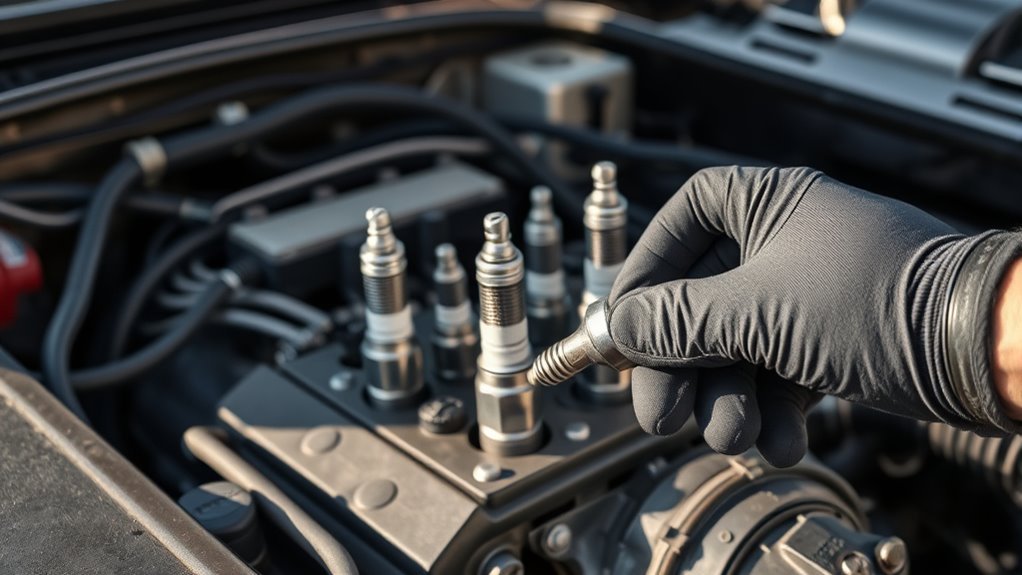
Tag: spark plug access

  • How to Access Spark Plugs

    How to Access Spark Plugs

    To access spark plugs, first locate them on your engine’s cylinder head, usually beneath ignition coils or wires. These components are key to engine performance, so careful handling is important.

    Remove any engine covers or obstructing components using the appropriate tools. This will give you clear access to the spark plugs without causing damage to other parts.

    Carefully disconnect spark plug wires or coil packs by twisting the boots gently, avoiding damage. Use a spark plug socket with a ratchet and extension to reach and loosen the plugs without cross-threading.

    Proper cleaning and inspection should follow removal to ensure spark plugs are in good condition. Keep going to uncover detailed steps for safe removal and reinstallation.

    Key Takeaways

    • Identify the engine type to locate spark plugs on the cylinder head or banks accordingly.
    • Remove engine covers and obstructions using appropriate tools to expose spark plugs.
    • Disconnect ignition wires or coil packs carefully by twisting and pulling the boots.
    • Use a spark plug socket with ratchet and extension to reach and loosen plugs.
    • Keep the area clean by blowing out debris before removing or reinstalling spark plugs.

    Where To Find Spark Plugs In Your Engine

    Where exactly are the spark plugs located in your engine? Their position depends on the engine layout and spark plug types used.

    In inline engines, spark plugs sit on the cylinder head, aligned in a straight row.

    For V-shaped engines, they’re located on each cylinder bank’s angled head, often requiring access from both sides.

    Boxer engines position spark plugs horizontally on opposing cylinder heads.

    Modern engines typically use iridium or platinum spark plug types, which fit standard threaded holes in the cylinder head.

    You’ll identify them by following the ignition wires or coil packs leading directly to each plug.

    Understanding your engine layout helps you locate the spark plugs quickly and accurately, streamlining maintenance or replacement tasks without unnecessary disassembly.

    Essential Tools To Access Spark Plugs

    Before you begin removing spark plugs, you’ll need specific tools to confirm a safe and efficient process. Start with a quality spark plug socket that matches the spark plug types in your vehicle, typically 5/8-inch or 13/16-inch.

    Use a ratchet wrench with an extension to reach recessed plugs without damaging surrounding components. A torque wrench is essential for reinstalling plugs to manufacturer specifications, preventing overtightening or stripping.

    Additionally, a spark plug gap gauge helps verify proper electrode spacing, a critical maintenance tip for peak engine performance. Keep a magnetic pickup tool handy to retrieve dropped plugs or small parts easily.

    Having these tools prepared confirms you can access and service your spark plugs accurately, maintaining engine efficiency and prolonging component life.

    How To Remove Engine Covers And Components Blocking Access

    Start by identifying the engine covers and components blocking access to the spark plugs, such as plastic covers, air intake ducts, or wiring harnesses.

    Use the correct tools, typically a ratchet with the appropriate socket size and screwdrivers, to remove bolts and fasteners securely.

    Always keep track of removed parts and fasteners to guarantee proper reassembly later.

    Identifying Obstructive Components

    Although accessing spark plugs may seem straightforward, various engine covers and components often obstruct your path. To efficiently locate the spark plugs, understand the spark plug anatomy and identify common obstructions such as ignition coils, wiring harnesses, and plastic engine covers. Recognizing these components helps you plan their removal without damage.

    Component Type Description Common Obstruction Role
    Engine Cover Plastic or metal shield Blocks direct access
    Ignition Coils Connects to spark plugs Covers spark plug tips
    Wiring Harness Electrical cables bundle Limits mobility
    Air Intake Ducts Channels air to engine Physically in the way
    Fuel Injectors Deliver fuel Located near spark plugs

    Tools For Cover Removal

    You’ll typically need a specific set of tools to remove engine covers and components that block access to spark plugs.

    Different cover types, plastic, metal, or composite, require tailored removal techniques to prevent damage.

    Here’s a concise list of essential tools:

    1. Socket Set with Ratchet: Use various socket sizes to loosen bolts securing metal and plastic covers efficiently.
    2. Trim Removal Tools: These plastic pry bars help release clips and fasteners on composite covers without scratching surfaces.
    3. Screwdrivers (Flathead and Phillips): Necessary for screws and stubborn fasteners on certain cover types.

    Employ these tools carefully, applying steady pressure to avoid stripping bolts or breaking clips.

    Mastering these removal techniques enables safe, smooth access to spark plugs, streamlining maintenance and repairs.

    How To Disconnect Spark Plug Wires Or Coils Safely

    First, identify whether your engine uses spark plug wires or coil on plug coils to guarantee proper handling.

    Grasp the boot firmly, not the wire or connector, and apply a twisting motion to safely disconnect without damaging components.

    Always follow the manufacturer’s recommended removal technique to prevent electrical or mechanical damage.

    Identify Wire Types

    Spark plug wires and ignition coils come in various designs and materials, each requiring a specific approach for safe disconnection. To identify wire types correctly, first observe the wire colors; manufacturers often use distinct colors to differentiate cylinders or functions.

    Next, note the wire lengths, as longer wires typically connect to farther cylinders. Finally, examine the wire construction. Some have silicone insulation, while others use EPDM rubber, affecting flexibility and heat resistance.

    Follow this checklist:

    1. Match each wire’s color to the vehicle’s wiring diagram to guarantee correct identification.
    2. Measure wire lengths against the engine layout to confirm appropriate routing.
    3. Inspect insulation material to anticipate handling precautions during removal.

    Accurate identification minimizes error and prevents damage during disconnection.

    Use Proper Removal Technique

    Grasp the ignition coil or wire boot firmly at the base, near the spark plug, to avoid pulling on the wire itself. Different spark plug types require specific removal techniques to prevent damage.

    For traditional wire-on-plug systems, gently twist the boot while pulling straight up to release it. For coil-on-plug designs, first disconnect the electrical connector by pressing its tab, then unbolt the coil if necessary before lifting it off.

    Never yank or pull wires forcefully, as this can break internal components. Use a spark plug wire puller tool if available to ease removal without strain.

    Proper removal techniques maintain the integrity of both the ignition system and spark plug types, reducing the risk of costly repairs and sustaining peak engine performance.

    How To Use A Spark Plug Socket And Ratchet Correctly

    Although handling a spark plug socket and ratchet may seem straightforward, using them correctly guarantees you avoid damaging the plug or engine components.

    First, identify the correct socket size based on your spark plug types; typically, 5/8″ or 13/16″ sockets fit most plugs.

    Second, attach the socket firmly to the ratchet, making sure the rubber insert inside the socket securely grips the plug to prevent slipping.

    Attach the socket firmly to the ratchet, ensuring the rubber insert grips the plug securely to avoid slipping.

    Third, insert the socket onto the spark plug carefully, turning the ratchet counterclockwise to loosen or clockwise to tighten.

    Apply steady, controlled force; avoid using excessive torque to prevent thread damage.

    How To Remove Spark Plugs Without Damaging Them

    Once you’ve secured the spark plug socket properly on the plug, the next step is to remove the plug without causing damage. Turn the ratchet handle slowly and steadily counterclockwise, applying consistent pressure to avoid stripping the threads.

    Different spark plug types may have varying thread pitches and lengths, so be mindful of the specific type in your engine. Avoid sudden force or jerking motions, which can fracture the porcelain insulator or damage the electrode.

    As a key maintenance tip, make sure the engine is cool before removal to prevent thread galling. After loosening, unscrew the plug by hand using the socket extension to maintain control.

    Following these steps preserves the integrity of the spark plug and cylinder head threads, guaranteeing peak performance and longevity during routine spark plug maintenance.

    Troubleshooting Hard-To-Reach Or Stuck Spark Plugs

    If you encounter hard-to-reach or stuck spark plugs, addressing the issue requires specialized tools and careful technique.

    Proper spark plug maintenance hinges on effective troubleshooting techniques to avoid damage and guarantee engine performance. Follow these steps:

    1. Use a flexible or swivel spark plug socket to access plugs in confined spaces, minimizing strain on components.
    2. Apply penetrating oil around the spark plug threads and let it sit for 10–15 minutes to loosen corrosion or carbon buildup.
    3. Gently tap the spark plug with a rubber mallet to break the seal, then carefully unscrew it using a torque wrench to prevent thread damage.

    How To Inspect And Clean Spark Plug Wells

    Spark plug wells often accumulate dirt, oil, and debris that can compromise ignition performance and lead to misfires. For effective spark plug maintenance, start by removing the ignition coil or spark plug boot carefully.

    Dirt and oil in spark plug wells can cause misfires—remove ignition components carefully for proper maintenance.

    Use a clean, dry compressed air nozzle to blow out loosened contaminants from the well without pushing debris deeper. Follow this by wiping the well interior with a lint-free cloth or a soft-bristle brush dipped in a mild solvent to remove stubborn grime.

    Avoid excessive liquid to prevent moisture buildup. Inspect the well for corrosion or damage, which may require further attention.

    Applying these cleaning techniques regularly guarantees a contaminant-free environment, supporting ideal spark plug function and prolonging component life.

    How To Reinstall Spark Plugs And Test Your Work

    After thoroughly cleaning and inspecting the spark plug wells, you’re ready to reinstall the spark plugs. Proper spark plug maintenance guarantees peak engine performance and longevity.

    Follow these steps:

    1. Hand-thread each spark plug carefully into its cylinder to avoid cross-threading. Once seated, torque the plug to the manufacturer’s specifications using a torque wrench.
    2. Reattach the spark plug wires or ignition coils, guaranteeing a secure connection to prevent misfires.
    3. Start the engine and listen for smooth operation. Observe for any warning lights or irregular idling, indicating potential issues.

    Testing your work immediately confirms correct installation and preserves engine performance.

    Regular spark plug maintenance, including cleaning and correct reinstallation, prevents engine inefficiency and costly repairs.

    Frequently Asked Questions

    How Often Should Spark Plugs Be Replaced?

    You should replace spark plugs every 30,000 to 100,000 miles, depending on their lifespan and vehicle specifications. Always follow manufacturer-recommended replacement intervals to maintain peak engine performance and fuel efficiency.

    What Are the Signs of a Faulty Spark Plug?

    Poor spark plug performance contrasts sharply with smooth engine operation. You’ll notice misfires, rough idling, or difficulty starting.

    Conduct a thorough spark plug inspection to detect wear, carbon buildup, or electrode damage, ensuring peak engine function.

    Can I Use Any Type of Spark Plug for My Car?

    You can’t use any spark plug type; always check your vehicle’s manual. Different spark plug types have compatibility issues with engine design, heat range, and material.

    Selecting the correct one guarantees peak performance and prevents damage.

    How Do Spark Plugs Affect Fuel Efficiency?

    Like tuning a fine instrument, your spark plug types and ignition timing directly influence fuel efficiency. Using the right plugs guarantees ideal combustion, reducing wasted fuel and improving engine performance. Maintain precise timing for best results.

    What Causes Spark Plugs to Wear Out Prematurely?

    You’ll find spark plugs wear out prematurely due to poor spark plug materials, excessive heat, fouling, or improper gap. These factors cause engine misfires, reducing efficiency and damaging performance, so guarantee quality materials and proper maintenance.

    Conclusion

    Accessing your spark plugs might seem tricky, but with the right tools and careful steps, it’s straightforward and safe. Don’t worry about damaging components—using a proper spark plug socket and gentle technique prevents harm.

    By following these precise instructions, you’ll confidently remove, inspect, and reinstall spark plugs, ensuring your engine runs smoothly. Remember, patience and attention to detail are key to avoiding common pitfalls and achieving professional results every time.

    In conclusion, mastering how to access spark plugs is essential for maintaining your vehicle’s performance and longevity.