Tag: safety warning signs

  • When to Change Shocks

    When to Change Shocks

    You should change your shocks if you notice excessive bouncing after bumps, visible fluid leaks on the shock body, uneven tire wear, or increased body roll during turns. These signs mean your shocks can’t control suspension movement properly, compromising safety and handling.

    Delaying replacement risks longer braking distances and further suspension damage. Knowing when and how to replace shocks guarantees your vehicle performs reliably and safely.

    Keep exploring to understand the full impact and replacement process.

    Key Takeaways

    • Change shocks if you notice visible fluid leaks, indicating seal failure and reduced damping efficiency.
    • Replace shocks when the vehicle excessively bounces after bumps, showing loss of suspension control.
    • Uneven tire wear patterns can signal worn shocks needing timely replacement.
    • Increased body roll during turns and longer braking distances suggest compromised shocks affecting safety.
    • Routine shock replacement is recommended every 50,000 to 100,000 miles or sooner if performance degrades.

    What Shock Absorbers Do and Why They Matter

    Shock absorbers play a critical role in maintaining your vehicle’s stability and control by dampening the impact of road irregularities. They convert kinetic energy from suspension movement into heat, reducing oscillations that affect handling and ride comfort.

    Understanding shock absorber types, such as hydraulic, gas-charged, and monotube, helps you select the best solution for your vehicle. Each type offers distinct damping characteristics suited to different driving conditions.

    Explore hydraulic, gas-charged, and monotube shocks to find the ideal damping for your driving needs.

    Proper shock installation techniques guarantee alignment, secure mounting, and correct torque specifications, preventing premature wear and maintaining performance. By focusing on these technical aspects, you’ll enhance vehicle safety and extend suspension component life, assuring predictable response during acceleration, braking, and cornering.

    Recognizing the function and installation of shocks is essential before monitoring their condition or planning replacements.

    Signs Your Shocks Need Replacing

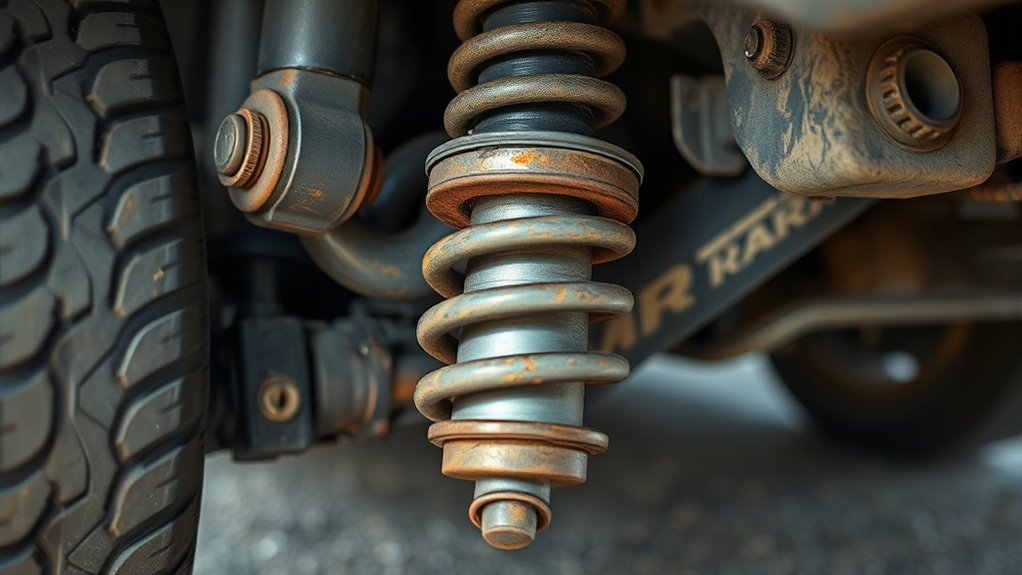
    You’ll want to inspect your shocks regularly for visible fluid leakage, which indicates a seal failure.

    Notice if your vehicle bounces excessively after hitting bumps. That’s a clear sign the shocks aren’t dampening properly.

    Additionally, uneven tire wear patterns can reveal compromised shock performance affecting tire contact with the road.

    Visible Leakage On Shocks

    Although it might seem minor at first, visible oil leakage on your vehicle’s shocks indicates a compromised seal and diminished damping performance.

    During your routine shock maintenance and fluid inspection, spotting this leakage is critical. It signals the shock absorber’s internal fluid is escaping, reducing its ability to control suspension movement.

    Here are four key points to take into account:

    1. Leakage usually appears as oily residue on the shock body.
    2. It often results from worn or damaged seals.
    3. Persistent fluid loss leads to reduced shock efficiency.
    4. Ignoring leakage can cause uneven tire wear and poor handling.

    Addressing visible leakage promptly guarantees your shocks maintain peak performance and vehicle safety.

    Excessive Bouncing While Driving

    Visible oil leakage signals that your shocks aren’t properly containing their damping fluid, which directly affects how your vehicle absorbs road impacts.

    One of the most noticeable signs you need to replace your shocks is excessive bouncing while driving.

    When the shocks lose their ability to control suspension movement, you’ll experience pronounced bouncing effects after hitting bumps or uneven surfaces.

    This not only compromises driving comfort but also reduces vehicle stability and control.

    If you feel your car continues to oscillate longer than usual or exhibits a “floaty” sensation, your shocks are failing to dampen suspension travel effectively.

    Addressing these symptoms promptly is essential to maintain safe handling, minimize wear on other suspension components, and restore ideal driving comfort.

    Uneven Tire Wear Patterns

    When shocks fail to absorb impacts properly, they cause irregular tire contact with the road, leading to uneven tire wear patterns. This uneven wear often signals that your shocks need replacing to maintain ideal tire alignment and vehicle safety.

    Here are key signs to watch for:

    1. Feathered Tread Edges

    Tread patterns show a saw-tooth wear, indicating poor shock absorption.

    2. Cupping or Scalloping

    Tires develop high and low points, a direct result of bouncing caused by worn shocks.

    3. Inner or Outer Edge Wear

    Uneven wear on tire edges often points to compromised shock performance affecting alignment.

    4. Rapid Tread Wear

    Accelerated tire degradation suggests shocks aren’t stabilizing the vehicle, causing uneven pressure distribution.

    Addressing these issues promptly preserves tire life and guarantees proper tire alignment.

    When Should You Replace Old Shocks?

    How can you determine the ideal time to replace your old shocks? The shock lifespan typically ranges between 50,000 to 100,000 miles, but this varies based on driving conditions and vehicle usage.

    You should monitor specific performance indicators such as increased body roll, prolonged braking distances, or visible fluid leaks around the shock body. Additionally, excessive bouncing after hitting bumps signals diminished damping efficiency.

    Inspecting for physical damage or corrosion can also reveal compromised integrity. Regular evaluations, especially after harsh terrain exposure, help identify wear early.

    Replacing shocks at the right time guarantees prime ride comfort and suspension function. Relying solely on mileage can be misleading, so prioritize these tangible performance indicators to maintain your vehicle’s handling and stability effectively.

    How Worn Shocks Affect Handling and Safety

    Although worn shocks mightn’t always be immediately noticeable, they considerably impair your vehicle’s handling and safety. Reduced shock performance directly impacts your control over the vehicle, compromising handling stability.

    When shocks deteriorate, you may experience increased body roll during turns, reducing cornering precision. You might also notice longer braking distances due to uneven tire contact.

    Excessive bouncing on uneven surfaces affects steering response, and poor traction is common, especially on wet or slippery roads. Each factor diminishes your ability to respond accurately, raising the risk of accidents.

    Maintaining peak shock performance guarantees consistent handling stability, preserving your vehicle’s safety.

    If you notice these symptoms, it indicates your shocks are worn and not functioning as designed, necessitating prompt inspection and maintenance to avoid critical handling issues.

    Why You Shouldn’t Wait to Replace Worn Shocks

    You shouldn’t wait to replace worn shocks because safety risks escalate as their effectiveness diminishes.

    Reduced shock absorption compromises your vehicle’s stability, increasing the chance of accidents.

    Additionally, your vehicle’s overall performance declines, affecting braking and handling precision.

    Safety Risks Increase

    Because worn shocks compromise your vehicle’s stability, they greatly increase safety risks on the road.

    Your car’s safety features depend on consistent driving stability, which shocks help maintain by absorbing road impacts and controlling suspension movement.

    When shocks degrade, you face:

    1. Reduced tire contact with the road, impairing traction.
    2. Increased stopping distances due to unstable braking.
    3. Excessive body roll during turns, risking loss of control.
    4. Poor response to emergency maneuvers, limiting vehicle control.

    Ignoring worn shocks undermines essential safety features, putting you and others in danger.

    Replacing shocks promptly preserves driving stability, ensuring your vehicle handles predictably in varying conditions.

    Don’t wait until safety is compromised. Act when you notice signs of shock wear or during routine inspections.

    Vehicle Performance Declines

    Beyond safety concerns, worn shocks considerably impair your vehicle’s overall performance. When shock performance deteriorates, your suspension system can no longer effectively absorb road irregularities. This leads to increased body roll during cornering, reduced tire contact with the road, and longer braking distances.

    You’ll notice a decline in ride comfort as well, with vibrations and jolts becoming more pronounced inside the cabin. Ignoring these symptoms forces other suspension components to compensate, accelerating wear and risking costly repairs.

    To maintain ideal handling, stability, and passenger comfort, you shouldn’t delay replacing worn shocks. Timely replacement restores the shocks’ ability to control suspension movement precisely, ensuring your vehicle responds predictably and maintains consistent traction under various driving conditions.

    Prioritize shock maintenance to preserve both performance and comfort.

    How to Choose the Right Replacement Shocks

    How do you determine which replacement shocks best suit your vehicle’s needs? Start by evaluating shock types. Choose between hydraulic, gas-charged, or adjustable shocks based on your driving conditions.

    Next, consider shock brands. Opt for reputable manufacturers known for durability and performance.

    Then, check compatibility with your vehicle’s make and model to guarantee proper fit and function.

    Finally, factor in your driving style, whether you prioritize comfort, sport handling, or off-road capability, to select shocks that match your requirements.

    1. Identify appropriate shock types for your vehicle and terrain.
    2. Research top shock brands with proven reliability.
    3. Verify fitment and specifications for your vehicle model.
    4. Align shock performance characteristics with your driving preferences.

    This approach guarantees ideal suspension performance and longevity.

    What to Expect During Shock Replacement Service

    When you bring your vehicle in for shock replacement, the technician will first inspect the suspension system to confirm the extent of wear and identify any additional issues.

    During the shock service, they’ll remove the old shocks and assess mounting hardware for damage or corrosion.

    The replacement process involves installing new shocks precisely matched to your vehicle’s specifications to guarantee peak performance and safety.

    Technicians will test the suspension’s function post-installation, confirming proper operation and ride quality.

    You can expect the entire shock service to take between one to two hours, depending on your vehicle model and any complications found during inspection.

    Following the replacement process, your vehicle will handle more smoothly, offering improved stability and control, especially on uneven terrain or during braking.

    Frequently Asked Questions

    Can I Replace Shocks Myself or Should I Hire a Mechanic?

    You can attempt DIY replacement if you have proper tools and mechanical knowledge, but shocks require precise installation. For safety and ideal performance, consider professional installation to guarantee correct torque settings and avoid potential damage or injury.

    Are All Shock Absorbers Compatible With My Vehicle Make and Model?

    Not all shock absorbers guarantee shock compatibility with your vehicle specifications. You need to select shocks designed specifically for your make and model to maintain performance, safety, and proper fit.

    Always consult manufacturer guidelines before purchasing.

    How Do Different Road Conditions Affect Shock Absorber Lifespan?

    If you drive frequently on rough gravel roads, your shock lifespan decreases due to constant vibrations and impacts. Harsh road conditions accelerate wear, so you should inspect shocks regularly to maintain ideal vehicle stability and safety.

    Can Worn Shocks Cause Uneven Tire Wear?

    Yes, worn shocks can cause uneven tire wear by disrupting tire alignment and suspension stability. Regular shock maintenance guarantees proper alignment, improves handling, and prevents premature tire damage, enhancing overall vehicle safety and performance.

    What Are the Typical Costs Associated With Shock Replacement?

    Think of shock replacement costs like fixing a leaky faucet. Parts usually run $100-$300, while labor expenses add $100-$150.

    You’ll pay $200-$450 total, depending on your vehicle’s make and shop rates.

    Conclusion

    By now, you’ve seen how worn shocks can turn your smooth ride into a bumpy journey, quietly eroding control and safety. Don’t let your vehicle’s heartbeat falter—replacing your shocks keeps every twist and turn steady and sure.

    Choosing the right shocks and timely service guarantees your ride stays balanced, responsive, and secure. Think of fresh shocks as a new set of lungs for your suspension, breathing life back into every drive.

    Knowing when to change shocks is key to maintaining that smooth, controlled ride. Keep an eye on wear and don’t wait until the bumps become unbearable.