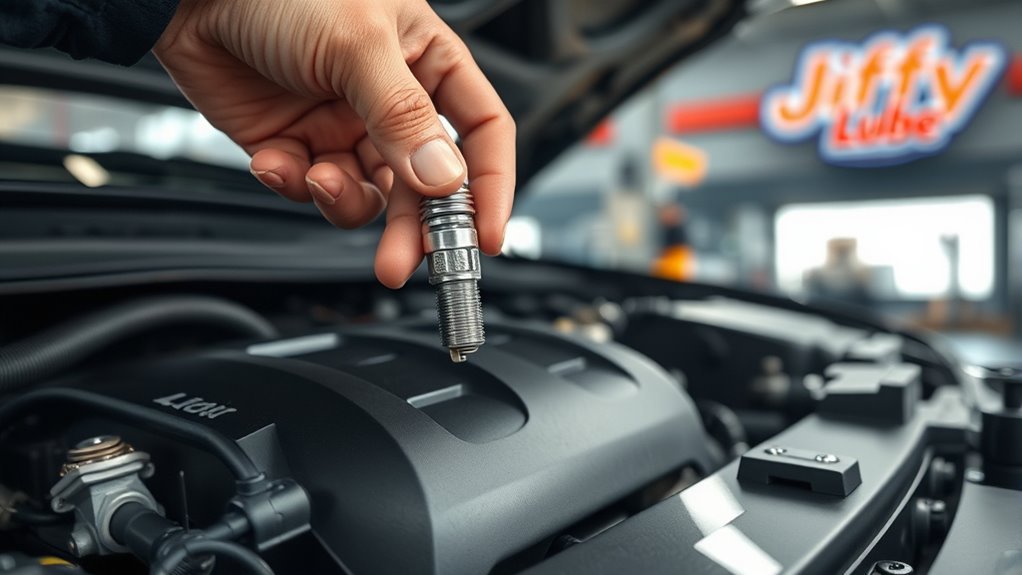
Yes, Jiffy Lube does change spark plugs. Their technicians inspect wear, deposits, and electrode gaps, then replace plugs according to your vehicle’s specifications. This helps maintain fuel efficiency and engine performance.
They handle copper, platinum, and iridium types, which last between 30,000 to 100,000 miles depending on type and use. If you want to understand costs, timing, and when a specialist might be better, keep exploring the options and maintenance tips available.
Key Takeaways
- Jiffy Lube offers spark plug replacement services for copper, platinum, and iridium spark plugs.
- Technicians inspect spark plugs for wear, electrode gap, and damage before recommending replacements.
- Spark plug replacement includes removal, installation, and gap adjustment to manufacturer specifications.
- Jiffy Lube recommends spark plug replacement every 30,000 to 100,000 miles depending on type.
- Their service helps maintain engine performance, fuel efficiency, and reduces emissions.
Does Jiffy Lube Change Spark Plugs?
Wondering if Jiffy Lube changes spark plugs? Yes, Jiffy Lube does offer spark plug replacement services, addressing various spark plug types like copper, platinum, and iridium.
Each type affects engine performance differently. Copper plugs provide good conductivity but shorter lifespan, while iridium plugs offer enhanced durability and efficient combustion. Understanding these distinctions is essential because the correct spark plug type influences ignition timing, fuel efficiency, and emissions.
Jiffy Lube technicians recognize the importance of matching your vehicle’s specifications with appropriate spark plugs to maintain peak engine performance.
While they handle the replacement, they also consider the impact of spark plug wear on engine misfires and rough idling, ensuring your engine operates smoothly.
This technical approach helps sustain your vehicle’s power output and fuel economy.
How Jiffy Lube Inspects and Replaces Spark Plugs
After choosing the right spark plug type for your vehicle, Jiffy Lube technicians begin the inspection by removing each plug to check for wear, deposits, and electrode erosion. This spark plug inspection is an essential part of spark plug maintenance, ensuring peak engine performance.
Jiffy Lube technicians inspect each spark plug for wear and deposits to maintain optimal engine performance.
During the process, they:
- Examine the electrode gap and adjust if necessary to meet manufacturer specifications.
- Inspect for carbon buildup, oil fouling, or physical damage that could impair ignition.
- Assess the spark plug’s heat range suitability and overall condition to determine if replacement is needed.
If any issues are detected, they’ll recommend replacing the spark plugs promptly. This thorough approach helps maintain engine efficiency and prevents misfires, ensuring your vehicle runs smoothly.
Spark Plug Replacement Costs and Timing at Jiffy Lube
Jiffy Lube typically recommends replacing your vehicle’s spark plugs every 30,000 to 100,000 miles, depending on the spark plug type and manufacturer guidelines. This range reflects variations in spark plug longevity, with iridium and platinum plugs generally lasting longer than copper ones.
When considering spark plug replacement costs at Jiffy Lube, expect pricing to vary by vehicle make, model, and spark plug type. While Jiffy Lube offers competitive rates, it’s crucial to perform a cost comparison with dealerships and specialized mechanics to guarantee you receive the best value.
Their service includes inspection, removal, and installation, assuring proper gap settings.
Staying within the recommended interval helps maintain engine efficiency and prevents misfires, supporting ideal vehicle performance and fuel economy.
When to Choose a Specialist Instead of Jiffy Lube
Although Jiffy Lube provides convenient spark plug services, you should opt for a specialist when your vehicle requires advanced diagnostics, custom spark plug types, or performance tuning.
Specialists offer expertise tailored to complex engine configurations, guaranteeing superior service quality and engine performance.
Consider choosing a specialist in these cases:
- Advanced Diagnostics: When your vehicle exhibits misfires or sensor-related issues, specialists have diagnostic tools and skills beyond standard maintenance.
- Custom Spark Plugs: If your engine demands non-standard spark plugs for enhanced efficiency or emissions compliance, specialists guarantee correct selection and installation.
- Performance Tuning: For high-performance or modified engines, specialists adjust spark timing and plug specifications to maximize power and longevity.
Relying on specialist expertise assures precise, high-quality service that meets your vehicle’s specific needs, which Jiffy Lube’s generalized approach may not provide.
Where Else Can You Get Spark Plugs Changed?
You can get spark plugs changed at dealership service centers, which offer manufacturer-trained technicians and original parts.
Independent auto shops provide a cost-effective alternative with skilled mechanics familiar with various vehicle models.
If you’re comfortable with tools, DIY replacement is possible by following specific torque and gap specifications to guarantee proper engine performance.
Dealership Service Centers
Dealership service centers provide specialized maintenance tailored to your vehicle’s make and model, making them a reliable option for spark plug replacement. One of the key dealership benefits is access to OEM parts, ensuring compatibility and peak performance.
While cost comparisons often show dealership prices are higher than quick lube shops, you pay for expert technicians familiar with your vehicle’s specific requirements.
Here are essential points to evaluate:
- Technicians use manufacturer-recommended spark plugs and follow precise replacement procedures.
- Service records at dealerships can enhance your vehicle’s resale value by documenting proper maintenance.
- Warranty coverage often requires using dealership service centers to avoid voiding manufacturer warranties.
Choosing a dealership balances cost with quality and long-term vehicle health.
Independent Auto Shops
When seeking alternatives for spark plug replacement, independent auto shops offer skilled technicians who can provide personalized service often at a lower cost than dealerships.
Independent shops typically employ local mechanics with extensive experience diagnosing ignition system issues and replacing spark plugs using manufacturer-specified tools and torque settings.
These local mechanics prioritize precision, guaranteeing spark plugs are gapped correctly and installed to optimize engine performance and fuel efficiency.
Additionally, independent shops often provide flexible scheduling and quicker turnaround times compared to dealership service centers.
By choosing independent shops, you benefit from tailored advice on spark plug types and maintenance intervals suited to your vehicle.
This approach guarantees reliable ignition system function without the premium pricing that dealerships may charge for similar services.
DIY Spark Plug Replacement
Besides independent auto shops, many car owners opt to replace spark plugs themselves to save on labor costs and gain hands-on experience with their vehicle’s ignition system.
Performing a DIY spark plug replacement requires specific spark plug tools like a socket wrench with an extension and a torque wrench to guarantee proper installation. Proper torque is essential to prevent damage and maintain peak engine performance.
Here’s how to proceed:
- Disconnect the battery and remove ignition coils or wires to access the spark plugs safely.
- Use a spark plug socket and ratchet to carefully extract old plugs without damaging the cylinder head threads.
- Install new plugs, torquing them to manufacturer specifications to maintain engine performance and fuel efficiency.
This method guarantees precise maintenance without relying on service centers.
Tips for Maintaining Spark Plugs Between Changes
You should regularly inspect your spark plugs for signs of wear or deposits to guarantee peak performance.
Keeping your engine properly tuned helps prevent premature spark plug failure and maintains fuel efficiency.
Additionally, using quality fuel additives can reduce carbon buildup and extend the life of your spark plugs between changes.
Inspect Spark Plug Condition
Regularly inspecting your spark plugs guarantees peak engine performance and prevents costly repairs.
Different spark plug types, such as copper, platinum, or iridium, have varying lifespans, so knowing yours helps you schedule timely checks.
To inspect spark plug condition effectively:
- Remove each spark plug using the correct socket to avoid damage.
- Examine the electrode and insulator for wear, deposits, or erosion, which indicate reduced spark plug lifespan.
- Check the gap using a feeler gauge, ensuring it matches manufacturer specifications for ideal combustion.
Maintain Proper Engine Tune
Although spark plugs require periodic replacement, maintaining proper engine tune between changes helps extend their lifespan and guarantees peak performance.
You should routinely check ignition timing, fuel mixture, and idle speed, as these factors directly affect engine performance and spark plug lifespan.
Misfires, rough idling, or poor acceleration often indicate tune issues that stress spark plugs.
Regularly inspect and replace air filters to verify correct air-fuel ratios, preventing deposits that degrade plug efficiency.
Additionally, confirm your vehicle’s onboard diagnostics are scanned periodically to detect engine misfires or sensor malfunctions early.
Use Quality Fuel Additives
Maintaining a proper engine tune minimizes stress on spark plugs, but incorporating quality fuel additives can further protect and enhance their performance between changes.
These additives clean your fuel system, reduce deposit buildup, and optimize combustion, directly supporting consistent engine performance.
To effectively use fuel additives, follow these steps:
- Choose additives formulated to clean fuel injectors and combustion chambers, preventing carbon deposits that impair spark plug function.
- Add the recommended dosage to your fuel tank every few thousand miles or as specified by the additive manufacturer.
- Use additives compatible with your vehicle’s fuel system materials to avoid corrosion or damage.
How to Know When Your Spark Plugs Need Replacing
How can you tell when your spark plugs are due for replacement? Typically, spark plugs have a lifespan of 30,000 to 100,000 miles, depending on the type and manufacturer specifications.
You should monitor engine performance closely; signs of worn spark plugs include rough idling, reduced fuel efficiency, engine misfires, and difficulty starting. If you notice decreased acceleration or uneven engine power, it’s a clear indicator.
Additionally, performing a visual inspection can help. Look for carbon deposits, worn electrodes, or corrosion on the plugs. Ignoring these signs can lead to poor combustion and increased emissions.
Regularly inspect spark plugs for carbon buildup, worn electrodes, or corrosion to maintain efficient combustion and reduce emissions.
Regularly consulting your vehicle’s maintenance schedule and addressing these symptoms promptly will guarantee peak engine performance and prevent costly repairs down the line.
Frequently Asked Questions
What Types of Spark Plugs Are Best for Fuel Efficiency?
You’ll want iridium spark plugs for the best fuel efficiency since they offer superior conductivity and longevity. Platinum spark plugs also improve efficiency but iridium’s finer electrode reduces voltage demand more effectively.
Can Faulty Spark Plugs Cause Engine Misfires?
Think of faulty spark plugs as a flickering lighthouse; yes, they cause engine misfires. These spark plug symptoms disrupt combustion, leading to poor engine performance, reduced fuel efficiency, and rough idling, signaling it’s time for maintenance.
How Do Spark Plugs Affect Vehicle Emissions?
You’ll find worn spark plugs reduce combustion efficiency, increasing harmful emissions and risking failure to meet emission standards. Maintaining ideal spark plug lifespan guarantees cleaner exhaust and helps your vehicle comply with environmental regulations effectively.
Are Spark Plug Gaps Adjustable by Car Owners?
Think of your spark plug gap like the precise spacing between piano keys. Too wide or narrow, and the melody falters. You can adjust this gap with proper tools during spark plug maintenance by careful gap measurement.
What Tools Are Needed for DIY Spark Plug Replacement?
You’ll need a spark plug socket, ratchet wrench, torque wrench, gap gauge, and extension bar. Different spark plug types require proper sizing and gap adjustment tools to guarantee precise installation and ideal engine performance during replacement.
Conclusion
So, if you’re wondering whether Jiffy Lube changes spark plugs, they do offer inspection and replacement services. However, their expertise might not match that of a specialist.
Think of it like using a pocket watch in a digital age—it works, but there are faster, more precise options available. Keep an eye on your spark plugs’ condition and follow recommended intervals.
When deciding where to go, choose the service that best fits your vehicle’s needs for peak performance and longevity. In conclusion, Jiffy Lube does change spark plugs, but consider your options to ensure the best care for your car.