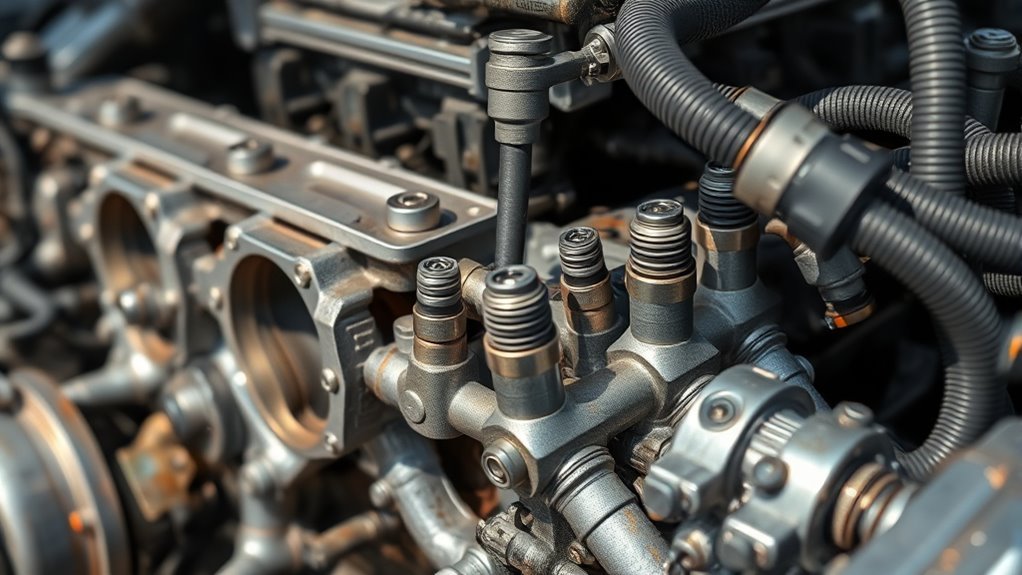
Do diesel engines have spark plugs? The answer is no, because diesel engines ignite fuel through compression rather than electrical sparks.
Diesel engines compress air to very high pressures and temperatures. This intense compression causes the injected fuel to ignite spontaneously without the need for spark plugs.
Instead of spark plugs, diesel engines use fuel injectors to deliver fuel directly into the combustion chamber. They also sometimes use glow plugs, which preheat the combustion chamber to ensure smoother starts in cold conditions.
This design improves efficiency and eliminates the need for spark-based ignition systems. Understanding these differences helps clarify how diesel engines operate and the key components involved.
Key Takeaways
- Diesel engines do not have spark plugs because they rely on compression ignition rather than electrical sparks.
- High cylinder pressure and temperature from compressed air ignite diesel fuel without a spark plug.
- Fuel injectors deliver fuel directly into the combustion chamber at peak compression for ignition.
- Glow plugs are used in diesel engines to preheat the chamber, aiding cold starts but not igniting fuel.
- The absence of spark plugs distinguishes diesel engines from gasoline engines in their ignition process.
Do Diesel Engines Have Spark Plugs?
Why don’t diesel engines have spark plugs like gasoline engines do?
Unlike gasoline engines, diesel engines rely on a different ignition process called diesel ignition. Instead of spark plugs igniting the air-fuel mixture, diesel engines compress air to such high pressure and temperature that fuel injected into the combustion chamber ignites spontaneously.
This method enhances engine efficiency by eliminating the need for a separate ignition system.
You won’t find spark plugs in diesel engines because their design capitalizes on compression heat for ignition. Understanding this distinction is vital when comparing diesel and gasoline engines, as it directly affects performance characteristics and mechanical complexity.
How Diesel Engines Ignite Fuel Without Spark Plugs
Although diesel engines don’t use spark plugs, they ignite fuel through a process called compression ignition. This relies on the engine’s high compression ratio to generate the necessary heat for diesel ignition.
Here’s how it works:
- Air is drawn into the cylinder during the intake stroke.
- The piston compresses this air, drastically increasing its temperature due to the high compression ratio.
- At peak compression, fuel is injected directly into the hot, compressed air.
- The fuel spontaneously ignites from the elevated temperature, powering the engine.
You can see that instead of a spark, the engine uses intense heat generated by compressing air to ignite the fuel. This method enables diesel engines to operate efficiently without spark plugs, relying solely on compression ignition for combustion.
What Glow Plugs Do in Diesel Engines
You rely on glow plugs to preheat the combustion chamber, ensuring efficient ignition in cold conditions.
These devices rapidly heat up when activated, raising the air temperature inside the cylinder.
Understanding their operation helps explain how diesel engines overcome low-temperature starting challenges.
Purpose of Glow Plugs
Since diesel engines rely on compression to ignite fuel, glow plugs play a critical role in guaranteeing efficient starting, especially in cold conditions. When you turn the ignition, glow plugs heat the combustion chamber, aiding fuel ignition.
Understanding their purpose helps you appreciate their importance:
- Preheat the combustion chamber to reach ignition temperature quickly.
- Improve cold start performance by compensating for low ambient temperatures.
- Stabilize engine operation immediately after startup to reduce emissions.
- Support consistent combustion, preventing misfires during warm-up.
Various glow plug types exist, such as ceramic and metal, each suited for specific applications.
Proper glow plug maintenance guarantees longevity and reliable function, preventing starting issues.
Glow Plug Operation Process
Glow plugs operate by rapidly heating the combustion chamber to guarantee fuel ignites under the high compression typical of diesel engines. When you turn the ignition, electrical current flows through the glow plug’s heating element, causing it to reach temperatures up to 1000°C within seconds.
This preheats the air-fuel mixture, facilitating reliable combustion, especially in cold starts. Different glow plug types, such as ceramic and metal, offer varying heat-up times and durability.
You need to monitor glow plug performance regularly, as faulty plugs lead to hard starts and increased emissions.
Glow plug maintenance involves checking resistance values, inspecting wiring, and replacing worn plugs promptly. Proper upkeep facilitates your diesel engine runs efficiently, reducing wear and improving fuel combustion under diverse operating conditions.
Components That Replace Spark Plugs in Diesel Engines
Diesel engines rely on components such as fuel injectors and compression ignition systems to initiate combustion, rather than spark plugs used in gasoline engines.
Diesel engines use fuel injectors and compression ignition instead of spark plugs to start combustion.
Here’s what replaces spark plugs in diesel engines:
- Fuel Injector delivers precise fuel amounts directly into the combustion chamber at high pressure, ensuring efficient atomization and mixing with compressed air.
- Compression Ignition System relies on high cylinder pressure and temperature to ignite the fuel-air mixture without an external spark.
- Glow Plugs assist during cold starts by preheating the combustion chamber, facilitating ignition in low-temperature conditions.
- Combustion Chamber Design is engineered to maximize pressure and temperature, promoting spontaneous ignition of the injected fuel.
These components work together to replace the function of spark plugs, enabling diesel engines to operate efficiently through fuel injection and compression ignition.
Debunking Myths About Diesel Engines and Spark Plugs
You might assume diesel engines use spark plugs like gasoline engines, but they don’t.
This is due to their unique combustion process. Instead of sparks, diesel engines rely on high compression to ignite the fuel-air mixture.
Understanding this difference clears up common misconceptions about how diesel engines operate.
Spark Plug Absence Explained
Although many people assume all internal combustion engines use spark plugs, diesel engines operate differently by relying on compression ignition rather than spark ignition. This fundamental difference explains why diesel engines lack spark plugs.
Understanding spark plug functionality clarifies this distinction:
- Spark plugs generate an electrical spark to ignite the air-fuel mixture in gasoline engines.
- Diesel engine design compresses air to very high pressures, raising temperature sufficiently for fuel auto-ignition.
- The absence of spark plugs eliminates the need for an external ignition source in diesel combustion.
- Diesel engines use fuel injectors to deliver fuel precisely when compression heats the air enough to ignite it.
Diesel Combustion Process
Understanding why diesel engines don’t use spark plugs leads directly to how their combustion process works. Instead of relying on an electrical spark, diesel engines use high compression to heat the air inside the cylinder to a temperature sufficient for ignition.
When fuel injection occurs, diesel fuel is precisely sprayed into this hot, compressed air, causing spontaneous combustion. This method maximizes combustion efficiency by ensuring ideal fuel-air mixing and timing.
You’ll find that controlling the fuel injection timing and pressure is critical, as it directly influences power output and emissions.
Unlike spark-ignition engines, the absence of spark plugs means diesel engines depend on compression ignition, which enhances durability and fuel economy.
Understanding this process helps clarify why spark plugs are unnecessary in diesel technology.
Differences Between Spark Plugs and Glow Plugs in Diesel Engines
While both spark plugs and glow plugs play critical roles in engine ignition systems, their functions and designs differ greatly due to the distinct combustion processes in gasoline and diesel engines.
Spark plug types vary widely, designed to create an electric spark that ignites the air-fuel mixture. In contrast, glow plugs don’t spark but heat the combustion chamber to aid diesel ignition under cold conditions.
Consider these differences:
- Spark plugs generate sparks; glow plugs generate heat.
- Spark plugs ignite a premixed fuel-air mixture; glow plugs assist in auto-ignition of diesel fuel.
- Spark plugs operate continuously during combustion; glow plugs operate only during startup.
- Spark plugs vary by gap, material, and design; glow plugs are simpler heating elements.
Understanding this helps you grasp why diesel engines rely on glow plugs instead of spark plugs.
How Spark Plugs Work in Gasoline vs. Diesel Engines
A spark plug in a gasoline engine creates a high-voltage electrical spark that ignites the air-fuel mixture inside the combustion chamber. You rely on specific spark plug types designed to withstand high temperatures and pressures, ensuring ideal combustion efficiency.
In contrast, diesel engines don’t use spark plugs; instead, they depend on high compression to ignite the fuel-air mix. Glow plugs preheat the combustion chamber to aid cold starts but don’t initiate combustion.
Understanding these differences, you see that spark plugs directly trigger ignition in gasoline engines, while diesel engines use compression and glow plugs for starting assistance.
Spark plugs ignite gasoline engines; diesel engines rely on compression and glow plugs for starting.
This distinction is vital for maintenance and performance enhancement, as selecting appropriate spark plug types improves combustion efficiency in gasoline engines but is irrelevant for diesel engines.
Frequently Asked Questions
Can Diesel Engines Run on Gasoline?
You can’t run diesel engines on gasoline because diesel fuel properties differ considerably; diesel engines rely on compression ignition, and gasoline compatibility is low, causing poor combustion, engine knocking, and severe damage due to the fuel’s volatile nature.
How Often Should Diesel Engine Glow Plugs Be Replaced?
Think of glow plug maintenance as tending a flame; replacing glow plugs every 60,000 to 100,000 miles guarantees peak diesel engine performance. Regular checks prevent misfires and cold starts, keeping your engine running efficiently and reliably.
What Are Common Symptoms of Faulty Glow Plugs?
You’ll notice glow plug failure causes rough idling, hard starts, increased white smoke, and reduced diesel performance. These symptoms signal your engine’s combustion process isn’t heating properly, so addressing glow plug issues promptly is essential.
Are Diesel Engines More Fuel-Efficient Than Gasoline Engines?
Think of diesel efficiency as a well-tuned orchestra, delivering more power with less fuel. When you compare fuel, diesel engines outperform gasoline ones by burning fuel denser and slower,
giving you better mileage and torque for heavy loads.
Can Diesel Engines Use Regular Spark Plugs in Emergencies?
You can’t use regular spark plugs in diesel engines, even in emergency situations. Diesel engines rely on compression ignition, so spark plug alternatives don’t exist or function.
This makes spark plugs ineffective and incompatible with diesel combustion systems.
Conclusion
You might think diesel engines are magic machines that defy basic ignition rules, but they don’t use spark plugs like gasoline engines do. Instead, they rely on glow plugs and high compression to ignite fuel—no sparks flying around!
Understanding this clears up myths and shows how diesel technology brilliantly replaces spark plugs with components designed for intense pressure and heat.
So next time you see a diesel engine roar, remember: it’s precision, not sparks, that powers it. Do diesel engines have spark plugs? No, they use glow plugs and compression instead.