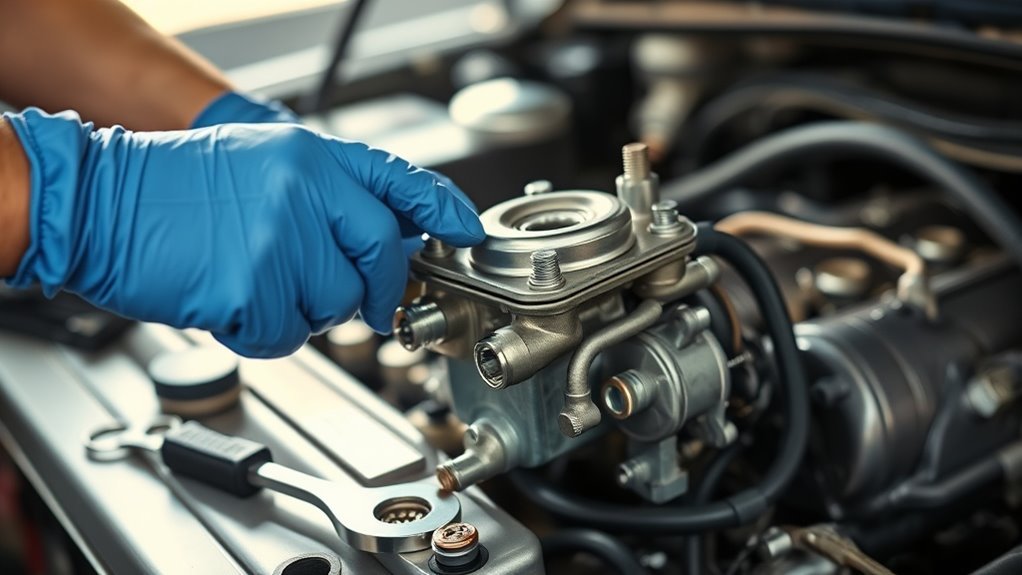
Tag: carburetor removal

  • How to Remove Carburetor

    How to Remove Carburetor

    To remove your carburetor, first gather the right tools like screwdrivers and wrenches that fit precisely. Make sure the engine is cool, then carefully disconnect fuel lines and linkages, noting their positions.

    Use a socket wrench to unbolt and lift the carburetor straight off to avoid damage. Catch any fuel spills and inspect the mounting surface for residue.

    After removal, you can clean, inspect, and troubleshoot common issues to restore proper function, with more detailed steps available ahead.

    Key Takeaways

    • Gather appropriate screwdrivers, wrenches, and pliers to fit carburetor bolts and prepare a clean workspace.
    • Ensure the engine is cool, depressurize fuel lines, and carefully disconnect fuel lines and linkages.
    • Use a socket wrench to remove mounting bolts and lift the carburetor straight up to avoid damage.
    • Place a rag underneath to catch fuel drips and inspect the mounting surface for residue or damage.
    • Organize removed parts systematically for easy reassembly and prevent loss or confusion.

    Gather Tools for Carburetor Removal

    To remove a carburetor efficiently, start by gathering the essential tools you’ll need for the job. Confirm you have a set of carburetor tools including screwdrivers, wrenches, socket sets, and pliers.

    Precision is vital; select tools that fit the carburetor’s bolts and screws exactly to avoid damage.

    Using precisely fitting tools prevents damage and ensures a smooth carburetor removal process.

    Review removal techniques specific to your carburetor model. Some require loosening mounting bolts first, while others need careful alignment adjustments.

    Prepare a clean workspace for organizing removed parts systematically.

    Additionally, having a carburetor cleaner and a container for small components will streamline the process.

    Safely Disconnect Carburetor Fuel Lines and Linkages

    Before disconnecting any fuel lines or linkages, make sure the engine is cool and the fuel system is depressurized to prevent fuel spray or fire hazards.

    Begin by identifying all fuel line connections to the carburetor.

    Use a wrench to carefully loosen clamps or fittings securing the fuel line, then gently pull the line free, avoiding kinks or damage.

    Next, locate the various linkage types, including throttle, choke, and governor linkages, that connect to the carburetor levers.

    Note their attachment points and orientations.

    Use appropriate tools to remove retaining clips or fasteners, then carefully disengage each linkage without forcing or bending components.

    Organize all removed parts methodically to guarantee correct reassembly later.

    This precise approach prevents damage and maintains system integrity throughout the carburetor removal process.

    Remove the Carburetor From Your Engine

    Once you’ve safely disconnected all fuel lines and linkages, you can proceed to unbolt the carburetor from the engine manifold. Proper removal guarantees effective carburetor maintenance and preserves engine performance.

    Safely disconnect fuel lines before unbolting the carburetor to ensure effective maintenance and optimal engine performance.

    Follow these steps carefully:

    1. Use the appropriate socket wrench to loosen and remove the mounting bolts securing the carburetor.
    2. Gently lift the carburetor straight up to avoid damaging the gasket or manifold surface.
    3. Place a clean rag or container beneath to catch any residual fuel or debris.
    4. Inspect the mounting surface for damage or residue before removing the carburetor completely.

    This methodical removal prevents harm to engine components and sets the foundation for thorough maintenance, which is crucial for optimizing engine performance.

    Inspect and Clean the Carburetor

    Start by carefully inspecting the carburetor for signs of wear, corrosion, or buildup that could impair its function.

    Focus on the throttle body, jets, and float bowl areas, as these commonly accumulate debris. Use a magnifying glass if needed to detect fine deposits.

    For carburetor maintenance, employ precise cleaning techniques such as soaking the parts in a carburetor cleaner solution to dissolve varnish and deposits.

    Avoid abrasive tools that might damage delicate components.

    After soaking, use compressed air to blow out clogged passages and verify all jets are clear.

    Re-examine the gaskets and seals for integrity, replacing any that appear brittle or cracked.

    Fix Common Problems After Removing Your Carburetor

    Although removing the carburetor exposes its components for inspection, you’ll often encounter common issues such as clogged jets, worn gaskets, or stuck floats that require immediate attention.

    To fix these problems effectively:

    1. Clean clogged jets using carburetor cleaner and compressed air to restore proper fuel flow.
    2. Replace worn gaskets to prevent air leaks that interfere with adjusting air fuel ratios.
    3. Inspect and free stuck floats to guarantee correct fuel level regulation.
    4. Troubleshoot idle by adjusting the idle screw and verifying smooth engine operation, correcting any irregularities.

    Carefully address each issue to maintain peak carburetor performance.

    Properly fixing these problems after removal guarantees reliable engine function and prevents future breakdowns.

    Frequently Asked Questions

    What Are Signs My Carburetor Needs Removal?

    You’ll notice carburetor symptoms like rough idling, poor engine performance, stalling, or hard starts. If your engine hesitates or floods frequently, it’s a precise sign you need to remove and inspect the carburetor immediately.

    Can I Remove a Carburetor Without Draining the Fuel Tank?

    You can remove a carburetor without draining the fuel tank, but 70% of fuel system clogs result from improper maintenance.

    Follow precise maintenance tips: disconnect fuel lines carefully, use clamps to prevent leaks, and work methodically to avoid spills.

    How Long Does Carburetor Removal Typically Take?

    Carburetor removal time typically ranges from 30 minutes to an hour, depending on your experience and vehicle complexity.

    The typical removal duration involves disconnecting linkages, fuel lines, and mounting bolts carefully to avoid damage.

    Are Specialized Tools Required for Carburetor Removal?

    You won’t usually need specialized carburetor tools; standard removal techniques rely on basic wrenches and screwdrivers. However, having carburetor-specific tools can streamline disassembly and prevent damage during removal.

    Will Removing the Carburetor Affect My Vehicle’s Warranty?

    Imagine your warranty coverage as a safety net. Removing the carburetor can void it if considered unauthorized vehicle modifications. Always review your warranty terms meticulously to avoid compromising protection through such mechanical changes.

    Conclusion

    By gathering the right gear and gracefully disconnecting fuel lines and linkages, you gain greater control over your carburetor. Removing and rigorously inspecting this vital component lets you catch common concerns early. Cleaning carefully and correcting complications guarantees consistent combustion and engine efficiency.

    Remember, methodical maintenance maximizes motor performance. With these steps, you’ll swiftly solve stubborn issues and ensure smooth, steady operation. Mastering the process of how to remove carburetor makes your mechanical work both manageable and meaningful.