Tag: anti-seize

  • Should You Put Anti Seize on Spark Plugs

    Should You Put Anti Seize on Spark Plugs

    You should use anti-seize on spark plugs mainly when installing them in aluminum cylinder heads or on steel-threaded plugs to prevent corrosion and galling. This helps ensure easier future removal and precise torque application.

    Avoid using anti-seize on plugs with nickel or plated threads, as it can lead to over-tightening. Apply a thin layer only to the external threads, making sure to avoid the electrodes.

    Following proper use of anti-seize extends spark plug life and makes maintenance easier. Understanding when and how to apply it can significantly improve your engine’s reliability.

    Key Takeaways

    • Use anti-seize on spark plugs installed in aluminum cylinder heads to prevent thread galling and corrosion.
    • Avoid anti-seize on plugs with nickel or plated threads to prevent over-torquing and potential damage.
    • Apply a thin, even layer only on external threads, avoiding electrodes and combustion chamber contamination.
    • Follow manufacturer guidelines carefully, as some spark plugs come pre-coated and do not need anti-seize.
    • Proper use of anti-seize aids future removal, maintains accurate torque, and extends spark plug and engine life.

    What Does Anti-Seize Do for Spark Plugs?

    Although spark plugs are designed to withstand high temperatures and pressures, applying anti-seize compound on their threads helps prevent galling and corrosion during installation and removal.

    When you apply anti-seize, you create a protective barrier that minimizes thread corrosion caused by heat cycles and exposure to combustion byproducts. This barrier guarantees that the spark plug threads don’t seize inside the cylinder head, making future removal easier and reducing the risk of damaging the threads.

    By preventing thread corrosion, anti-seize directly contributes to maintaining spark plug longevity, allowing you to replace or inspect plugs without complications.

    Proper application is key; use a thin, even layer to avoid over-tightening, which can damage the spark plug or cylinder head. This practical step safeguards your engine’s performance and facilitates maintenance.

    When Should You Use Anti-Seize on Spark Plugs?

    You should use anti-seize on spark plugs when installing them in aluminum cylinder heads to prevent galling and guarantee easy removal later.

    However, avoid applying anti-seize on plugs with nickel or plated threads, as it can cause over-torquing and damage.

    Understanding these benefits and limitations helps you apply anti-seize correctly for peak engine performance.

    Benefits Of Anti-Seize

    When installing spark plugs, applying anti-seize compound can prevent galling and seizing caused by heat and corrosion. This guarantees easier removal during future maintenance. This practice enhances spark plug longevity by reducing thread damage and preserving the integrity of the spark plug seat.

    Additionally, it supports consistent engine performance by maintaining proper torque and preventing misfires due to stuck plugs.

    Benefit Description Impact on Engine
    Corrosion Prevention Protects threads from rust and oxidation Facilitates spark plug removal
    Reduced Galling Minimizes metal-on-metal wear Guarantees accurate torque
    Improved Longevity Extends spark plug service life Maintains consistent firing
    Easier Maintenance Simplifies future spark plug replacement Saves time and labor
    Engine Efficiency Maintains proper heat dissipation Enhances overall performance

    When To Avoid

    While anti-seize compounds offer clear benefits, you should avoid using them on spark plugs that come pre-coated with a manufacturer-applied lubricant or anti-seize. Over-application can alter the torque specifications and lead to improper installation.

    Specifically, consider these cases:

    1. Spark plugs with nickel or plated threads. These materials resist seizing naturally, so additional anti-seize is unnecessary and may cause over-tightening.
    2. Thread types designed for specific torque. Adding anti-seize changes friction and can lead to inaccurate torque readings.
    3. When the manufacturer explicitly warns against its use. Always follow guidelines to prevent damage or warranty voidance.

    What Do Manufacturers Say About Using Anti-Seize?

    Several major spark plug manufacturers have issued clear guidelines regarding the use of anti-seize compounds. According to manufacturer recommendations, you generally don’t need to apply anti-seize on spark plugs made with nickel alloy threads because these materials are designed to resist galling and corrosion effectively on their own.

    However, some manufacturers suggest anti-seize application for spark plugs with steel or other less corrosion-resistant thread materials to prevent seizing in harsh environments.

    It’s essential to follow the specific instructions provided with your spark plugs, as improper use of anti-seize can alter thread torque and affect installation.

    Always check the manufacturer’s technical data sheet or installation guidelines related to your spark plug materials to verify compliance and maintain peak performance.

    How Anti-Seize Affects Spark Plug Torque

    Because anti-seize lubricates the threads of spark plugs, it directly influences the torque required during installation. When you apply anti-seize, you reduce friction between the spark plug materials and the cylinder head threads, which can lead to over-tightening if you follow standard torque specifications.

    To avoid this, consider these points:

    1. Adjust torque values: Lubricated threads need less torque to reach proper clamping force, so check if the manufacturer provides revised torque specs when using anti-seize.
    2. Material differences: Aluminum cylinder heads are more prone to thread damage, making torque precision essential when anti-seize is involved.
    3. Risk of over-torquing: Applying standard dry torque specs with anti-seize can cause excessive tightening, potentially damaging threads or the spark plug.

    Always verify torque specs specific to your spark plug materials when using anti-seize.

    How to Apply Anti-Seize Correctly on Spark Plugs

    You’ll want to start by selecting an anti-seize compound compatible with your spark plug material to prevent thread damage.

    Next, clean the spark plug threads thoroughly to remove debris and oils for maximum adhesion.

    Finally, apply a thin, even layer of anti-seize to the threads, avoiding the electrode and gasket areas to guarantee proper installation and torque accuracy.

    Choosing The Right Anti-Seize

    Selecting the right anti-seize compound guarantees proper protection and ease of future spark plug removal.

    Different anti-seize types offer varying performance based on their anti-seize materials.

    To choose correctly, consider these factors:

    1. Compatibility: Confirm the anti-seize is compatible with the spark plug’s metal and cylinder head material to prevent galvanic corrosion.
    2. Temperature Rating: Select a compound that withstands the engine’s operating temperature; some contain copper, aluminum, or nickel, each with distinct thermal tolerances.
    3. Application Purpose: Use nickel-based anti-seize for high-heat environments, aluminum-based for general automotive use, and copper-based when superior conductivity is needed.

    Preparing Spark Plug Threads

    Before applying anti-seize, thoroughly clean the spark plug threads to remove any dirt, oil, or old compound that could interfere with proper adhesion.

    Use a wire brush or thread chaser specifically designed for thread cleaning to restore the threads to their original condition without damaging them.

    After cleaning, wipe the threads with a solvent-soaked rag to eliminate residual debris and allow them to dry completely.

    Proper thread lubrication guarantees smooth installation and prevents galling or seizing during future maintenance.

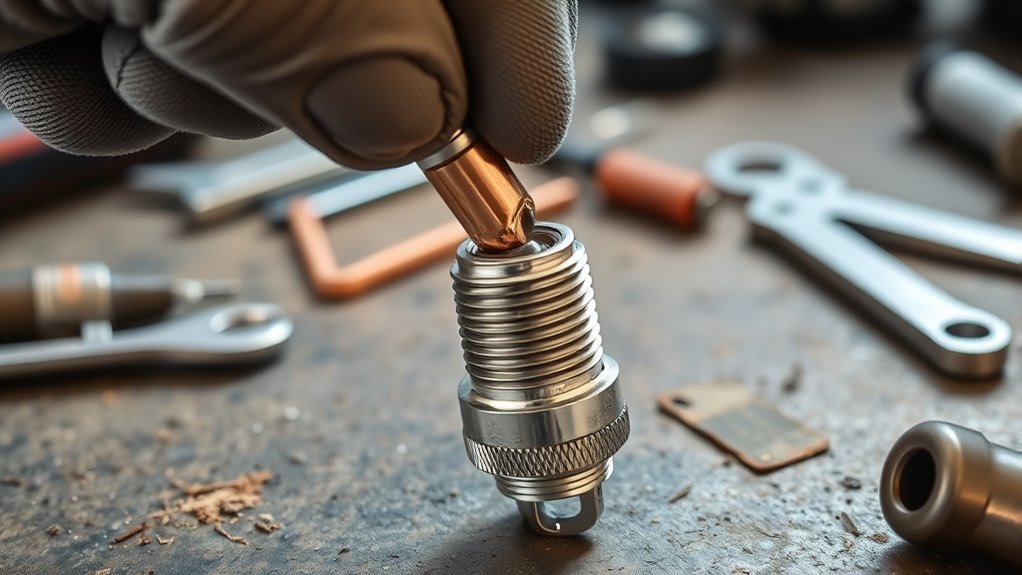
    Apply a thin, even layer of anti-seize compound only on the external threads of the spark plug.

    Avoid contaminating the electrode or firing end.

    Applying Anti-Seize Evenly

    Applying anti-seize evenly requires careful attention to the amount and distribution of the compound on the spark plug threads.

    You want to avoid excess that could contaminate the combustion chamber or insufficient coverage that defeats the purpose.

    Use these applying techniques for evenly distributing anti-seize:

    1. Apply a thin, consistent layer of anti-seize compound around the threads using a small brush or your finger, ensuring no gaps or thick spots.
    2. Rotate the spark plug slightly as you apply to spread the compound uniformly across all thread surfaces.
    3. Wipe away any excess compound from the spark plug base and electrode to prevent contamination.

    Risks of Using Anti-Seize Incorrectly

    Although anti-seize compounds can prevent spark plug threads from seizing, using them incorrectly can cause serious engine damage or inaccurate torque readings. Overapplying anti-seize increases the risk of overheating by altering heat dissipation. Improper installation can lead to stripped threads or uneven torque application.

    You must apply the correct amount evenly to maintain proper torque and avoid damaging the cylinder head.

    Risk Cause Consequence
    Overheating Excess anti-seize Engine knock or pre-ignition
    Torque inaccuracy Uneven application Loose or overtightened plugs
    Thread damage Improper installation Stripped threads, costly repairs
    Contamination Using wrong compound Corrosion or electrical issues
    Difficulty removing Excessive use Broken spark plugs

    Use anti-seize carefully to prevent these issues and guarantee engine reliability.

    Alternatives to Anti-Seize for Preventing Spark Plug Seizure

    When you want to prevent spark plug seizure without using anti-seize, several reliable alternatives exist that maintain thread integrity and accurate torque.

    First, many spark plugs come with specialized spark plug coatings, such as nickel or platinum, designed to reduce corrosion and galling.

    Many spark plugs feature nickel or platinum coatings to minimize corrosion and prevent thread galling.

    Second, you can apply dedicated thread lubricants formulated specifically for high-temperature engine environments; these guarantee smooth installation without altering torque specs.

    Third, using dielectric grease on the spark plug threads can prevent moisture ingress and oxidation, which are common causes of seizing.

    Each of these methods offers a practical solution that avoids the potential risks of conventional anti-seize compounds, assuring you achieve proper torque and easy removal during maintenance.

    Choosing the right alternative depends on your engine type and manufacturer recommendations.

    How to Tell If Your Spark Plugs Are Seized or Need Replacement

    Preventing spark plug seizure is important, but knowing how to recognize seized plugs or those needing replacement can save you time and engine damage.

    Begin with a thorough spark plug inspection: look for signs like difficulty in removal, damaged threads, or corrosion, which indicate seizure.

    Replacement signs include worn electrodes, heavy carbon deposits, or cracked insulators. If you notice your engine misfires, reduced fuel efficiency, or rough idling, these symptoms often correlate with faulty spark plugs.

    During inspection, use a torque wrench to avoid over-tightening, which can cause seizure. If a plug resists removal or shows physical damage, replace it promptly to prevent cylinder head damage.

    Regular spark plug inspection and recognizing replacement signs help maintain engine performance and avoid costly repairs.

    Frequently Asked Questions

    Can Anti-Seize Affect Spark Plug Gap or Performance?

    Anti-seize application won’t directly affect spark plug gap or performance, but excessive use can alter torque, impacting spark plug longevity.

    You should apply it carefully to guarantee proper fit without compromising function or lifespan.

    Does Anti-Seize Cause Corrosion on Spark Plug Threads?

    No, anti-seize doesn’t cause corrosion on spark plug threads; instead, it enhances thread lubrication, preventing galling and seizing.

    This practice promotes spark plug longevity by ensuring easier removal and maintaining proper thread condition over time.

    Is Anti-Seize Necessary for All Types of Spark Plugs?

    Wondering if anti-seize suits all spark plug types? It doesn’t. Some plugs come pre-coated, so applying it again risks over-tightening. Master proper application techniques by checking manufacturer specs to protect threads without compromising performance or warranty.

    How Often Should Spark Plugs Be Cleaned if Anti-Seize Is Used?

    You should clean spark plugs every 30,000 to 50,000 miles during routine spark plug maintenance. Using anti-seize doesn’t change the cleaning frequency but helps prevent thread damage and seizure for easier future removal.

    Can Anti-Seize Improve Spark Plug Removal in Marine Engines?

    Like a lifesaver in rough seas, anti-seize eases spark plug removal in marine engine applications. It prevents corrosion and galling, streamlining spark plug maintenance and ensuring you won’t wrestle stubborn plugs when service time comes.

    Conclusion

    So, should you put anti-seize on spark plugs? It depends on the type of spark plugs you have and the manufacturer’s recommendations. Anti-seize can help prevent the threads from sticking and make future removal easier.

    However, using anti-seize affects torque readings, which can lead to over-tightening and potential damage. If you decide to apply it, use it sparingly and adjust the torque settings accordingly.

    Otherwise, it’s best to rely on proper installation techniques and quality spark plugs to avoid any thread seizure. When considering whether to put anti-seize on spark plugs, following the manufacturer’s guidelines is always the safest choice.