Tag: 4-cylinder engine

  • How Many Spark Plugs Are in a 4 Cylinder Engine

    How Many Spark Plugs Are in a 4 Cylinder Engine

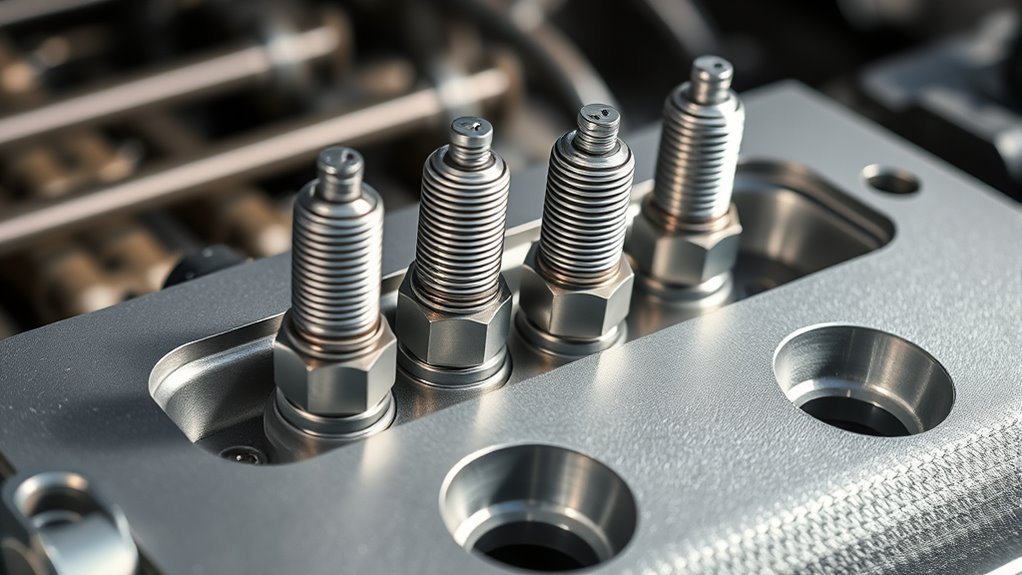
    You’ll find that a typical 4-cylinder engine has four spark plugs—one for each cylinder. Understanding how many spark plugs are in a 4 cylinder engine is essential for grasping its ignition system. Each plug precisely ignites the air-fuel mix within its cylinder, ensuring efficient combustion and smooth performance.

    While some engines might use dual spark plugs per cylinder for enhanced efficiency and emissions control, the standard setup is a single plug per cylinder.

    Understanding spark plug configurations and their impact can help you optimize your engine’s performance and maintain it effectively.

    Key Takeaways

    • A typical 4-cylinder engine has four spark plugs, one for each cylinder.
    • Some engines use dual spark plugs per cylinder, doubling the total to eight.
    • Single spark plug setups are simpler and more cost-effective for 4-cylinder engines.
    • Dual spark configurations improve combustion efficiency and reduce emissions in some models.
    • The exact number depends on the engine design and ignition system used.

    How Many Spark Plugs Does a 4-Cylinder Engine Have?

    A 4-cylinder engine typically has four spark plugs, with one spark plug dedicated to each cylinder. You’ll find various spark plug types designed to match specific engine requirements, including copper, platinum, and iridium.

    Each type offers different performance characteristics and longevity, so selecting the correct one is crucial for peak engine function.

    Choosing the right spark plug type ensures optimal performance and durability for your engine.

    When performing spark plug maintenance, you should regularly check for wear, deposits, and proper gap settings to guarantee efficient combustion and prevent misfires.

    Using the right spark plug type and adhering to maintenance schedules helps maintain engine efficiency and prolongs spark plug life.

    Understanding these factors allows you to keep your 4-cylinder engine running smoothly and reliably over time.

    Why Does Each Cylinder Need Its Own Spark Plug?

    You need a separate spark plug for each cylinder to guarantee precise ignition timing tailored to each combustion chamber.

    This setup promotes efficient combustion, maximizing fuel burn and power output.

    It also maintains consistent engine performance by preventing misfires and uneven power delivery.

    Individual Ignition Timing

    Each cylinder in a 4-cylinder engine requires its own spark plug to guarantee precise ignition timing tailored to its specific combustion cycle.

    You need individual ignition timing because each cylinder operates independently, firing at different intervals within the engine’s cycle.

    By having separate spark plugs, you can control the exact moment each cylinder ignites its air-fuel mixture, enhancing combustion efficiency.

    This precise ignition timing is vital for performance tuning, allowing you to adjust spark advance or retard for each cylinder based on load, speed, and temperature variations.

    Without individual spark plugs, you’d lose the ability to fine-tune each cylinder’s timing, resulting in reduced engine efficiency, misfires, and lower overall performance.

    Individual spark plugs consequently guarantee accurate, cylinder-specific control essential for peak engine operation.

    Efficient Combustion Process

    Precise ignition timing depends on individual spark plugs, but the core reason for equipping each cylinder with its own spark plug lies in achieving an efficient combustion process. When each cylinder receives a dedicated spark, combustion efficiency improves, optimizing fuel economy by ensuring complete fuel burn. This precise ignition prevents misfires and uneven fuel consumption.

    Aspect Single Spark Plug per Cylinder Shared Spark Plug
    Combustion Efficiency High Reduced
    Fuel Economy Optimized Lower
    Maintenance Complexity Moderate Simplified

    You rely on each spark plug to initiate combustion at the right moment, maximizing power output and minimizing wasted fuel. This setup is fundamental to modern 4-cylinder engine design.

    Engine Performance Consistency

    Because consistent engine performance hinges on uniform combustion across all cylinders, equipping each cylinder with its own spark plug is essential. Each spark plug delivers a precise ignition spark, ensuring that combustion timing and intensity are consistent.

    If one cylinder shares a spark plug or experiences ignition delays, it disrupts the engine’s balance, reducing overall efficiency and power output. This consistency is critical when you perform engine tuning or implement performance upgrades, as precise spark control directly affects fuel combustion and emissions.

    By maintaining individual spark plugs, you guarantee that each cylinder fires efficiently, supporting smoother operation, better throttle response, and improved horsepower.

    Ultimately, this setup enables you to maximize your engine’s potential while preserving reliability and minimizing misfires.

    Single vs. Dual Spark Plugs in 4-Cylinder Engines: What’s the Difference?

    When comparing single and dual spark plug configurations in 4-cylinder engines, you’ll notice key differences in combustion efficiency and engine performance.

    A single spark setup uses one spark plug per cylinder, igniting the air-fuel mixture at a single point. This design is simpler and cost-effective but may result in slower, less uniform combustion.

    Single spark plugs ignite fuel at one point, offering simplicity and cost savings but slower combustion.

    In contrast, a dual spark system employs two spark plugs per cylinder, allowing simultaneous ignition at two points. This enhances flame propagation speed, reduces emissions, and improves fuel efficiency by achieving more complete combustion.

    While dual spark setups increase complexity and maintenance, they provide superior combustion control.

    Understanding these distinctions helps you appreciate how each system impacts engine responsiveness and overall efficiency without deciding which is best for your specific engine needs.

    Which Spark Plug Setup Is Best for Your 4-Cylinder Engine?

    How do you determine the ideal spark plug setup for your 4-cylinder engine? Start by evaluating your engine’s ignition system and performance needs.

    Modern ignition systems often benefit from single spark plug setups made with advanced spark plug materials like iridium or platinum, which offer durability and consistent sparks.

    Dual spark plug configurations can enhance combustion efficiency but require compatible ignition systems and precise tuning.

    Consider your engine’s design and operating conditions; high-performance or turbocharged 4-cylinder engines sometimes gain from dual plugs to maximize combustion and reduce emissions.

    However, for standard engines, a single spark plug setup using high-quality materials usually provides reliable ignition and maintenance ease.

    Ultimately, matching spark plug materials with your ignition system guarantees peak performance and longevity.

    How Spark Plug Count Affects Engine Performance and Efficiency

    You’ll find that increasing the number of spark plugs can improve combustion efficiency, boosting engine power.

    However, adding more plugs also raises complexity and fuel consumption, creating a tradeoff between performance and efficiency.

    Understanding this balance helps you optimize your 4-cylinder engine’s setup for your specific needs.

    Spark Plug Quantity Impact

    Although the number of spark plugs in a 4-cylinder engine might seem fixed, variations can greatly influence engine performance and efficiency. Increasing the spark plug quantity, such as using dual plugs per cylinder, can enhance combustion by promoting more complete fuel burn, which improves power output and reduces emissions.

    However, this also impacts spark plug lifespan since more plugs require more frequent engine maintenance to prevent fouling and guarantee peak ignition timing.

    Conversely, a single spark plug setup simplifies maintenance and lowers replacement costs but may limit combustion efficiency.

    Understanding how spark plug quantity affects your engine helps balance performance demands with maintenance schedules, making sure you maximize both operational efficiency and component longevity.

    Properly managing spark plug lifespan is essential for sustained engine health in any configuration.

    Efficiency and Power Tradeoff

    Adjusting the number of spark plugs in a 4-cylinder engine directly influences both power output and fuel efficiency, creating a balance you need to manage carefully. Increasing spark plug count can improve combustion uniformity, enhancing power optimization but may reduce fuel efficiency due to added complexity and increased electrical load.

    Conversely, fewer plugs simplify the system and boost fuel efficiency but might compromise peak power.

    Spark Plug Count Performance Impact
    4 (Standard) Balanced power & efficiency
    6 Improved power optimization
    8 Maximum power, lower efficiency
    2 Higher fuel efficiency
    1 Reduced power, max efficiency

    Understanding this tradeoff helps you optimize engine tuning for desired performance and fuel economy.

    Signs Your 4-Cylinder Spark Plugs Need Replacing

    How can you tell when your 4-cylinder engine’s spark plugs need replacing? Monitoring the spark plug lifespan is essential to maintaining peak engine performance.

    Worn or fouled plugs often cause engine misfire, reducing fuel efficiency and power. You should watch for these signs indicating replacement is necessary:

    • Difficulty starting the engine or rough idling
    • Noticeable decrease in fuel economy
    • Engine misfire or hesitation during acceleration
    • Increased exhaust emissions or unusual engine noises

    Ignoring these symptoms can lead to more severe engine issues.

    Regular inspection and timely replacement guarantee your 4-cylinder engine runs smoothly, preserving both efficiency and power output.

    Stay proactive to avoid costly repairs and maintain your vehicle’s reliability.

    How to Find and Identify Spark Plugs in Your 4-Cylinder Engine

    To find the spark plugs in your 4-cylinder engine, locate the ignition coils or wires running along the top of the engine block.

    Identify the spark plug type by checking the manufacturer’s specifications or inspecting the plug design directly.

    You’ll need a spark plug socket, ratchet, and extension to safely remove and inspect them.

    Locating Spark Plug Positions

    Although spark plugs are essential components in your 4-cylinder engine, locating their exact positions can sometimes be challenging due to engine design variations.

    Understanding the spark plug arrangement and cylinder layout helps you identify where each plug sits. Typically, spark plugs are positioned on the cylinder head, with one plug per cylinder in a standard 4-cylinder setup.

    To locate them efficiently:

    Open the engine bay and locate the engine cover, if present. Identify the cylinder head, the top part of the engine block. Look for ignition coils or spark plug wires connected to the plugs. Follow the spark plug wires or coil packs to their base on the cylinder head.

    This process helps you find each spark plug’s position accurately without guesswork.

    Identifying Spark Plug Types

    Where exactly can you find the spark plug specifications on your 4-cylinder engine? Typically, this information is located in the vehicle’s owner manual or on the engine’s service sticker under the hood.

    Identifying spark plug types involves examining both spark plug materials and spark plug designs. Common materials include copper, platinum, and iridium, each affecting durability and performance.

    Designs vary by electrode configuration, thread length, and heat range, tailored to enhance ignition efficiency. You can also inspect the existing spark plugs directly; their part numbers usually indicate the type and specifications.

    Understanding these details guarantees you select plugs compatible with your engine’s requirements, maintaining peak combustion and engine function.

    Accurate identification prevents premature wear and maximizes fuel efficiency.

    Tools Needed For Removal

    Knowing the exact spark plug type and location on your 4-cylinder engine helps you prepare the correct tools for removal.

    Using proper spark plug tools guarantees you avoid damage during removal and apply the right removal techniques. Typically, you’ll need specialized equipment to access and extract the plugs efficiently.

    Essential spark plug tools include:

    • A spark plug socket with rubber insert to grip and protect the plug
    • A ratchet wrench for controlled torque application
    • An extension bar to reach recessed plugs
    • A spark plug gap gauge to verify plug specifications upon removal

    With these tools, you can safely and effectively remove spark plugs, minimizing the risk of stripping threads or damaging electrodes.

    Proper preparation streamlines the removal process and protects your engine components.

    How to Safely Remove and Replace Spark Plugs in a 4-Cylinder Engine

    Before you start removing spark plugs from your 4-cylinder engine, confirm the engine is completely cool to prevent burns and avoid damaging the threads.

    Follow essential safety precautions: disconnect the battery to avoid electrical shocks and wear gloves to protect your hands.

    Use a spark plug socket with an extension and ratchet for proper leverage. When loosening each spark plug, apply steady torque counterclockwise using controlled removal techniques to prevent stripping the threads.

    After removal, inspect the spark plugs for wear or deposits.

    When installing new plugs, hand-thread them first to avoid cross-threading, then tighten to the manufacturer’s specified torque using a torque wrench.

    Reconnect the ignition wires or coil packs carefully.

    Observing these steps guarantees safe, effective spark plug replacement and maintains engine performance.

    Best Spark Plug Types for 4-Cylinder Engines

    After safely removing and inspecting your spark plugs, choosing the right type for your 4-cylinder engine becomes important to secure peak performance and longevity.

    Focus on spark plug materials and reputable spark plug brands to maximize efficiency.

    Common spark plug materials include copper, platinum, and iridium, each offering distinct benefits.

    Consider these factors when selecting:

    • Copper plugs provide excellent conductivity but wear faster.
    • Platinum plugs offer longer life and better heat resistance.
    • Iridium plugs combine durability with superior ignition performance.
    • Trusted spark plug brands guarantee quality manufacturing and reliable specifications.

    Selecting the appropriate material and brand tailored to your engine’s design optimizes combustion, fuel efficiency, and engine smoothness.

    Always consult your vehicle’s manual to match spark plug heat range and gap specifications for the best results.

    How Often Should You Change Spark Plugs in a 4-Cylinder Engine?

    How often should you change spark plugs in a 4-cylinder engine to maintain peak performance? Typically, the spark plug lifespan ranges between 30,000 to 100,000 miles, depending on the type—copper, platinum, or iridium.

    To optimize engine efficiency and fuel economy, adhere to the manufacturer’s recommended replacement interval found in your vehicle’s manual. Regularly inspect spark plugs during routine maintenance to identify signs of wear, such as electrode erosion or carbon buildup.

    Maintenance tips include checking gap size and guaranteeing proper torque during installation to avoid misfires or engine hesitation.

    Keeping spark plugs within specification helps maintain consistent combustion and prevents performance degradation.

    Frequently Asked Questions

    Can Spark Plugs Affect Fuel Economy in a 4-Cylinder Engine?

    Yes, spark plug maintenance directly impacts fuel efficiency in your 4-cylinder engine. Worn or fouled plugs cause misfires, reducing combustion effectiveness and increasing fuel consumption.

    Regular inspection guarantees peak engine performance and better fuel economy.

    What Tools Are Needed to Change Spark Plugs?

    You’ll need a spark plug socket, ratchet wrench, and extension, your essential maintenance tools to conquer spark plug replacement. Don’t forget a gap gauge for precision and anti-seize lubricant to guarantee smooth installation and peak engine performance.

    How Do Spark Plugs Differ Between Gasoline and Diesel Engines?

    You’ll find spark plug types only in gasoline engines, where they ignite the fuel-air mixture during engine combustion. Diesel engines don’t use spark plugs; they rely on compression for combustion initiation instead.

    Can Faulty Spark Plugs Cause an Engine to Stall?

    Yes, faulty spark plugs can cause your engine to stall. Regular spark plug maintenance guarantees peak engine performance by preventing misfires, improving combustion, and maintaining smooth operation.

    Neglecting this can lead to engine hesitation and stalling.

    Are Spark Plug Wires Necessary for Modern 4-Cylinder Engines?

    You might think spark plug wires are obsolete, but in many modern 4-cylinder engines, they’re still essential for spark plug maintenance and a reliable ignition system. However, some use coil-on-plug setups eliminating those wires.

    Conclusion

    Think of your 4-cylinder engine’s spark plugs like the four legs of a sturdy table—each one essential for balance and performance. Skipping on maintenance is like removing a leg; the engine stumbles and loses efficiency.

    With one spark plug per cylinder, or sometimes two for extra precision, you guarantee smooth combustion and peak power. Regularly checking and replacing spark plugs keeps your engine running reliably, just like tightening those table legs keeps it steady and strong.

    In conclusion, knowing how many spark plugs are in a 4 cylinder engine is key to proper maintenance and ensuring your vehicle runs smoothly.