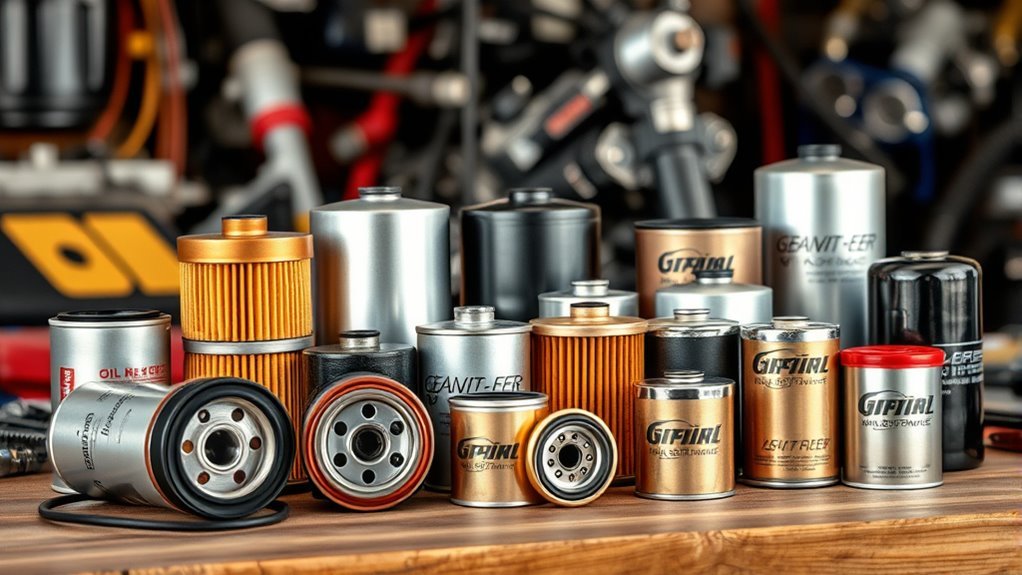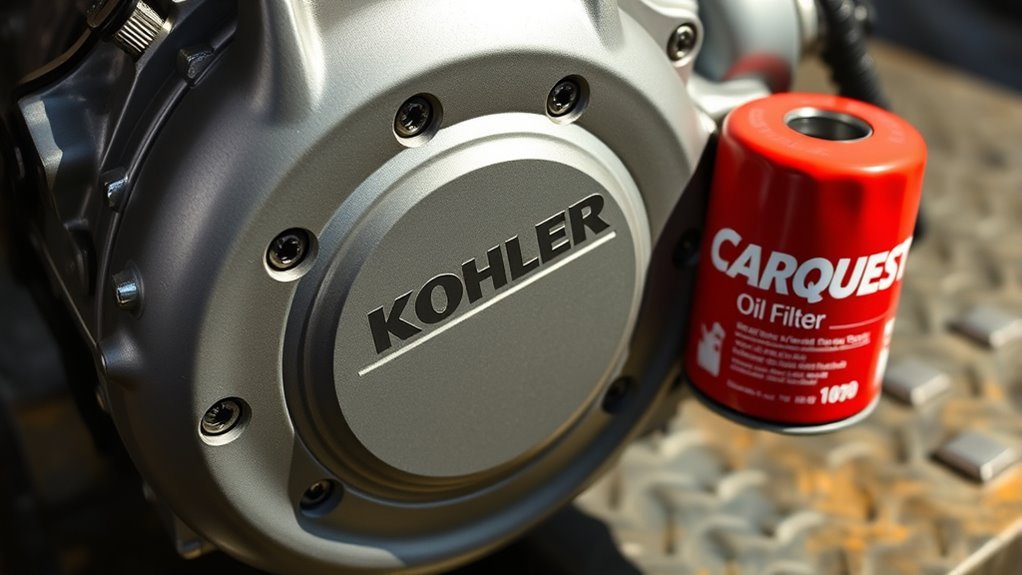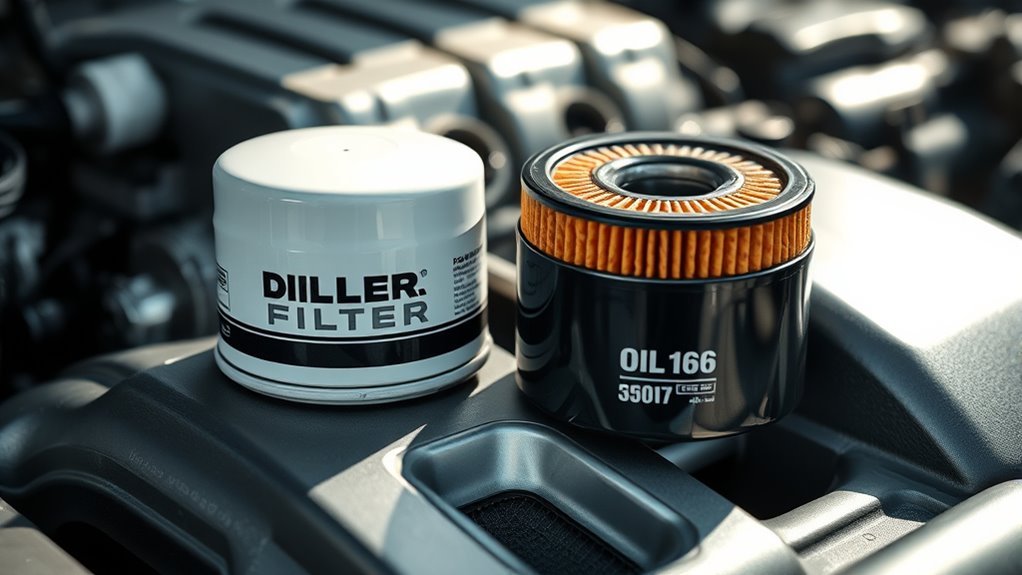
Yes, oil filter brand matters because it directly impacts your engine’s protection and performance. Choosing the right oil filter brand ensures that your engine receives clean, well-filtered oil, which is essential for its longevity.
High-quality brands use advanced media that trap microscopic contaminants without restricting oil flow, guaranteeing clean oil lubricates essential parts. Inferior brands may fail to filter effectively or cause leaks, risking engine damage.
Selecting a trusted or OEM filter ensures compatibility, durability, and consistent filtration. This choice helps prolong engine life and maintain warranty compliance. Understanding these factors helps you make the best choice for your vehicle.
Key Takeaways
- Oil filter brand impacts engine longevity by varying filtration efficiency and particle retention quality.
- Trusted brands ensure reliable performance, reducing risks of premature filter failure or oil flow restriction.
- Premium filters use advanced media to trap finer contaminants, protecting engine components better than generic options.
- OEM filters guarantee exact fit and optimized design, enhancing compatibility and maintaining vehicle warranty compliance.
- Choosing reputable brands balances cost with long-term engine health and lower maintenance expenses.
Does the Oil Filter Brand Really Matter?
Why should you care about the brand of your oil filter? Because filter effectiveness varies considerably across manufacturers, impacting your engine’s longevity and performance.
When you choose a reputable brand, you’re selecting a filter that meets stringent quality standards, ensuring ideal particle retention and flow rates.
This precision in filtration protects engine components from wear caused by contaminants. Brand loyalty often stems from consistent product reliability and proven performance data, which you can verify through industry certifications and independent testing results.
Opting for a trusted brand reduces the risk of premature filter failure or oil starvation.
Ultimately, your choice influences maintenance intervals and engine health, making brand selection a critical factor rather than a mere preference.
What Does an Oil Filter Do?
An oil filter plays an essential role in your engine’s lubrication system by trapping contaminants such as dirt, metal particles, and carbon deposits before they circulate through the engine.
The oil filter function is to guarantee that only clean oil lubricates moving components, minimizing wear and maintaining peak engine performance.
By capturing these impurities, the filter prevents abrasion and corrosion that could compromise engine longevity.
Effective filter maintenance is vital; neglecting it allows contaminants to bypass or clog the filter, reducing oil flow and risking engine damage.
Regular replacement according to manufacturer guidelines sustains filtration efficiency, assuring that the oil remains clean and your engine operates smoothly.
Understanding this function helps you appreciate why timely filter maintenance is essential for engine health.
Why Oil Filter Quality Matters
Because your engine relies on consistent oil cleanliness, choosing a high-quality oil filter directly impacts its performance and longevity.
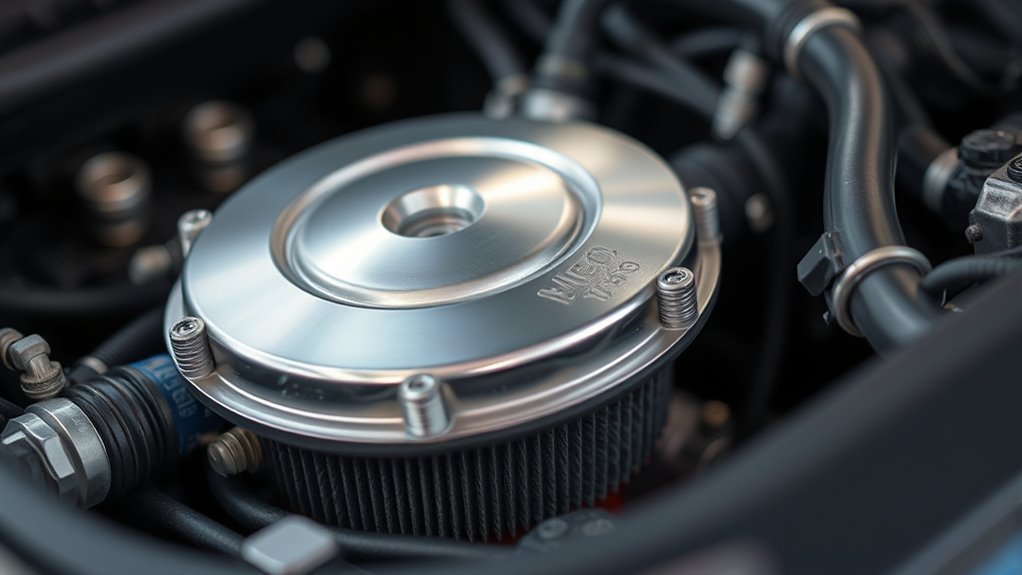
The oil filter construction determines its ability to trap contaminants effectively without restricting oil flow. Premium filters use advanced filtration media designed to capture microscopic particles, preventing abrasive wear on engine components.
Inferior filters often use substandard media that allow debris to pass, accelerating engine deterioration. Furthermore, robust construction guarantees the filter withstands pressure fluctuations and thermal cycles without collapsing or leaking.
When you select a filter with superior filtration media and solid construction, you maintain ideal oil viscosity and cleanliness, which reduces friction and wear.
Essentially, oil filter quality is a critical factor in safeguarding your engine’s operational integrity and extending its service life.
Can Cheap Oil Filters Harm Your Engine?
While choosing a high-quality oil filter improves engine protection, opting for cheap filters can introduce significant risks.
Cheap oil filter risks primarily stem from inferior materials and substandard manufacturing processes, which can compromise filtration efficiency and structural integrity.
When you use a low-quality filter, contaminants may bypass the filter media, increasing the engine damage potential by accelerating wear on critical components like bearings and camshafts.
Additionally, cheap filters often have weaker seals and housings, risking leaks or catastrophic failure under pressure.
This can lead to oil starvation, causing severe engine damage or even total failure.
To minimize engine damage potential, you need to prioritize reputable brands that adhere to industry standards, ensuring reliable filtration and durable construction.
Choosing cheap filters may save money initially but can cost you much more in repairs.
How Oil Filters Differ in Filtration
Even though oil filters may look similar externally, they differ considerably in their filtration capabilities, which directly impacts engine longevity and performance.
When evaluating these differences, you should focus on:
- Filtration efficiency: how effectively the filter media traps contaminants without restricting oil flow.
- Filter media composition: synthetic fibers, cellulose, or blends affect particle capture and durability.
- Micron rating: the smallest particle size the filter can capture; lower micron ratings mean finer filtration.
- Dirt-holding capacity: how much debris the filter can retain before clogging, influencing filter lifespan.
Which Brands Do Mechanics Trust?
You want to choose oil filter brands that mechanics consistently recommend for their proven reliability and performance.
Trusted brands withstand rigorous testing and maintain engine protection under varying conditions.
Understanding which names dominate professional preferences helps you make an informed decision for ideal engine care.
Top Brands Recommended
Several top oil filter brands consistently earn the trust of professional mechanics due to their proven filtration efficiency and durability.
If you want reliable filter performance, consider these top oil filters known for rigorous testing and quality materials:
1. Mobil 1
Excels in synthetic media filtration, guaranteeing superior contaminant capture.
2. Bosch
Combines advanced pleat design with robust construction for consistent flow rates.
3. K&N
Features high-capacity synthetic media, enhancing dirt-holding capacity without sacrificing flow.
4. Fram
Offers solid filtration at a competitive price, favored for everyday driving conditions.
Choosing among these brands guarantees you get precise filtration and durability aligned with manufacturer standards, essential for maintaining engine longevity and optimal functionality.
Reliability and Performance
Although numerous brands claim high filtration standards, mechanics consistently rely on a select few for their proven reliability and performance under demanding conditions. You’ll find that trusted brands excel in filter longevity, ensuring adherence to strict maintenance schedules without compromising engine protection.
Their media composition and construction quality directly impact contaminant retention and flow rates, critical to engine health.
| Brand | Filter Longevity (miles) | Recommended Maintenance (miles) |
|---|---|---|
| Brand A | 10,000 | 7,500 |
| Brand B | 12,000 | 7,500 |
| Brand C | 9,000 | 7,000 |
Does Brand Reputation Affect Oil Filters?
You’ll find that brand reputation directly influences the perceived reliability of oil filters due to consistent quality standards.
When a brand maintains stringent manufacturing controls, it reduces variability in filter performance.
Evaluating how trust correlates with these quality consistency factors helps you make informed decisions.
Impact of Brand Trust
Trust plays an essential role when selecting oil filters, as brand reputation often reflects consistent product quality and reliability.
When you rely on a reputable brand, you tap into established brand loyalty, which indicates proven performance and durability.
Consumer perception directly influences your confidence in a filter’s efficiency and its ability to protect your engine.
Consider these factors that shape the impact of brand trust:
- Historical performance data supporting filter efficacy
- Transparent manufacturing standards and certifications
- Positive user reviews reinforcing consumer perception
- Brand commitment to innovation and quality assurance
Quality Consistency Factors
Brand reputation often signals more than just consumer confidence; it can directly influence the consistency of oil filter quality you receive. Established brands typically enforce stringent quality control protocols, ensuring uniformity in filter materials and manufacturing processes.
This consistency translates to predictable performance ratings, reducing variability between filter batches. When you choose a reputable brand, you minimize the risk of encountering subpar filters with compromised filtration efficiency or structural integrity.
Conversely, lesser-known brands may exhibit fluctuations in raw material quality or assembly standards, leading to inconsistent performance in real-world conditions.
As a result, brand reputation serves as a proxy for quality consistency, allowing you to rely on the filter’s ability to meet specified performance metrics repeatedly, safeguarding your engine’s longevity and operational efficiency.
Key Features to Look for When Choosing an Oil Filter
Although selecting an oil filter may seem straightforward, evaluating specific technical features guarantees peak engine performance and longevity. You need to scrutinize key aspects to confirm ideal filtration and fit.
- Filter Material: Choose materials with high contaminant-trapping efficiency, such as synthetic fibers, to enhance durability and filtration capacity.
- Filter Size: Verify the filter size matches your engine specifications; an incorrect size compromises sealing and oil flow.
- Bypass Valve: Verify the presence and quality of a bypass valve to maintain oil flow under extreme conditions without unfiltered oil circulating.
- Anti-Drain Back Valve: Opt for a reliable valve to prevent oil drainage when the engine is off, confirming immediate lubrication upon startup.
Assess these features precisely to maximize engine protection and performance.
Are OEM Oil Filters the Best Choice?
You’ll find OEM oil filters match exact engine specifications, ensuring ideal compatibility and performance.
However, their cost often exceeds aftermarket options, so you need to weigh price against quality carefully.
Evaluating whether OEM filters truly deliver superior filtration and durability is essential before making a choice.
OEM Filter Quality
When evaluating oil filters, taking into account OEM quality is essential because these filters are designed specifically for your vehicle’s engine requirements.
OEM filter advantages include tailored filtration media, optimized bypass valves, and precise construction tolerances, ensuring consistent performance under your engine’s operating conditions.
You’ll also benefit from OEM filter longevity, as these filters undergo rigorous testing to meet stringent durability standards.
Here are four key points to take into account:
- Filtration efficiency matched to engine specifications
- Material quality engineered for extended service intervals
- Compatibility with OEM engine oil flow rates and pressure
- Manufacturer-backed performance validation and warranty support
Choosing an OEM filter means you’re relying on a component engineered for reliability and efficiency, minimizing wear and maximizing engine protection over time.
Compatibility With Engines
Since oil filters must operate seamlessly within your engine’s design parameters, compatibility becomes a critical factor in selecting the right filter. You need filters that strictly adhere to engine specifications to guarantee peak performance and avoid potential damage. OEM oil filters are designed with exact filter compatibility in mind, aligning precisely with your vehicle’s engineering requirements.
| Engine Type | OEM Filter Compatibility | Aftermarket Filter Compatibility | Notes |
|---|---|---|---|
| Gasoline Inline-4 | High | Variable | OEM guarantees exact fit |
| V6 Turbocharged | High | Moderate | Some aftermarket fit issues |
| Diesel V8 | High | Low | OEM preferred for durability |
| Hybrid Systems | High | Moderate | OEM recommended for specs |
Matching filters to engine specifications prevents inefficiencies and protects engine integrity.
Cost Versus Performance
Although OEM oil filters often come with a higher upfront cost, they deliver consistent performance aligned with your engine’s exact specifications.
When conducting a cost analysis and performance comparison, you’ll find that OEM filters often justify their price through reliability and longevity.
Here’s what to take into account:
- Filtration Efficiency – OEM filters meet stringent standards tailored to your engine’s needs.
- Durability – They withstand high pressure and temperature fluctuations better than many aftermarket options.
- Warranty Compliance – Using OEM parts helps maintain your vehicle’s warranty.
- Long-term Cost – Reduced risk of engine wear can lower repair expenses over time.
Balancing these factors, OEM filters often represent the best choice despite their initial cost, ensuring peak engine protection and performance.
When to Switch Your Oil Filter Brand
Deciding to switch your oil filter brand hinges on evaluating performance metrics such as filtration efficiency, flow rate, and durability under specific operating conditions.
If your current filter exhibits decreased filtration efficiency or compromised flow rates, it’s a clear signal to reconsider your choice.
Regular oil filter maintenance records help identify performance degradation linked to brand-specific issues.
Tracking maintenance records reveals brand-specific filter performance issues before they impact engine health.
While brand loyalty often influences your choice, relying solely on it can overlook advancements in filtration technology or changes in engine requirements.
You should also monitor manufacturer recalls or reported failures that may affect long-term reliability.
When you notice consistent underperformance or compatibility issues despite proper maintenance, switching brands becomes not just advisable but necessary to guarantee ideal engine protection and longevity.
Frequently Asked Questions
How Often Should I Replace My Oil Filter?
You should replace your oil filter every oil change frequency recommended by your vehicle manufacturer, typically every 3,000 to 7,500 miles.
Regular filter maintenance tips include checking for clogging and ensuring proper installation to optimize engine performance.
Can I Use the Same Oil Filter for Different Car Models?
You can’t always use the same oil filter for different car models due to cross compatibility issues. Always check filter specifications like size, thread pitch, and filtration efficiency to guarantee proper fit and engine protection.
What Is the Cost Difference Between Premium and Budget Oil Filters?
You might be shocked by the cost comparison: premium oil filters often cost 2-3 times more than budget ones. But that price difference reflects superior filter performance, durability, and enhanced engine protection, worth every extra penny, really.
Are Reusable Oil Filters Worth Buying?
You’ll find reusable oil filters worth buying due to reusable benefits like reduced waste and cost savings over time. They minimize environmental impact by cutting disposable filter use, but guarantee proper maintenance to maintain filtration efficiency and engine protection.
How Do I Properly Dispose of Used Oil Filters?
Don’t beat around the bush. Drain your used oil filters completely to prevent filter contamination, then take them to an oil recycling center. Proper disposal guarantees hazardous waste is handled safely and supports environmental protection efforts.
Conclusion
You might wonder if oil filter brand really impacts your engine’s health. After examining filtration efficiency, build quality, and brand reputation, it’s clear that not all filters perform equally.
Choosing a reputable brand often means better contaminant removal and engine protection. While budget options exist, compromising on filter quality can risk engine wear.
So, when it’s time to replace your oil filter, prioritize proven performance over price to safeguard your vehicle’s longevity. Ultimately, the oil filter brand does matter for maintaining engine health.