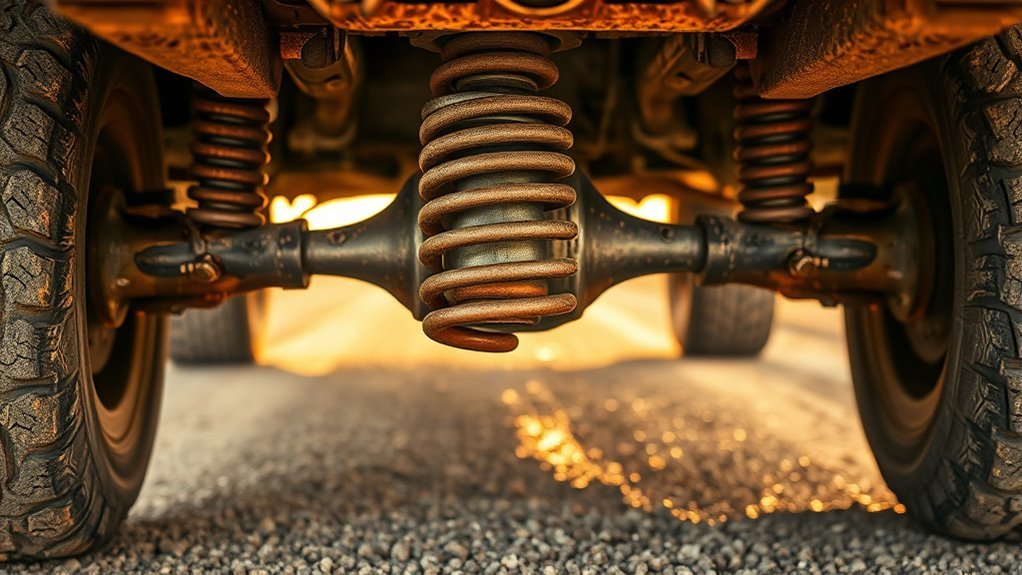

You can expect your truck shocks to last between 50,000 and 100,000 miles, but this depends on how you drive, the terrain you encounter, and how well you maintain them. Truck shocks play a crucial role in ensuring a smooth and stable ride, so understanding their lifespan is important.
Rough roads, heavy loads, and aggressive driving can shorten the lifespan of your shocks. Regularly inspect them for leaks, dents, and diminished performance to guarantee safety.
Choosing quality shocks and replacing them timely keeps your ride stable and comfortable. Keep exploring to understand signs of wear and ideal replacement timing.
Key Takeaways
- Truck shocks typically last between 50,000 and 100,000 miles with proper maintenance.
- Heavy loads, rough terrain, and aggressive driving reduce shock absorber lifespan.
- Gas-charged shocks generally last longer than standard hydraulic shocks.
- Signs of worn shocks include excessive bouncing, uneven tire wear, and visible leaks.
- Regular inspections and timely replacements ensure safety and optimal shock performance.
How Long Do Truck Shocks Typically Last?
Although the lifespan of truck shocks varies based on usage and conditions, you can generally expect them to last between 50,000 and 100,000 miles. Proper shock maintenance is essential to achieving this range, as neglect can accelerate wear and degrade shock performance.
You’ll want to regularly inspect for leaks, dents, or corrosion that compromise the shock’s damping ability. Maintaining peak shock performance guarantees vehicle stability, reduces tire wear, and improves ride comfort.
Keep in mind that shocks operate by controlling suspension movement through hydraulic fluid or gas, which naturally deteriorates over time. Timely replacement based on performance degradation or mileage prevents safety risks and costly repairs.
Monitoring your shocks and adhering to maintenance schedules maximizes their functional lifespan efficiently.
Key Factors That Affect Truck Shock Longevity
Because various conditions influence shock durability, understanding the key factors that affect truck shock longevity helps you maintain peak suspension performance.
The quality and composition of shock absorber materials directly impact wear resistance and heat dissipation. High-grade alloys and advanced synthetic fluids enhance lifespan by reducing internal friction and corrosion.
Additionally, your maintenance practices play a critical role. Regular inspections for leaks, mounting hardware integrity, and fluid condition prevent premature failure.
Environmental exposure to dirt, moisture, and temperature fluctuations accelerates degradation, so timely cleaning and protective coatings extend operational life.
Also, driving habits, such as frequent heavy loads or rough terrain, increase stress on shocks, necessitating more vigilant upkeep.
Truck Shock Types and Their Lifespan Differences
What makes one type of truck shock last longer than another? It primarily depends on the shock absorber types and their design.
Hydraulic shocks, for example, use fluid to dampen motion but wear faster under heavy loads. Gas-charged shocks incorporate pressurized nitrogen to reduce foaming, extending lifespan and enhancing performance.
Hydraulic shocks wear quickly under heavy loads, while gas-charged shocks use nitrogen to boost lifespan and performance.
Coilover shocks combine springs and dampers, offering durability but requiring precise shock installation methods to avoid premature wear. Additionally, monotube versus twin-tube designs influence longevity; monotube shocks dissipate heat more efficiently, improving lifespan.
You’ll also find that improper installation can negate the benefits of advanced shock absorber types, causing uneven wear or failure.
Understanding these distinctions helps you select and maintain shocks that suit your truck’s demands and maximize service life.
How Driving Conditions Affect Truck Shocks
Selecting the right type of shock absorber sets the foundation, but how you drive your truck plays a significant role in how long those shocks last. Your driving habits and terrain impact directly affect shock longevity. Here’s how:
- Aggressive Driving Habits: Frequent hard braking, rapid acceleration, and sharp turns increase shock wear by stressing internal components.
- Terrain Impact: Rough, uneven roads, off-road trails, or gravel surfaces cause more frequent and intense shock compression cycles, accelerating deterioration.
- Load and Speed Variations: Carrying heavy loads over bumpy terrain or driving at high speeds magnifies shock stress, reducing lifespan.
How to Check Your Truck Shocks for Wear
How can you determine if your truck shocks are worn out? Begin with a thorough shock inspection by visually examining the shock absorbers for leaks, dents, or corrosion.
Start by visually inspecting your truck shocks for leaks, dents, or corrosion to spot wear early.
Check the mounting points to make certain they’re secure and free from damage.
Look closely for wear indicators such as uneven or excessive tire wear, sagging suspension, or oil residue on the shocks.
Perform a bounce test by pushing down firmly on each corner of the truck; if it continues to bounce more than once or twice, the shocks likely show signs of wear.
Use a flashlight to inspect the shock shaft for pitting or scratches, which can compromise performance.
Regular shock inspection using these wear indicators helps you identify issues early and maintain peak truck handling.
Signs Your Truck Shocks Need Replacing
After inspecting your truck shocks for wear, recognizing the specific signs that indicate replacement is necessary becomes the next step in maintaining your vehicle’s performance.
Faulty shocks compromise shock absorption and reduce ride comfort, impacting driving safety and control.
Watch for these key indicators:
- Excessive Bouncing: If your truck continues to bounce after hitting a bump, your shocks aren’t effectively dampening vibrations, signaling diminished shock absorption.
- Uneven Tire Wear: Worn shocks cause inconsistent tire contact with the road, leading to irregular tread wear patterns.
- Poor Handling and Stability: Noticeable body roll during turns or nose-diving when braking means the shocks no longer maintain proper suspension control, reducing ride comfort and safety.
Addressing these signs promptly guarantees your truck maintains ideal shock absorption and ride comfort.
What Happens When Truck Shocks Wear Out
When truck shocks wear out, your vehicle’s suspension system loses its ability to absorb impacts effectively, resulting in a rougher ride and reduced control.
Decreased shock absorber performance means your truck’s suspension system impact management falters, causing excessive bouncing and instability over uneven terrain.
You’ll notice longer stopping distances as worn shocks fail to keep tires firmly planted, compromising traction and braking efficiency.
Additionally, uneven tire wear occurs because the suspension can’t maintain consistent contact with the road.
The increased suspension system impact forces also strain other components, accelerating wear on ball joints, bushings, and springs.
Ultimately, you risk diminished handling precision and safety, especially during cornering or emergency maneuvers.
Maintaining ideal shock absorber performance guarantees your truck’s suspension system effectively mitigates impact, preserving vehicle stability and control.
When and Why You Should Replace Truck Shocks
Although shocks can last tens of thousands of miles, you should replace them once you notice signs of diminished performance or after a specific mileage threshold, typically between 50,000 to 100,000 miles.
Proper shock maintenance helps guarantee safety and ride quality.
You should consider replacing your truck shocks when:
- You experience excessive bouncing or poor handling, indicating the shocks no longer absorb impacts efficiently.
- Visual inspection reveals oil leaks or physical damage to the shock body, compromising functionality.
- You plan shock upgrades to improve towing capacity, off-road performance, or overall ride comfort.
Replacing worn shocks prevents further suspension wear and maintains vehicle stability.
Timely shock replacement, combined with strategic shock upgrades, optimizes truck performance and safety on various terrains.
Tips for Choosing Quality Replacement Truck Shocks
Selecting quality replacement truck shocks requires understanding key performance factors that affect durability and ride control. When choosing, focus on reliable shock absorber brands known for consistent quality.
Evaluate performance shock features such as adjustable damping, gas-charged technology, and corrosion-resistant coatings. These features enhance vehicle stability and extend shock life.
| Criterion | Recommendation |
|---|---|
| Shock Absorber Brands | Monroe, Bilstein, KYB |
| Damping Adjustability | Variable for terrain control |
| Gas-Charged Technology | Reduces fade, improves response |
| Coating Material | Powder-coated or zinc plated |
| Warranty | Minimum 1-year coverage |
Use this table as a guide to prioritize features and brands that align with your truck’s usage, ensuring peak shock performance and longevity.
Frequently Asked Questions
Can Worn Shocks Affect Truck Fuel Efficiency?
Yes, worn shocks increase suspension wear and cause your truck to bob more, which raises fuel consumption. You’ll notice reduced efficiency because your engine works harder to maintain control over uneven surfaces and instability.
Are Shock Absorbers Covered Under Truck Warranties?
You’re steering through warranty terms like a map. Shock absorbers often have a specific shock warranty separate from the truck’s general coverage.
Their shock lifespan varies, so check your manual for exact warranty details and limits.
How Do Temperature Changes Impact Shock Performance?
Temperature effects directly alter shock performance by changing the viscosity of the damping fluid; colder temperatures thicken it, reducing responsiveness, while heat thins it, potentially causing faster wear and inconsistent damping under varying conditions.
Can You Replace Truck Shocks Yourself Safely?
Replacing truck shocks yourself can be as precise as assembling a watch. Prioritize shock replacement with proper tools, follow manufacturer guidelines, and use safety gear to guarantee DIY safety. This prevents injury and ensures peak suspension performance.
Do Aftermarket Shocks Require Special Maintenance?
Aftermarket shocks generally don’t require special maintenance beyond standard shock installation checks. You should follow regular maintenance tips like inspecting mounts and seals to guarantee peak performance and longevity.
Conclusion
You should monitor your truck shocks regularly and inspect them for wear consistently. Replacing them promptly is essential to maintain peak performance. Understanding how driving conditions, shock types, and usage affect their lifespan helps you make informed decisions.
By choosing quality replacements, you guarantee safety, comfort, and durability. Stay proactive, stay attentive, and stay safe—because well-maintained shocks mean better handling, reduced wear on other components, and a smoother ride every time you hit the road.
Remember, knowing how long do shocks last on a truck ensures you keep your vehicle running smoothly and safely under all conditions.