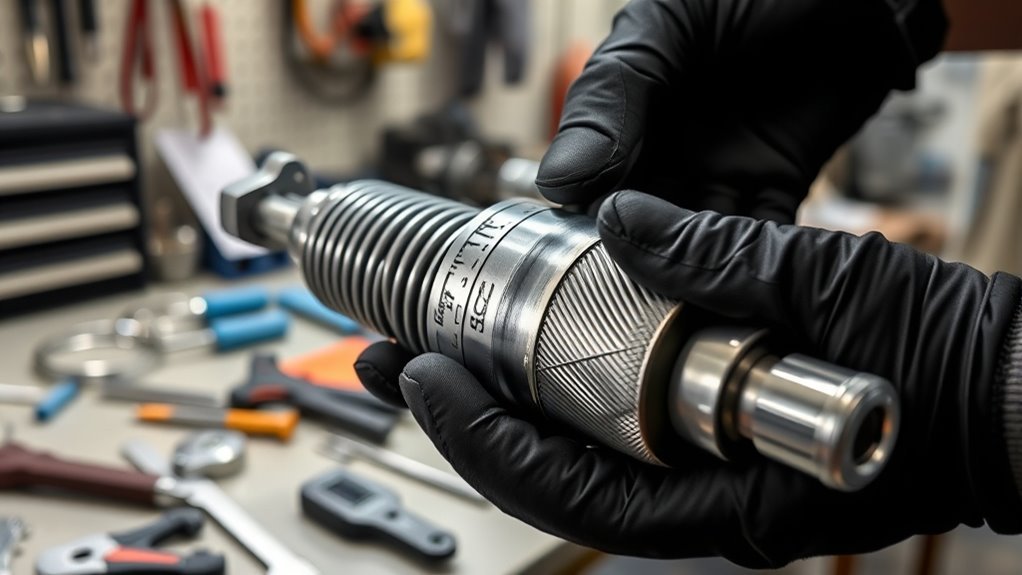

To measure shocks accurately, start by identifying the type of shock you are dealing with. This initial step ensures you use the correct measurement approach and tools.
Use precise instruments such as dial calipers or laser distance sensors for the most accurate readings. Fully extend the shock and record its maximum length between the mounting points.
Next, compress the shock completely to find its minimum length. Subtract the compressed length from the extended length to determine the total travel of the shock.
Pay close attention to any deviations from the manufacturer’s specifications. These variations can indicate wear or potential damage.
Combining these measurements with visual inspections and performance tests provides a comprehensive assessment. This helps in deciding whether the shocks require adjustment or replacement.
The following details will guide you through this process step-by-step.
Key Takeaways
- Fully extend the shock and measure the distance between mounting points for maximum length.
- Compress the shock completely and measure the minimum length between mounting points.
- Subtract minimum length from maximum length to determine total shock travel.
- Use calibrated tools like dial calipers or laser distance sensors for precise measurements.
- Repeat measurements multiple times to ensure accuracy and consistency.
Types of Vehicle Shocks and How to Identify Them
Shocks come in several distinct types, each designed to manage vehicle dynamics differently. When measuring shocks, you need to understand the main shock absorber types: twin-tube, monotube, gas-charged, and coilover shocks.
Each type exhibits unique characteristics essential for accurate identification. Twin-tube shocks have an inner and outer tube, offering a softer ride, while monotube shocks use a single tube with high-pressure gas for improved heat dissipation and responsiveness. Gas-charged shocks reduce foaming under heavy use, enhancing performance.
Twin-tube, monotube, and gas-charged shocks each offer distinct features for ride comfort and performance.
Coilover shocks integrate a coil spring around the shock for adjustable ride height and stiffness. Identifying shock characteristics involves examining build design, external features, and mounting styles, which directly influence measurement approaches and vehicle behavior.
Understanding these distinctions guarantees precise shock evaluation and maintenance.
Tools You Need to Measure Shocks Accurately
Several specialized tools are essential when you want to measure shocks accurately, guaranteeing reliable diagnostics and maintenance.
Employing the right shock measurement tools and accurate measuring techniques allows you to capture precise data on shock performance and wear.
To get started, you’ll need:
- Dial Calipers: For exact dimensional measurements of the shock components.
- Shock Dynometer: To assess damping characteristics under controlled conditions.
- Laser Distance Sensor: Provides non-contact, high-precision measurement of shock travel.
- Digital Force Gauge: Measures the force required to compress or extend the shock.
Using these tools, you can avoid errors common with manual measurement methods.
Accurate measuring techniques are critical for identifying subtle variations in shock behavior, enabling you to make informed maintenance decisions and guarantee vehicle safety.
How to Measure Shock Length and Travel Step-by-Step
Accurately measuring shock length and travel involves a systematic approach to secure precise data collection. First, fully extend the shock to measure its maximum length, recording the distance between mounting points.
Next, compress the shock completely to find its minimum length, which accounts for shock compression. Subtract this minimum length from the maximum to determine total travel.
For dynamic assessment, measure shock rebound by slowly releasing compression and noting the distance the shock extends back to its resting position. Use a calibrated ruler or digital caliper for all measurements to secure accuracy.
Repeat these steps multiple times to confirm consistency.
This methodical process captures critical parameters, shock length, compression, and rebound, that define shock performance and inform subsequent analysis or adjustments.
How to Interpret Shock Measurements for Replacement or Adjustment
When you analyze shock measurements, understanding their implications is crucial for deciding whether to replace or adjust components. Accurate interpretation hinges on correlating your data with established shock ratings and replacement guidelines.
Focus on these key factors:
- Compare measured shock length and travel against manufacturer specifications.
- Evaluate deviations from nominal shock ratings to identify wear or damage.
- Assess if reduced travel or altered length affects suspension performance.
- Determine if adjustments can restore function or if replacement is essential per guidelines.
Visual and Performance Checks to Assess Shock Condition
Interpreting shock measurements provides quantitative insight, but combining this data with visual and performance checks offers a more thorough assessment of shock condition. When you conduct a visual inspection, look for fluid leaks, dents, or corrosion on the shock absorber body.
Performance checks, such as bounce tests, reveal damping efficiency and identify worn components.
| Check Type | Indicators |
|---|---|
| Visual Inspection | Fluid leaks, dents, corrosion |
| Bounce Test | Excessive oscillation, poor rebound |
| Road Test | Unstable handling, noise |
| Physical Check | Loose mounts, damaged bushings |
These methods together help you pinpoint shock absorber failures and determine necessary maintenance or replacement.
Frequently Asked Questions
How Do Temperature Changes Affect Shock Absorber Performance?
You’ll notice temperature effects alter shock absorber viscosity, impacting damping force and overall performance metrics. Colder temps thicken fluids, reducing responsiveness, while heat thins fluids, possibly causing decreased control and inconsistent shock behavior.
Can Shock Measurements Vary Between Different Vehicle Brands?
Yes, shock measurements differ sharply; shock design and brand specifications dictate this. You’ll find that variations in damping rates and materials reflect unique engineering goals, so you must consider each brand’s specific parameters carefully.
What Are the Common Causes of Shock Absorber Noise?
You’ll find common shock absorber noise caused by worn seals, damaged shock types, or loose mounts. Identifying these issues lets you apply noise solutions like replacing parts or tightening components for peak performance and quiet operation.
How Often Should Shocks Be Professionally Inspected?
You might be surprised, but shock maintenance frequency demands professional inspection every 50,000 miles. This inspection’s importance lies in ensuring peak performance and safety, preventing premature wear, and diagnosing subtle issues before they escalate.
Are Adjustable Shocks Suitable for All Driving Conditions?
Adjustable shocks aren’t suitable for all driving conditions since their performance depends on correct tuning. You’ll need to adjust settings based on terrain and load to optimize handling, comfort, and durability across varied driving conditions.
Conclusion
Now that you know how to measure shocks accurately, remember this: worn shocks can increase braking distance by up to 20%. Using the right tools and following precise measurement steps will ensure your vehicle’s suspension performs at its best.
Regularly interpreting shock data helps you decide when to replace or adjust them, preventing costly damage. Combine technical checks with visual inspections to maintain safety and ride quality consistently.
Accurate measurement of shocks is key to informed maintenance decisions and keeping your vehicle running smoothly.