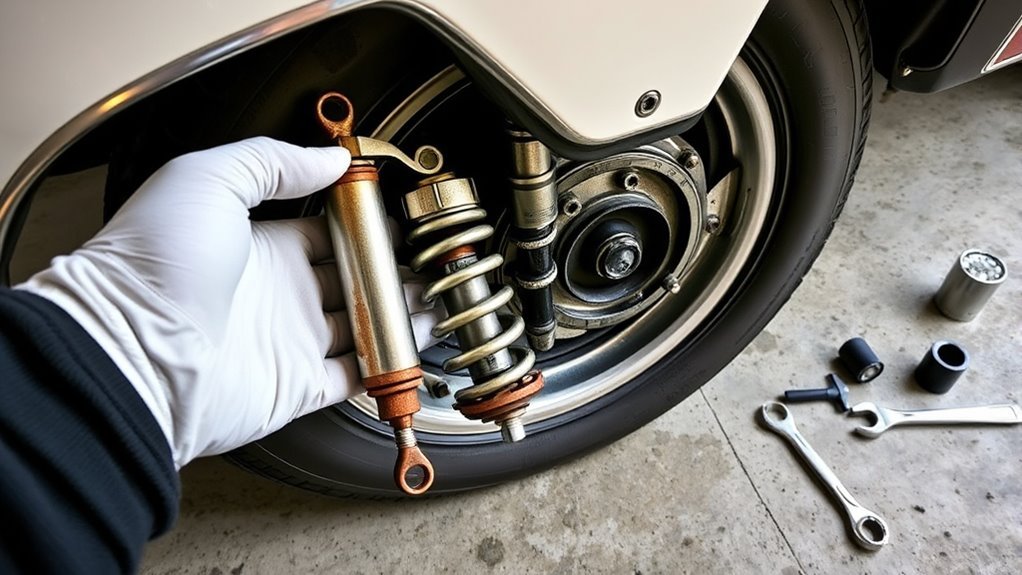

To change the rear shocks on your 1975 Cadillac Eldorado, start by gathering the correct replacement shocks and the necessary tools such as a socket wrench, jack, and torque wrench. Having everything ready before you begin will make the process smoother and safer.
Next, safely lift the rear of the car using a jack and support it with jack stands placed at the designated points. This ensures stability while you work underneath.
Remove the old shocks by loosening the mounting bolts carefully. Once removed, align the new shocks in place and install them, tightening the bolts to the manufacturer’s specified torque settings.
After installation, lower the vehicle and take it for a test drive to check the suspension’s performance. Following this proper procedure guarantees smooth handling and safety.
For those looking to go deeper, additional steps and tips are available to enhance your shock replacement process.
Key Takeaways
- Lift the rear of the 1975 Eldorado using a hydraulic jack and secure it with jack stands at designated support points.
- Remove rear shocks by applying penetrating oil, then loosen and remove the lower mounting bolts first for easier access.
- Install compatible replacement shocks by aligning mounting holes with frame and axle brackets, then tighten bolts to manufacturer torque specs.
- Test drive to check suspension performance, listen for unusual noises, and assess body roll and stability during turns.
- After the test ride, re-inspect and tighten all shock mounting hardware to ensure secure installation and proper alignment.
How to Tell When Your Rear Shocks Need Replacing on a 1975 Eldorado
Although your 1975 Eldorado may still drive smoothly, you’ll want to inspect the rear shocks regularly to confirm they’re functioning correctly.
Start by evaluating common shock absorber signs: excessive bouncing after a bump, uneven tire wear, or visible fluid leaks on the shock body.
Pay close attention to ride quality indicators such as increased body roll during turns or a harsh, unstable ride on uneven surfaces.
Test by pushing down on the rear end; if the vehicle continues to oscillate more than twice, the shocks likely need replacement.
Additionally, listen for clunking noises when driving over rough roads, which signal worn mounts or internal damage.
Regularly checking these parameters guarantees peak handling and safety for your Eldorado.
Gather Tools and Replacement Rear Shocks for Your 1975 Eldorado
Before starting, gather the essential tools including a jack, jack stands, wrenches, and a socket set to guarantee proper fit and torque application.
Verify you have the correct replacement rear shocks designed specifically for your 1975 Eldorado model to maintain peak performance.
Don’t forget to prepare safety equipment like gloves and eye protection to prevent injury during the replacement process.
Essential Tools Checklist
To successfully change the rear shocks on your 1975 Eldorado, you’ll need to gather a specific set of tools and replacement parts. Having the right equipment guarantees you handle different shock absorber types efficiently and follow proper installation tips without delays.
Here’s a precise checklist to prepare:
- Socket wrench set (including deep sockets) for removing bolts and nuts
- Jack and jack stands to safely elevate and support the vehicle
- Torque wrench to tighten bolts to manufacturer specifications
- Replacement rear shocks compatible with your Eldorado’s model year
This toolkit allows you to methodically remove the old shocks and install the new ones correctly.
Confirming you have these tools before starting will streamline the process and minimize errors related to shock absorber types and installation procedures.
Selecting Correct Shock Absorbers
Selecting the correct rear shock absorbers for your 1975 Eldorado requires careful consideration of the vehicle’s specifications and intended use.
Begin by identifying compatible shock absorber types, typically twin-tube or monotube designs, each offering distinct damping characteristics.
Twin-tube shocks provide a softer ride, suitable for daily driving, while monotube shocks offer better heat dissipation and responsiveness, ideal for performance upgrades.
Next, verify the shock length, mounting style, and load capacity to match the Eldorado’s rear suspension geometry.
Consider whether you want to maintain factory ride quality or enhance handling with upgraded components.
Consult manufacturer catalogs or OEM specifications to guarantee precise fitment.
Selecting the right shocks will optimize ride comfort, stability, and durability, assuring your repair or upgrade aligns with your driving requirements.
Safety Equipment Preparation
Although changing the rear shocks on your 1975 Eldorado may seem straightforward, assembling the proper safety equipment and tools is essential to guarantee a secure and efficient process.
Prioritize safety gear and personal protection before you begin to minimize injury risks.
Ascertain you have the right tools and replacement shocks ready to avoid interruptions.
Gather these essentials:
- Protective gloves and safety glasses to shield your hands and eyes
- A reliable floor jack and jack stands rated for your vehicle’s weight
- Wrenches and sockets compatible with your Eldorado’s shock mounting bolts
- OEM or high-quality aftermarket rear shock absorbers designed specifically for the 1975 Eldorado
Confirm everything is in good condition and accessible to maintain a methodical workflow.
How to Safely Lift and Support Your Eldorado’s Rear
Start by identifying the designated jack points on your 1975 Eldorado to avoid damaging the frame.
Use a hydraulic jack to lift the rear steadily, then securely place quality jack stands under the recommended support areas.
Always confirm the vehicle is stable before beginning any work on the rear shocks.
Choosing Proper Jack Points
Properly lifting and supporting your Eldorado’s rear requires identifying the vehicle’s designated jack points. Using correct jack point locations guarantees proper lifting, prevents damage, and assures safety.
For your 1975 Cadillac Eldorado, focus on these key areas:
- Locate the reinforced frame rails near the rear axle.
- Identify the pinch welds along the rocker panels.
- Avoid lifting from suspension components or body panels.
- Confirm jack points by consulting the Eldorado’s service manual.
Using Quality Jack Stands
Once you’ve identified the correct jack points on your Eldorado, the next step involves selecting and positioning quality jack stands to securely support the vehicle’s rear. Choose jack stand types rated for the vehicle’s weight and equipped with robust stability features like wide bases and locking pins. Position the stands under the frame or designated support areas.
| Jack Stand Type | Load Capacity | Stability Features |
|---|---|---|
| Steel | 3 tons | Wide base, locking pin |
| Aluminum | 2.5 tons | Anti-slip feet, adjustable |
| Ratchet | 4 tons | Auto-lock, broad footprint |
Raise the vehicle using a hydraulic jack, then carefully place the stands. Lower the car slowly onto the stands, ensuring they’re stable before starting shock replacement.
Remove the Old Rear Shocks Without Damaging Components
A secure workspace and the right tools are essential before you remove the old rear shocks. Employ proper shock removal techniques to avoid component damage and guarantee a smooth process.
Ensure a safe workspace and proper tools before removing rear shocks to prevent damage and ensure smooth removal.
Begin by supporting the rear axle with jack stands to relieve tension on the shocks. Use penetrating oil on bolts to ease removal and prevent stripping.
Follow these steps:
Loosen and remove the lower mounting bolt first to stabilize the shock.
Carefully detach the upper mounting bolt without forcing it.
Support the shock as you remove bolts to prevent sudden drops.
Inspect surrounding components for wear or damage during removal.
Install New Rear Shocks Step-by-Step on Your 1975 Eldorado
Begin by positioning the new rear shock in place on your 1975 Eldorado, aligning the mounting holes with the frame and axle brackets.
Select the appropriate shock absorber type, hydraulic or gas-charged, based on your vehicle’s specifications.
Insert the mounting bolts through the aligned holes, confirming the shock’s orientation matches factory settings.
Tighten the bolts gradually in a crisscross pattern to guarantee even pressure and secure fitment.
Use a torque wrench to apply manufacturer-recommended torque values, avoiding over-tightening that could damage components.
Installation tips include verifying that rubber bushings are properly seated to reduce noise and vibration.
Double-check all connections for firmness before lowering the vehicle.
This methodical approach guarantees the new rear shocks perform effectively and extend suspension lifespan.
Test Ride and Troubleshoot Rear Shock Issues After Installation
After installing your new rear shocks, you’ll want to conduct a thorough test ride to evaluate their performance under real driving conditions.
During the test ride, pay close attention to how the vehicle responds to bumps, turns, and braking. Effective shock troubleshooting involves identifying any unusual noises, excessive bouncing, or instability.
Focus on these checkpoints during your test ride:
- Monitor suspension firmness and rebound response.
- Listen for clunks or rattles indicating loose mounts.
- Assess vehicle body roll during cornering.
- Check for uneven tire wear or vibrations.
If you detect any issues, re-inspect shock mounting hardware and alignment.
Proper shock troubleshooting guarantees your 1975 Cadillac Eldorado’s rear suspension functions efficiently, providing a smooth and controlled ride.
Frequently Asked Questions
What Type of Rear Shocks Originally Came on the 1975 Eldorado?
You’ll find the original equipment shock absorbers on the 1975 Eldorado are heavy-duty, twin-tube gas-charged shocks designed to handle the car’s weight and provide smooth ride control, ensuring peak rear suspension performance.
Can I Upgrade to Modern Shocks on My 1975 Eldorado?
Upgrading to modern shocks is like fitting your Eldorado with new shoes; you’ll benefit from advanced shock absorber technology, enhancing ride comfort and handling.
Verify compatibility and consider performance upgrades carefully for peak results and safety.
How Often Should Rear Shocks Be Replaced on This Model?
You should check the replacement frequency every 50,000 miles, but inspect for shock wear sooner if you notice poor ride quality or leaks. Regular assessments guarantee your 1975 Eldorado’s rear shocks perform at their best and safely.
Are There Any Common Issues Specific to Eldorado Rear Shocks?
You’ll find Eldorado rear shocks often suffer reduced shock absorber lifespan due to age, leading to suspension noise issues like knocking. Regular inspection helps catch seal leaks and worn mounts, ensuring accurate diagnosis and timely replacement.
What Is the Average Cost for Professional Rear Shock Replacement?
Imagine John’s Eldorado rear shocks replacement; the cost breakdown showed $150 for parts and $120 labor charges. You’ll typically pay $270-$350 total, depending on shop rates and shock quality, ensuring precise, professional service.
Conclusion
Now that you’ve given your 1975 Eldorado’s rear shocks a well-deserved upgrade, you’re set to enjoy a smoother, more controlled ride.
Remember, keeping these components in top shape isn’t just about comfort—it’s about ensuring your classic beauty handles with the precision it was designed for.
Stay vigilant for any subtle signs of wear, and don’t hesitate to repeat this process when your Eldorado whispers it’s time for another tune-up.
Regular maintenance and attention to detail will help you get the most out of changing rear shocks on your 1975 Cadillac Eldorado.