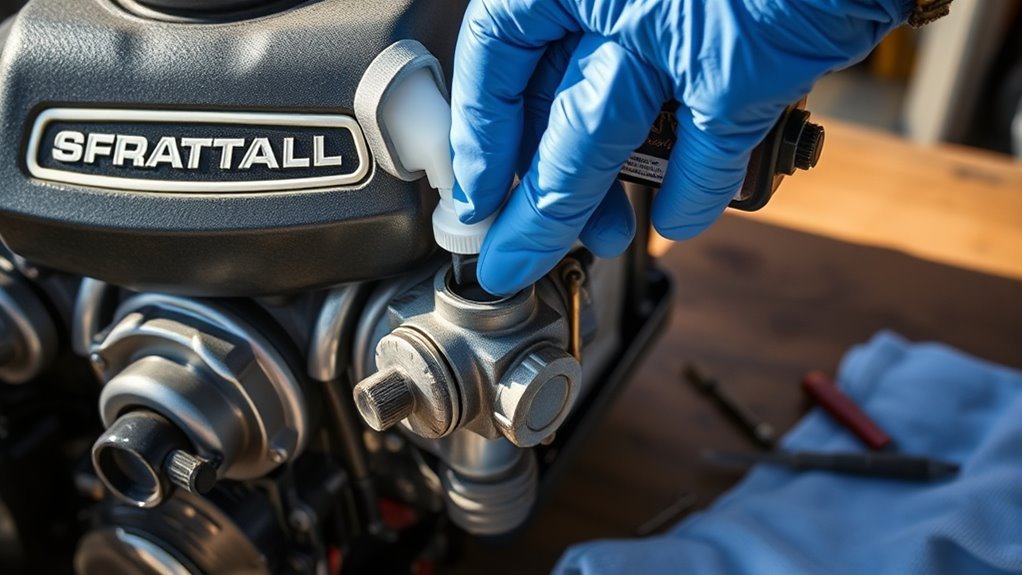

To clean your Briggs and Stratton carburetor without removing it, start by ensuring the engine is off and cool. Disconnect the spark plug wire to prevent accidental starting.
Next, remove the air filter to access the carburetor. Spray carburetor cleaner directly into the throttle plate and intake passages.
Manually operate the throttle to help dissolve deposits and loosen clogs. Wipe away grime with a clean cloth and repeat the process if necessary.
Following these steps and applying regular troubleshooting and maintenance tips can help keep your carburetor running smoothly for a longer time.
Key Takeaways
- Ensure the engine is cool, turned off, and the spark plug wire is disconnected before starting the cleaning process.
- Remove the air filter to access the carburetor and spray carburetor cleaner directly into the intake and throttle plate area.
- Manually operate the throttle to help distribute the cleaner and loosen deposits inside the carburetor.
- Allow the cleaner to soak briefly, then wipe away grime with a clean cloth, repeating as necessary for thorough cleaning.
- Avoid spraying on electrical components and use compressed air to blow out loosened debris if available.
Prepare Your Briggs and Stratton Engine for Cleaning Without Removal
Before you start cleaning, make certain your Briggs and Stratton engine is cool and turned off to prevent accidents.
Engine preparation is critical for effective cleaning without removal.
Preparing the engine properly ensures effective cleaning without the need for removal.
Begin by disconnecting the spark plug wire to eliminate any chance of accidental starts.
Use a brush or compressed air to clear debris and dirt around the carburetor area, ensuring cleaning supplies reach the target without obstruction.
Place a drip tray or cloth beneath the carburetor to catch any runoff.
Avoid spraying cleaning agents on electrical components during this process.
Gather your essential cleaning supplies such as carburetor cleaner spray, a small brush, and a clean cloth.
Proper preparation helps you clean efficiently, reduces contamination risk, and protects engine components during the process.
Choose the Best Carburetor Cleaner Sprays and Tools for the Job
Selecting the right carburetor cleaner spray and tools guarantees effective removal of varnish, gum, and dirt from your Briggs and Stratton carburetor.
Choose from carburetor cleaner types like aerosol sprays with strong solvents designed to dissolve deposits quickly. Opt for non-chlorinated formulas if you want a safer option for rubber components.
Essential cleaning tools include:
- Thin, flexible wire brushes to reach tight jets and passages
- Compressed air canisters for blowing out loosened debris
- Precision screwdrivers to adjust or remove small parts without damage
- Soft cloths or microfiber towels for wiping surfaces without scratching
Using appropriate carburetor cleaner types and cleaning tools guarantees thorough restoration of fuel flow and engine performance without removing the carburetor.
How to Clean Your Briggs and Stratton Carburetor Without Removing It
Using the right carburetor cleaner spray and tools sets the stage for effective cleaning without disassembling your Briggs and Stratton carburetor.
Start by ensuring the engine is off and cool. Remove the air filter to expose the carburetor throat.
Begin with the engine off and cool, then remove the air filter to access the carburetor throat.
Spray the cleaner directly into the carburetor’s intake, focusing on the throttle plate and surrounding areas. Operate the throttle manually to help distribute the cleaner and loosen deposits.
Allow the cleaner to soak briefly, then wipe away loosened grime with a clean cloth. Repeat if necessary.
This method supports routine carburetor maintenance, preventing buildup that impairs fuel flow and ignition.
Proper cleaning enhances engine performance by maintaining ideal air-fuel mixture delivery, reducing rough idling, and improving throttle response all without the hassle of removal.
Troubleshooting Briggs and Stratton Carburetor Issues After Cleaning
Even after a thorough cleaning, your Briggs and Stratton carburetor might still cause issues like rough idling or poor acceleration.
To troubleshoot carburetor performance effectively, start by identifying common symptoms signaling unresolved problems. Check for:
- Engine stalling during idle or load
- Hesitation or sputtering on acceleration
- Black smoke from the exhaust indicating a rich mixture
- Difficulty starting despite a clean carburetor
Address these by verifying fuel flow, inspecting the choke and throttle linkages, and ensuring the float level is correct.
Sometimes debris remains lodged in jets or passages despite cleaning. Use carburetor cleaner spray to reflush these areas without removal.
Maintain Your Carburetor to Prevent Future Clogs
Identifying and fixing carburetor problems after cleaning helps, but preventing clogs in the first place saves time and effort. To maintain your Briggs and Stratton carburetor, focus on consistent carburetor maintenance.
Use fresh, clean fuel and add a fuel stabilizer if the engine will sit unused for extended periods. Regularly inspect and clean the fuel system, including the fuel filter and lines, to prevent debris buildup.
Avoid letting fuel sit in the carburetor for long durations, as stale fuel promotes varnish and clog formation. Additionally, check for air leaks around the carburetor mounting area, as they can disrupt fuel flow and cause performance issues.
Implementing these practices guarantees prime fuel system function and prolongs the carburetor’s lifespan, reducing the need for frequent cleanings.
Frequently Asked Questions
What Symptoms Indicate a Carburetor Needs Cleaning?
You’ll notice carburetor malfunction if your engine stalls, hesitates, or struggles to accelerate. Rough idling, black smoke, or fuel odor also signal the carburetor needs cleaning to restore proper fuel flow and performance.
Can Fuel Additives Help Keep the Carburetor Clean?
You can think of fuel additives as gentle helpers; fuel stabilizers and specialized cleaning products prevent buildup and improve performance.
They won’t replace a thorough carburetor cleaning but definitely ease maintenance and extend engine life.
How Often Should the Carburetor Be Inspected or Cleaned?
You should inspect and clean your carburetor every 25 hours of use or at the start of each season. Routine checks and preventive maintenance prevent clogging and guarantee peak engine performance.
Are There Any Safety Precautions When Working With Carburetor Cleaner?
Did you know 60% of accidents with carburetor cleaner happen due to lack of safety gear? Always wear gloves and goggles, work in a ventilated area, and avoid skin contact to protect yourself while using carburetor cleaner.
Can a Dirty Carburetor Affect Engine Performance or Fuel Efficiency?
Yes, a dirty carburetor reduces engine power and increases fuel consumption. It disrupts the air-fuel mixture, causing inefficient combustion.
Cleaning it guarantees peak engine performance and better fuel efficiency, saving you time and fuel costs.
Conclusion
Cleaning your Briggs and Stratton carburetor without removing it can save time and effort, but it’s not a cure-all. While carburetor cleaner sprays effectively dissolve grime, stubborn clogs may still require full disassembly. Think of it like washing a car without opening the hood—you get surface clean but might miss hidden issues.
Regular maintenance and timely cleaning prevent major problems, keeping your engine running smoothly without complicated repairs. For best results, combining on-machine cleaning with periodic removal and thorough inspection is recommended. This balanced approach ensures your Briggs and Stratton carburetor stays in optimal condition.