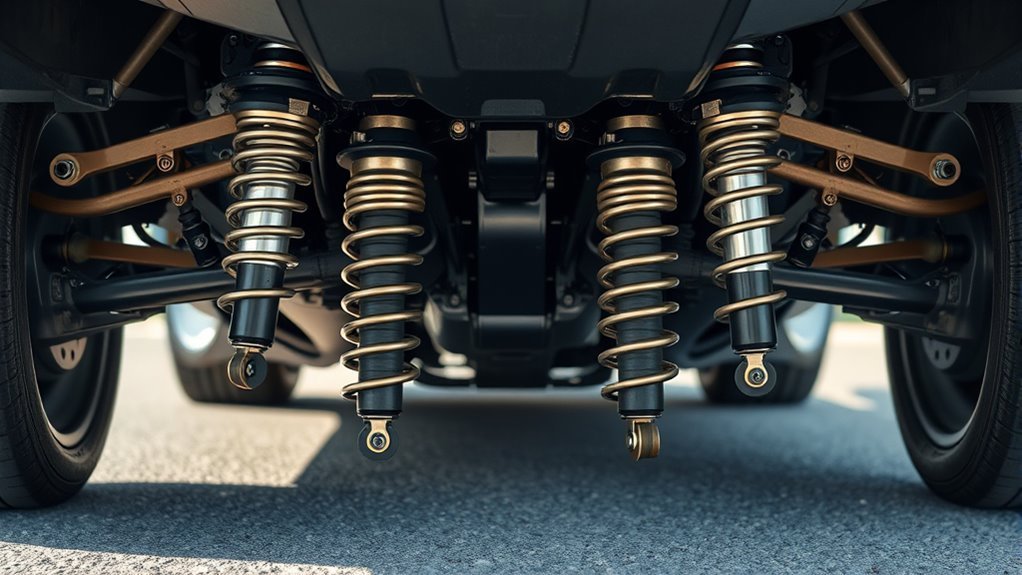

You’ll typically find four shocks on a car, one attached near each wheel to optimize ride comfort and maintain stability. These shocks dampen suspension movement, ensuring consistent tire contact with the road and preventing excessive body roll.
Depending on your suspension design, this number might vary, but most passenger vehicles use four for balanced handling. Proper shock function is key for safety and performance.
As you explore further, you’ll understand how shocks impact your driving experience and when to replace them.
Key Takeaways
- Most cars have four shock absorbers, one mounted at each wheel for balanced suspension performance.
- Each shock absorber helps maintain tire contact with the road, improving ride quality and vehicle stability.
- Different suspension designs can affect shock quantity, but independent suspensions typically use four shocks.
- Signs of worn shocks include leaks and uneven tire wear, indicating the need for inspection or replacement.
- Using the manufacturer-recommended number of shocks ensures optimal handling, safety, and suspension function.
How Many Shocks Does a Typical Car Have?
Most typical cars have four shock absorbers, with one installed at each wheel. These shocks come in various shock types, including twin-tube and monotube designs, each offering distinct damping characteristics suited to different driving conditions.
When you inspect your vehicle, understanding the specific shock type helps you choose the correct replacement or upgrade. Regular shock maintenance is essential; you’ll want to monitor for leaks, diminished ride quality, or uneven tire wear, all signs that shocks may be failing.
Proper maintenance guarantees your car maintains peak handling and safety. If you delay servicing or replacing worn shocks, you risk compromised suspension performance.
Why Do Most Cars Have Four Shocks?
Understanding the number of shocks on a vehicle leads directly to why manufacturers equip cars with four shock absorbers. Each wheel typically has its own shock to optimize ride quality and handling.
Different shock types, like twin-tube or monotube, serve specific shock functions, including controlling suspension movement and absorbing road impacts.
Twin-tube and monotube shocks control suspension movement while absorbing impacts for a smooth ride.
You’ll find four shocks on most cars because they maintain balanced damping forces at each wheel. They guarantee consistent tire contact with the road and evenly distribute vehicle weight during cornering and braking.
They also enhance overall stability and safety by preventing excessive body roll.
How Does Suspension Type Change Shock Count?
Because suspension systems vary widely in design, the number of shocks installed on a vehicle can change accordingly. The suspension design directly influences how many shock absorbers you’ll find.
For instance, solid axle setups often require different shock arrangements than independent suspension systems. Additionally, shock absorber types, such as monotube or twin-tube, can affect placement and quantity to optimize performance.
| Suspension Design | Typical Shock Count | Common Shock Absorber Types |
|---|---|---|
| Independent Suspension | 4 | Monotube, Twin-tube |
| Solid Axle | 2-4 | Twin-tube, Coilover |
| Air Suspension | Variable | Air shocks, Hydraulic shocks |
Understanding these factors helps you appreciate why shock count varies with suspension type.
How Can You Identify Your Car’s Shocks?
Where exactly can you find the shocks on your vehicle? Typically, shocks are mounted near each wheel, attached between the suspension and the vehicle frame.
To identify them accurately, check for these features:
- Cylindrical tubes, often metal, positioned vertically or at an angle
- Connection points at both ends: one to the suspension arm, one to the chassis
- Presence of a piston rod extending from the tube
- Labels or part numbers indicating manufacturer and specifications
Understanding these elements helps you perform effective shock maintenance. Regular inspection guarantees ideal shock performance, critical for ride comfort and vehicle control.
Look for leaks, dents, or unusual wear as signs your shocks might need attention.
Identifying your car’s shocks correctly sets the foundation for maintaining suspension integrity and safety.
What Happens If Your Car Has Too Few or Too Many Shocks?
Now that you’ve learned how to identify the shocks on your vehicle, it’s important to contemplate how their number affects performance.
Having too few shocks compromises shock performance, leading to increased body roll, reduced traction, and uneven tire wear. This under-damping disrupts vehicle stability, impacting your control and safety.
Too few shocks increase body roll, reduce traction, and cause uneven tire wear, jeopardizing vehicle stability and safety.
Conversely, installing too many shocks can cause conflicting damping forces, stressing suspension components and potentially reducing ride comfort. Excess shocks might also complicate shock maintenance, increasing costs and downtime without proportional benefits.
For peak shock performance, the vehicle’s suspension system relies on the manufacturer-recommended number of shocks. Proper shock maintenance ensures these components function effectively, preserving handling and safety.
Deviating from the intended shock count can undermine these critical aspects, so adhering to the specified number is essential for balanced, reliable performance.
When and Why Replace Your Car’s Shocks
Several key indicators signal when you need to replace your car’s shocks to maintain peak performance and safety.
Regular shock maintenance guarantees your vehicle handles correctly and absorbs road irregularities efficiently.
Different shock types, like twin-tube or monotube, wear differently, so knowing your shock type helps determine replacement timing.
Watch for these signs:
- Excessive bouncing or swaying after bumps
- Uneven tire wear indicating poor damping
- Visible fluid leaks from shock absorbers
- Nose-diving during braking or instability in corners
Ignoring these signs compromises control and increases wear on suspension components.
Replacing shocks promptly maintains vehicle stability and driver confidence.
Always consult your vehicle’s manual or a professional when evaluating shock types and scheduling maintenance to optimize shock performance and longevity.
How Shocks Improve Your Car’s Ride and Safety
Your car’s shocks play a critical role in absorbing road impacts to enhance ride comfort by reducing vibrations and jolts.
They also maintain tire contact with the road, which greatly improves vehicle stability and handling.
Understanding these functions helps you appreciate how shocks contribute to both a smoother drive and safer control.
Enhanced Ride Comfort
Although shocks often go unnoticed, they play a critical role in enhancing ride comfort by controlling the suspension’s movement and absorbing road impacts.
When you drive, shocks regulate shock absorption to maintain consistent ride quality, ensuring you feel less vibration and jolts. They prevent excessive bouncing by managing how the suspension responds to uneven surfaces.
Here’s how shocks improve your ride comfort:
- Dampen the energy from road irregularities to reduce cabin vibrations
- Maintain tire contact with the road for smoother handling
- Control suspension rebound to avoid harsh impacts
- Distribute forces evenly to minimize driver and passenger fatigue
Improved Vehicle Stability
Beyond enhancing ride comfort, shocks play an important role in maintaining vehicle stability by controlling suspension dynamics during acceleration, braking, and cornering.
Shock absorbers regulate the oscillations of your car’s springs, preventing excessive body roll and pitch that can compromise control. By dampening these movements, they guarantee consistent tire contact with the road surface, which is essential for reliable vehicle handling.
When you brake, shock absorbers reduce nose dive, helping maintain steering precision. During cornering, they minimize body lean, allowing you to maneuver safely and confidently.
Without properly functioning shocks, your car would become unstable, increasing the risk of loss of control. Understanding how shock absorbers contribute to vehicle handling emphasizes their importance not just for comfort, but for your safety behind the wheel.
Frequently Asked Questions
What Brands Manufacture the Best Car Shocks?
You’ll find KYB and Bilstein lead the performance comparison for car shocks, offering precise handling and durability. They back their quality with strong shock warranties, ensuring your vehicle maintains peak suspension performance over time.
Can You Install Shocks Yourself or Need a Professional?
You can definitely install shocks yourself, but be prepared. It’s a puzzle requiring patience and proper tools. Follow precise installation tips to guarantee safety.
DIY advantages include cost savings and skill-building, but consult a professional if unsure.
How Do Shocks Differ Between Electric and Gasoline Cars?
Electric shocks are often tuned for heavier battery weight and regenerative braking effects, while gasoline shocks handle traditional engine vibrations and weight distribution.
You’ll notice differences in damping rates and spring stiffness between electric and gasoline shocks.
Do Shocks Affect Fuel Efficiency?
You’ll find that poor shock absorption can increase fuel consumption by up to 10%. When shocks wear out, your vehicle loses efficiency.
Maintaining them helps optimize fuel economy and guarantees smoother, more controlled rides.
What Tools Are Needed to Replace Car Shocks?
You’ll need a socket set, wrenches, jack, jack stands, and possibly a spring compressor for shock absorber installation.
Follow shock maintenance tips by tightening bolts securely and inspecting components to guarantee proper function and safety.
Conclusion
Understanding how many shocks your car has is vital for maintaining peak performance and safety. Like the steady rhythm of a heartbeat, shocks keep your ride smooth and controlled by absorbing bumps and stabilizing movement.
Most cars have four shocks, but suspension types can vary this number. Regularly checking and replacing worn shocks guarantees your vehicle handles properly.
Knowing how many shocks are on a car helps ensure your vehicle remains safe and comfortable on every journey.