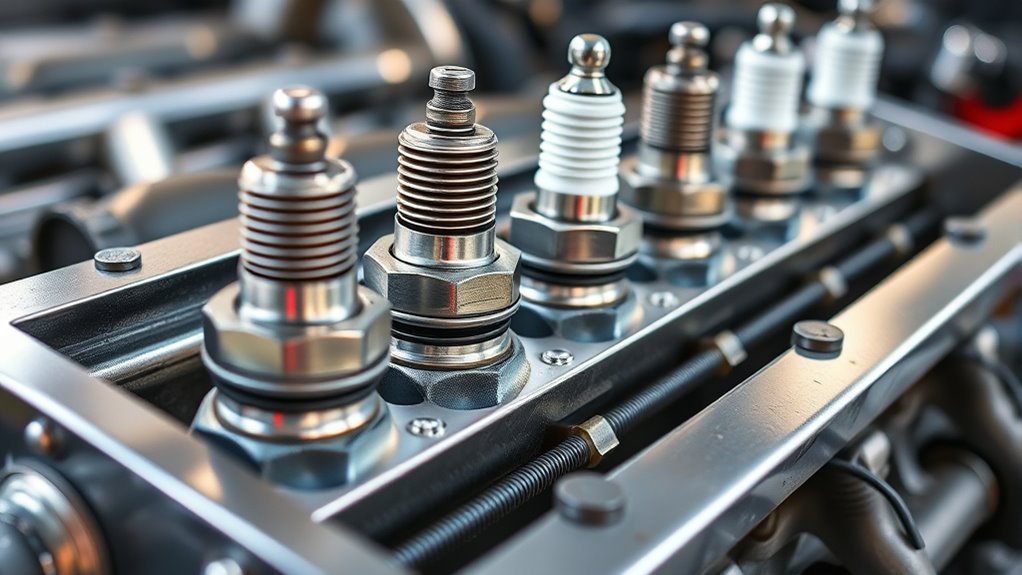
Tag: V6 engine

  • How Many Spark Plugs in a v6

    How Many Spark Plugs in a v6

    You typically have six spark plugs in a standard V6 engine—one per cylinder. Some V6 models use dual spark plugs per cylinder, doubling that number to twelve for enhanced combustion efficiency. This dual ignition setup improves performance, fuel efficiency, and reduces emissions.

    Faulty or missing spark plugs can cause misfires, rough idling, and power loss. Understanding spark plug count and maintenance helps you keep your engine running smoothly. Keep exploring to learn how this impacts your V6’s performance and longevity.

    Key Takeaways

    • A standard V6 engine typically has six spark plugs, one per cylinder.
    • Some V6 engines use dual spark plugs per cylinder, totaling twelve spark plugs.
    • Spark plug count depends on the engine design and manufacturer specifications.
    • Dual spark plugs improve combustion efficiency and engine performance in some V6 models.
    • Proper spark plug maintenance is crucial to avoid misfires and ensure optimal engine function.

    How Many Spark Plugs Does a Standard V6 Engine Have?

    How many spark plugs does a standard V6 engine have? Typically, a V6 engine contains six spark plugs, one per cylinder. However, some engines may use dual spark plugs per cylinder, totaling twelve.

    Understanding spark plug types such as copper, platinum, or iridium is vital because each material influences performance and longevity differently.

    Choosing the right spark plug material—copper, platinum, or iridium—affects your engine’s performance and lifespan.

    For peak engine function, you need regular spark plug maintenance, including inspection and timely replacement. Worn or fouled spark plugs can cause misfires, reduced fuel efficiency, and increased emissions.

    When servicing your V6, select the correct spark plug type per manufacturer specifications to guarantee compatibility and durability. Proper maintenance guarantees reliable ignition, smooth operation, and extends engine life.

    Always follow precise torque settings during installation to avoid damage and guarantee peak performance.

    How Do You Identify Spark Plug Numbers in Your V6?

    To accurately identify spark plug numbers in your V6, you need to understand the cylinder numbering system specific to your engine model. Most V6 engines number cylinders sequentially, either from front to back or in a V-bank order. Check your vehicle’s service manual to confirm the exact layout.

    The ignition system typically fires spark plugs according to this numbering, matching the firing order and spark plug types used.

    Cylinder Bank Spark Plug Number
    Left Bank 1, 3, 5
    Right Bank 2, 4, 6

    Knowing this helps you locate each spark plug precisely for inspection or replacement, ensuring you use the correct spark plug types and maintain peak ignition system performance.

    Why Do Some V6 Engines Have More Than Six Spark Plugs?

    You might notice some V6 engines use more than six spark plugs because they employ a dual spark plug design.

    This setup improves combustion efficiency and boosts engine performance by igniting the air-fuel mixture more effectively.

    Additionally, it helps reduce emissions by ensuring more complete burning of fuel within the cylinders.

    Dual Spark Plug Design

    Several V6 engines incorporate a dual spark plug design, meaning they’ve twelve spark plugs instead of six. This configuration places two spark plugs in each cylinder, enhancing combustion control.

    The use of advanced spark plug materials, such as iridium or platinum, improves durability and guarantees consistent ignition performance under varying conditions.

    With dual plugs, you can achieve more precise ignition timing, as each spark plug can ignite different areas of the combustion chamber simultaneously or sequentially. This setup reduces the likelihood of misfires and promotes more complete fuel burning.

    When you consider maintenance or replacement, it’s important to recognize that dual spark plugs demand careful attention to guarantee both plugs operate correctly, given their critical role in optimizing ignition timing and overall engine reliability.

    Performance And Efficiency

    Multiple spark plugs per cylinder enhance combustion efficiency and overall engine performance in some V6 engines. By igniting the air-fuel mixture at multiple points simultaneously, these engines improve combustion quality, leading to more complete and faster burning.

    This optimized combustion reduces the likelihood of knocking and allows for higher compression ratios, which in turn boosts power output. Additionally, better combustion quality directly influences fuel efficiency, as the engine extracts more energy from the same amount of fuel.

    When you drive a V6 with multiple spark plugs per cylinder, you benefit from smoother acceleration and improved responsiveness.

    This design also helps maintain consistent engine performance under varying loads and speeds, making it a practical choice for manufacturers aiming to balance power and economy without compromising reliability.

    Emission Control Benefits

    Although having more than six spark plugs in a V6 engine may seem unusual, this configuration plays a crucial role in reducing harmful emissions. By using multiple spark plugs per cylinder, the engine achieves more complete and efficient combustion. This precise ignition reduces unburned fuel residues, directly contributing to emission reduction.

    When combustion is thorough, fewer pollutants like hydrocarbons and carbon monoxide escape into the atmosphere. You’ll notice that this setup markedly lowers the environmental impact of your vehicle, meeting stringent emission standards more effectively.

    Additionally, improved combustion stability minimizes the formation of nitrogen oxides.

    How Dual Ignition Affects Spark Plugs in V6 Engines?

    When a V6 engine uses dual ignition, it doubles the number of spark plugs per cylinder, increasing the total spark plug count.

    You’ll find that this design improves combustion efficiency by igniting the air-fuel mixture more evenly and quickly.

    Understanding how this affects spark plug quantity and engine performance is key to grasping the benefits of dual ignition systems.

    Dual Ignition Design

    Because dual ignition systems use two spark plugs per cylinder, they double the number of spark plugs required in a V6 engine compared to a single ignition design. This means you’ll install 12 spark plugs instead of 6.

    Dual ignition improves combustion efficiency by igniting the air-fuel mixture from two points simultaneously, enhancing power and reducing emissions.

    When selecting spark plug types for dual ignition, you must consider compatibility with the engine’s ignition system and heat range to guarantee peak performance.

    Precise ignition timing becomes even more critical, as both spark plugs must fire at the correct moments to maximize combustion.

    Understanding these factors helps you maintain engine efficiency and reliability in dual ignition V6 configurations.

    Spark Plug Quantity Variation

    Understanding how dual ignition influences the number of spark plugs in a V6 engine clarifies why you might see variations in spark plug quantity across different engine designs.

    Typically, a V6 engine has six spark plugs, one per cylinder. However, dual ignition systems double this count by incorporating two spark plugs per cylinder, resulting in twelve spark plugs total. This design improves combustion efficiency but also means you need to take into account different spark plug types compatible with your engine’s setup.

    When selecting spark plug brands, prioritize those offering proven reliability and ideal heat range for dual ignition systems. Brands specializing in performance or OEM replacements often provide spark plugs suited for these configurations.

    Knowing this variation helps you maintain your V6 engine properly, ensuring you choose the right spark plug types and brands for your specific dual ignition design.

    Performance Impact Analysis

    Although dual ignition systems increase the number of spark plugs in a V6 engine, they greatly enhance combustion efficiency and engine performance. By employing two spark plugs per cylinder, the combustion chamber achieves more uniform flame propagation, reducing burn time and improving power output.

    This setup demands precise ignition timing synchronization to optimize the flame front and prevent misfires. Additionally, the choice of spark plug materials becomes critical; advanced materials like iridium or platinum offer superior durability and consistent spark quality under the increased thermal and electrical loads imposed by dual ignition.

    As a result, you benefit from improved fuel economy, lower emissions, and smoother engine operation. Understanding how dual ignition influences spark plug wear and ignition timing helps you maintain peak V6 engine performance effectively.

    What Happens When V6 Spark Plugs Are Faulty or Missing?

    Even a single faulty or missing spark plug in your V6 engine can cause significant performance issues.

    Spark plug failure disrupts the ignition process, leading to incomplete combustion and an engine misfire. This not only reduces power output but also compromises fuel efficiency and increases emissions.

    When a spark plug malfunctions or is absent, you may experience:

    • Rough idling and noticeable vibrations
    • Loss of acceleration and engine hesitation
    • Increased fuel consumption and potential catalytic converter damage

    Each cylinder in your V6 depends on its spark plug to ignite the air-fuel mixture precisely.

    Missing or damaged spark plugs cause imbalance in cylinder firing, impairing smooth engine operation.

    Addressing spark plug issues promptly guarantees ideal combustion, maintaining engine reliability and preventing further mechanical damage.

    Signs Your V6 Spark Plugs Need Replacing

    Several clear indicators can signal that your V6 spark plugs need replacing. Over time, the spark plug lifespan decreases, leading to performance issues such as engine misfires, rough idling, and reduced fuel efficiency.

    You might also notice difficulty starting the engine or a loss of acceleration power. Monitoring these signs helps maintain engine health and prevents further damage.

    Symptom Cause Impact on Performance
    Engine misfires Worn electrode Reduced power, jerky ride
    Rough idle Carbon build-up Engine vibration
    Hard starting Weak spark Delayed ignition
    Poor fuel economy Incomplete combustion Increased fuel use
    Loss of acceleration Inefficient spark Sluggish response

    Addressing these signs promptly guarantees ideal V6 engine operation.

    When Should You Replace Spark Plugs in a V6 Engine?

    Recognizing the signs of worn spark plugs is only part of maintaining your V6 engine’s performance; knowing the ideal replacement interval is equally important.

    Spark plug longevity varies by type and driving conditions, but most modern V6 engines recommend replacement every 30,000 to 100,000 miles.

    To optimize your engine’s efficiency and prevent misfires, adhere to the manufacturer’s specified replacement interval.

    Consider these factors when deciding the timing:

    • Driving habits and conditions, like frequent short trips or heavy loads, can reduce spark plug life.
    • Use of high-quality spark plugs can extend longevity.
    • Regular engine tune-ups help monitor spark plug condition precisely.

    Following these guidelines guarantees consistent combustion performance and prevents costly engine issues.

    How to Choose Spark Plugs for Your V6

    How do you select the right spark plugs for your V6 engine? Start by considering the spark plug types suitable for your engine: copper, platinum, or iridium. Each differs in durability and performance.

    Next, check compatibility with your V6’s specifications. Spark plug brands vary in quality and price, so choose reputable manufacturers that meet OEM standards.

    Use this table to compare key features:

    Spark Plug Type Durability Typical Brands
    Copper Short (~20,000 miles) NGK, Denso
    Platinum Medium (~60,000 miles) Bosch, Champion
    Iridium Long (~100,000 miles) NGK, Denso
    Double Platinum Long (~100,000 miles) AC Delco, Bosch

    Frequently Asked Questions

    Can Spark Plug Gaps Affect Engine Performance in a V6?

    Yes, incorrect spark plug gaps can disrupt ignition timing and reduce engine efficiency. You’ll need precise spark plug maintenance to guarantee proper gap settings, optimizing combustion and maintaining your V6 engine’s performance and fuel economy.

    How Do Spark Plug Materials Differ for V6 Engines?

    You’ll find spark plug materials differ mainly by ceramic insulators and platinum tips. Ceramic insulators resist heat and electrical wear, while platinum tips enhance durability and performance. Both are essential for maintaining efficient combustion in your V6 engine.

    What Tools Are Needed to Replace V6 Spark Plugs?

    You’ll need spark plug replacement tools that feel like they could fix the entire universe: a spark plug socket, ratchet wrench, torque wrench, extension bar, and a gap gauge. These guarantee precise, safe V6 spark plug replacement.

    Are Spark Plugs Universal Across All V6 Engine Models?

    You shouldn’t assume spark plug compatibility across all V6 engine variations. Different engines require specific spark plugs based on size, heat range, and design. Always check manufacturer specs to guarantee proper fit and performance.

    How Does Spark Plug Heat Range Impact a V6 Engine?

    You’ll find that choosing the right spark plug types directly affects heat dissipation in your V6 engine, ensuring ideal combustion and preventing overheating or fouling. It manages temperature extremes efficiently for consistent performance.

    Conclusion

    Understanding how many spark plugs your V6 engine needs is essential for maintaining peak performance. Most V6 engines typically have six spark plugs, one for each cylinder. However, some V6 engines with dual ignition systems may have twelve spark plugs in total.

    Keeping those spark plugs in top shape guarantees smooth operation and optimal engine efficiency. Don’t let a faulty spark plug throw a wrench in the works—regular inspection and timely replacement are key.

    Stay proactive with your maintenance, and you’ll avoid costly repairs down the road. Knowing how many spark plugs are in a V6 engine helps ensure your vehicle runs reliably and efficiently.