Tag: troubleshooting tips

  • Where Is the Carburetor on a Snowblower

    Where Is the Carburetor on a Snowblower

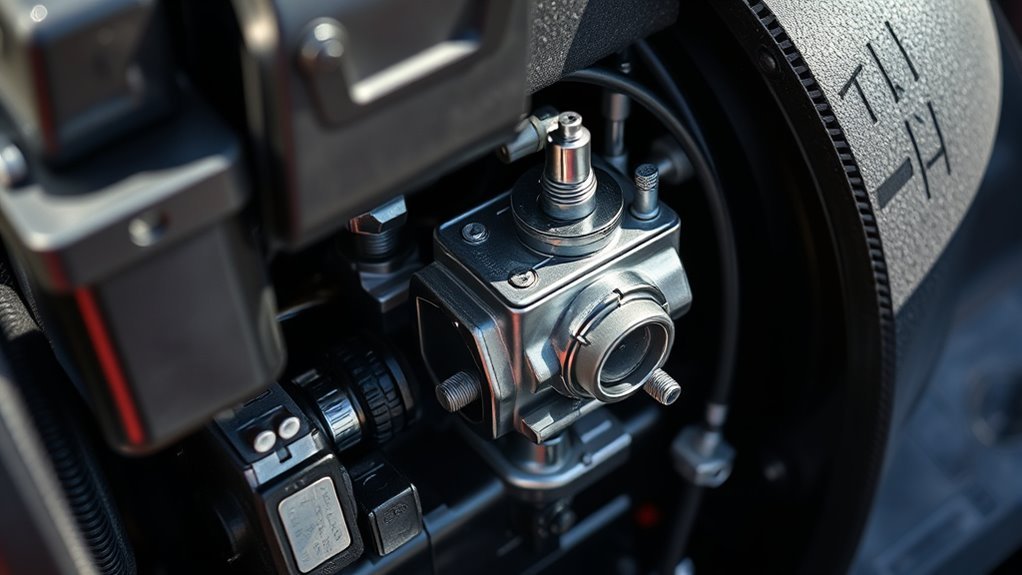
    You’ll find the carburetor on a snowblower mounted directly on the engine, usually near the intake manifold and connected to the fuel line. It’s a small metal component with adjustment screws, throttle, and choke levers, responsible for mixing air and fuel efficiently.

    To locate it, follow the fuel line from the gas tank. Knowing where the carburetor is helps with maintenance and troubleshooting performance issues.

    Keep going, and you’ll gain practical tips for inspection and care.

    Key Takeaways

    • The carburetor is located near the engine’s intake manifold on most snowblower models.
    • Follow the fuel line from the gas tank to find the carburetor attached directly to the engine.
    • It typically appears as a small metal component with a fuel inlet, throttle lever, and choke lever.
    • Toro snowblowers have carburetors on the right side, while Honda models place them centrally near the engine.
    • Ariens models position the carburetor near the front of the engine frame for easy access.

    How To Find Your Snowblower’s Carburetor

    Where exactly is your snowblower’s carburetor located? Typically, it’s mounted directly to the engine, near the air filter housing. This placement allows the carburetor to mix air and fuel efficiently before delivery to the combustion chamber.

    To find it, follow the fuel line from the gas tank; it leads straight to the carburetor. Understanding carburetor functions is vital for effective snowblower maintenance, as it controls the air-fuel ratio essential for engine performance.

    Follow the fuel line from the gas tank to locate the carburetor, key for proper air-fuel mixture.

    Regular inspection guarantees no blockages or leaks impair operation. Knowing its location simplifies tasks like cleaning or adjusting the carburetor to optimize fuel combustion.

    Identifying this component accurately helps maintain your snowblower’s reliability and extends its service life.

    What The Carburetor Looks Like And How To Recognize It

    Once you’ve located your snowblower’s carburetor by tracing the fuel line, the next step is to identify its physical characteristics. The carburetor is a small, metal component attached near the engine’s intake manifold.

    You’ll notice several carburetor components: a fuel inlet, throttle lever, choke lever, and a bowl at the bottom that holds fuel. It’s typically rectangular or cylindrical, with linkages and screws for adjustments.

    Recognizing it’s essential because it regulates the air-fuel mixture, directly impacting engine performance. If you see a part connecting the fuel line to the air intake with adjustment screws, you’ve found the carburetor.

    Understanding its look helps you diagnose issues or perform maintenance efficiently, ensuring your snowblower runs smoothly in cold conditions.

    Carburetor Locations On Common Snowblower Models

    Although carburetor placement can vary among snowblower models, you’ll generally find it mounted near the engine’s intake manifold, connected directly to the fuel line and air intake.

    On popular snowblower models from brands like Toro, Honda, and Ariens, the carburetor is typically located on the side of the engine block, beneath the air filter housing.

    For example, Toro models often use Walbro carburetor brands positioned on the right side, while Honda models feature their proprietary carburetor centrally located for easy access.

    Ariens models usually place the carburetor near the front of the engine frame.

    Understanding these common locations helps you quickly identify the carburetor when servicing fuel delivery or adjusting engine performance on your specific snowblower model.

    Why Finding Your Carburetor Makes Maintenance Easier

    When you know exactly where your carburetor is, you can access it quickly, which boosts maintenance efficiency.

    This ease of access simplifies cleaning and reduces the time spent on routine upkeep.

    Plus, it speeds up troubleshooting by letting you identify and fix issues without unnecessary disassembly.

    Easy Access Boosts Efficiency

    Locating your snowblower’s carburetor quickly streamlines routine maintenance and troubleshooting.

    Easy access to this component offers clear efficiency benefits by minimizing downtime and simplifying adjustments. When you can reach the carburetor without disassembling multiple parts, you save time and reduce the risk of errors.

    This accessibility lets you apply maintenance tips effectively, such as inspecting for clogs, adjusting fuel-air mixture screws, and replacing worn gaskets promptly.

    Furthermore, it supports consistent performance by facilitating regular tune-ups, which prevents fuel delivery issues that could compromise engine power.

    Prioritize snowblower models with straightforward carburetor access to optimize your maintenance workflow and extend the equipment’s service life.

    Efficient upkeep hinges on how easily you can reach and work on the carburetor.

    Simplifies Cleaning Process

    Since the carburetor plays an essential role in mixing air and fuel, having quick access to it simplifies cleaning and maintenance tasks.

    When you locate your snowblower’s carburetor easily, you can perform carburetor cleaning more efficiently, preventing fuel buildup and clogs that impair engine performance.

    Following maintenance tips such as removing the fuel line and spraying carburetor cleaner directly into the jets helps restore peak fuel flow. Quick access also lets you inspect gaskets and diaphragms for wear, ensuring proper sealing and function.

    By streamlining these steps, you reduce downtime and extend your snowblower’s lifespan.

    Knowing exactly where the carburetor sits means you won’t waste time disassembling unrelated parts, making routine maintenance less frustrating and more effective.

    Speeds Up Troubleshooting

    Two key benefits come from quickly identifying your snowblower’s carburetor during troubleshooting: faster diagnosis and targeted repairs.

    When you know the carburetor’s exact location, you can efficiently apply troubleshooting techniques to isolate fuel delivery issues, such as clogging or improper adjustment. This precision reduces guesswork and limits downtime.

    Incorporating carburetor checks into your regular maintenance schedule guarantees consistent performance and prevents minor issues from escalating. By routinely inspecting and adjusting the carburetor, you maintain peak engine function, which simplifies troubleshooting when problems arise.

    How To Access And Inspect Your Snowblower’s Carburetor

    Accessing and inspecting your snowblower’s carburetor involves a few straightforward steps that guarantee peak engine performance.

    First, disconnect the spark plug wire to assure safety. Remove the air filter cover and air filter to expose the carburetor.

    Carefully detach the fuel line, catching any residual fuel to prevent spills. Once visible, inspect the carburetor for dirt, debris, or corrosion that could impair fuel system efficiency.

    Check the throttle linkage and choke for smooth operation. Look for signs of wear or damage on the gaskets and seals.

    If necessary, perform carburetor adjustments to optimize fuel-air mixture based on your engine’s requirements. Regular inspection helps maintain consistent engine performance and extends your snowblower’s lifespan.

    Troubleshooting Common Carburetor Problems

    You’ll want to start by identifying symptoms like rough idling, stalling, or hard starting, which often point to carburetor issues.

    Regular cleaning prevents buildup that disrupts fuel flow and air mixture.

    Follow precise maintenance steps to keep your carburetor functioning reliably.

    Identifying Carburetor Issues

    Although carburetor problems can vary, most issues manifest through common symptoms that you can quickly spot. Typical carburetor symptoms include difficulty starting the engine, rough idling, and stalling.

    You might also notice poor acceleration or a strong fuel odor, which often points to fuel issues such as clogged jets or incorrect fuel mixture. If your snowblower runs inconsistently or lacks power, the carburetor may not be delivering fuel properly.

    Inspect the fuel lines and check for leaks or blockages. Additionally, if black smoke emits from the exhaust, it indicates a rich fuel mixture due to carburetor malfunction.

    Cleaning and Maintenance Tips

    Recognizing carburetor symptoms is only the first step; resolving these issues requires regular cleaning and maintenance. Start by draining stale fuel from the fuel system to prevent varnish buildup, which clogs jets and passages.

    Remove the carburetor carefully, then clean all components with a specialized carburetor cleaner, focusing on jets, float bowl, and throttle linkage. Inspect the gasket for damage and replace if necessary.

    After reassembly, perform precise carburetor adjustments to optimize fuel-air mixture and engine idle speed. Regularly check the fuel filter and lines for blockages or cracks.

    These preventive measures guarantee smooth fuel flow and consistent engine performance, reducing the likelihood of stalls or rough running caused by dirty or misadjusted carburetors.

    Following this routine keeps your snowblower reliable throughout the winter season.

    Frequently Asked Questions

    Can I Replace the Carburetor Myself or Should I Hire a Professional?

    You can attempt a DIY repair if you have mechanical skills and proper tools. Otherwise, seeking professional help guarantees safety and correct installation.

    This prevents potential damage or performance issues with your snowblower’s carburetor.

    How Often Should I Clean the Carburetor for Optimal Performance?

    You should perform carburetor maintenance every 25 hours of use or at least once per season. This cleaning frequency prevents clogging, ensuring peak engine performance and extending your snowblower’s lifespan efficiently and reliably.

    What Type of Fuel Is Best for Snowblower Carburetors?

    You should use fresh, unleaded gasoline with an octane rating of 87 or higher for your snowblower carburetor. Avoid ethanol blends over 10% to guarantee efficient fuel types and simplify snowblower maintenance.

    Are There Any Additives to Improve Carburetor Function in Cold Weather?

    Yes, you can use carburetor additives designed for cold weather to prevent fuel gelling and improve atomization. These additives help maintain smooth engine performance by reducing moisture buildup and ensuring reliable starts in freezing conditions.

    What Symptoms Indicate a Failing Carburetor in a Snowblower?

    Like a clogged coffee filter, a failing carburetor chokes your snowblower’s engine. You’ll notice rough idling, hard starts, or stalling.

    Regular carburetor maintenance helps with snowblower troubleshooting and keeps performance smooth in winter.

    Conclusion

    Now that you know where to find and identify your snowblower’s carburetor, maintenance becomes much simpler. Remember, “a stitch in time saves nine”—regular inspection and timely troubleshooting prevent bigger issues down the road.

    Accessing the carburetor on common models is straightforward once you recognize its shape and location. Keep your snowblower running smoothly by staying proactive with carburetor care.

    Ensuring reliable performance whenever winter hits depends largely on proper upkeep. Knowing where the carburetor on a snowblower is located helps you maintain it effectively and avoid unexpected breakdowns.