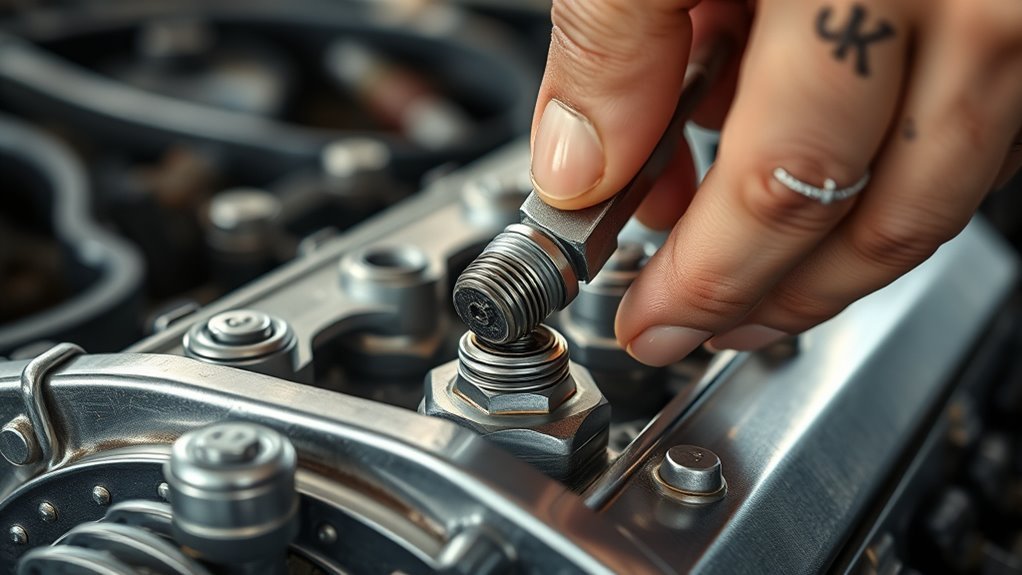
Tag: spark plug removal

  • How to Remove Spark Plugs

    How to Remove Spark Plugs

    To remove spark plugs, first make certain the engine is cool and gather tools: a spark plug socket, ratchet with extension, torque wrench, and gap gauge. Removing spark plugs requires careful handling to avoid damage to the engine components.

    Locate spark plugs by tracing wires or coils, then carefully disconnect them by handling the boot, not the wire. Clean around the plugs with compressed air to avoid debris falling in.

    Use the socket and ratchet to loosen and unscrew plugs gently. Once removed, inspect them for wear or damage. Keep following for detailed steps on handling stubborn plugs and proper maintenance.

    Key Takeaways

    • Ensure the engine is cool and clean debris around the spark plug wells using compressed air and a soft brush.
    • Locate spark plug wires or ignition coils and carefully disconnect them by handling the boot, not the wire itself.
    • Use the correct spark plug socket (5/8 or 13/16 inch) attached to a ratchet with an extension to loosen plugs counterclockwise.
    • Remove spark plugs gently by hand once loosened to avoid damaging threads or the cylinder head.
    • Inspect and measure the spark plugs for wear or damage before deciding on cleaning or replacement.

    Essential Tools for Removing Spark Plugs

    To remove spark plugs effectively, you’ll need a specific set of tools designed for precision and ease of use.

    Begin with a high-quality spark plug socket sized appropriately for the spark plug types in your engine, usually 5/8 or 13/16 inches.

    Start with a durable spark plug socket that matches your engine’s plug size, typically 5/8 or 13/16 inches.

    A ratchet wrench with an extension bar allows you to reach recessed plugs without damaging the ceramic insulator. A torque wrench is essential for reinstalling plugs to the manufacturer’s specified torque, ensuring proper seating and preventing overtightening.

    Additionally, a spark plug gap gauge helps you check and adjust the gap during maintenance.

    Depending on your vehicle’s maintenance frequency, regularly inspecting and replacing worn plugs with these tools maintains peak engine performance and fuel efficiency.

    Using the right tools reduces the risk of damage and simplifies the removal process.

    How to Locate Spark Plugs in Your Engine

    Start by examining your engine layout to pinpoint the general area where the spark plugs are installed, typically along the cylinder head.

    Next, identify the spark plug wires or ignition coils connected directly to the plugs; these will guide you to their exact locations.

    Make sure to trace each wire carefully to avoid confusion during removal.

    Engine Layout Overview

    Understanding your engine’s layout is essential for locating the spark plugs efficiently. Different engine types, such as inline, V-type, or flat engines, feature distinct layout differences that affect spark plug placement.

    In an inline engine, spark plugs typically align along one side of the cylinder head, making them easier to access.

    V-type engines, however, have two cylinder banks, so you’ll find spark plugs on both sides, often requiring you to work in tighter spaces.

    Flat engines position spark plugs horizontally across the cylinders, sometimes beneath intake manifolds.

    To locate the plugs accurately, familiarize yourself with your engine’s configuration, noting where the cylinder heads sit and how the components are arranged.

    This knowledge helps you identify spark plug locations quickly and prevents unnecessary disassembly.

    Identifying Spark Plug Wires

    Where exactly do you find the spark plug wires in your engine bay? Look for thick, insulated cables running from the ignition coil or distributor cap directly to the engine block. These wires connect to the spark plugs, enabling the ignition spark.

    For accurate spark plug identification, follow each wire from the ignition source to the spark plug boot. Pay close attention to wire color coding; manufacturers often use distinct colors or stripes to differentiate cylinders or firing order.

    This coding helps prevent cross-connection during removal or installation. Before disconnecting, note the wire positions and colors carefully to maintain correct spark plug firing sequence.

    Proper identification guarantees you avoid misfiring or engine performance issues during spark plug replacement.

    How to Disconnect Spark Plug Wires and Coils Safely

    Before you disconnect spark plug wires or coils, make certain the engine is cool to prevent burns and avoid damaging sensitive components.

    For spark plug safety, always handle wires by the boot, not the wire itself, to avoid internal damage. Grip the boot firmly and twist slightly to break the seal before pulling it straight out. Avoid yanking or pulling at an angle, as this can damage the wire or coil.

    If your vehicle uses coil-on-plug systems, carefully unplug the electrical connector by pressing the release tab and pulling it away without bending pins. Keep track of wire placement to guarantee correct reinstallation.

    Practice proper wire handling techniques to maintain spark plug circuit integrity and avoid misfires or electrical faults after reassembly.

    How to Clean Around Spark Plugs Before Removal

    Before you remove the spark plugs, gather the necessary tools like a soft brush, compressed air, and a clean rag to prevent debris from entering the cylinder.

    Use the brush and compressed air to carefully clear dirt and dust around the spark plug well.

    Cleaning this area thoroughly guarantees a secure grip and protects the engine from contamination during removal.

    Tools Needed

    Proper cleaning tools guarantee you remove dirt and debris effectively around spark plugs before extraction.

    Begin with a compressed air canister or air compressor to blow away loose particles, essential across all spark plug types.

    Use a soft-bristle brush, such as a nylon or brass brush, to gently dislodge stubborn grime without damaging the spark plug threads or surrounding engine components.

    A vacuum cleaner can also help eliminate debris loosened during brushing.

    Additionally, have lint-free microfiber cloths on hand to wipe surfaces clean.

    Avoid harsh chemicals that may corrode or compromise spark plug materials.

    Employing these tools aligns with recommended maintenance tips, ensuring you maintain peak engine performance and prevent contamination during removal.

    Proper preparation with these tools reduces the risk of damaging delicate spark plug parts or compromising engine integrity.

    Cleaning Techniques

    Although spark plugs are designed to withstand harsh conditions, you should thoroughly clean the area around them before removal to prevent dirt or debris from entering the combustion chamber.

    Begin spark plug cleaning by using compressed air to blow away loose dust and debris. If compressed air isn’t available, use a soft brush to gently remove grime without pushing contaminants deeper.

    Next, apply a suitable degreaser or engine cleaner sparingly, then wipe the area with a clean rag. Avoid excessive moisture, as it can seep into the cylinder.

    Following these maintenance tips guarantees the spark plug hole remains clean, reducing the risk of engine damage during removal.

    Proper cleaning not only protects your engine but also facilitates easier spark plug extraction. Always prioritize cleanliness for effective spark plug maintenance.

    How to Remove Spark Plugs With a Socket

    Grab a spark plug socket and ratchet to begin loosening the spark plug. First, select the correct socket size, typically 5/8-inch or 13/16-inch, depending on your spark plug type. Verify the socket matches the hex size of the plug to avoid rounding the edges.

    Attach the socket to the ratchet, insert it onto the spark plug, and turn counterclockwise with steady pressure. Use a spark plug socket with an internal rubber insert or magnetic feature to securely grip the plug during removal.

    Avoid applying excessive force to prevent damage to the plug or cylinder head threads. Once loosened, continue unscrewing by hand to remove the plug fully.

    This approach works efficiently on most standard spark plug types without causing damage.

    How to Remove Stuck or Hard-to-Remove Spark Plugs

    When spark plugs become stuck, you’ll need specialized techniques to avoid damaging the threads or cylinder head. Start by applying a spark plug lubricant or penetrating oil to the base of the plug. Let it sit for at least 15 minutes to penetrate and reduce friction.

    Next, use heat expansion to your advantage: gently warming the cylinder head around the spark plug can expand the metal, breaking the plug loose. Be cautious not to overheat or damage surrounding components.

    Gently warm the cylinder head to expand the metal and loosen stuck spark plugs without causing damage.

    Use a properly sized spark plug socket with a ratchet, applying slow, steady torque in a counterclockwise direction. If resistance remains high, alternate slight tightening and loosening to gradually free the plug. Avoid excessive force to prevent thread damage.

    Patience and precision are key to successfully removing stuck spark plugs.

    How to Inspect Spark Plugs for Wear and Damage

    A thorough inspection of spark plugs reveals essential information about engine performance and combustion efficiency. When checking for wear and damage, focus on key wear indicators such as electrode erosion, insulator cracks, and carbon deposits. Different spark plug types, copper, platinum, and iridium, show wear differently, so identify your spark plug type before inspection.

    Wear Indicator Description
    Electrode Erosion Rounded or thinned electrodes
    Carbon Deposits Black, dry soot on insulator
    Insulator Cracks Visible fractures or chips
    Gap Size Measure with a feeler gauge

    Use a gap gauge to measure electrode spacing. Excessive gaps reduce performance. Replace plugs showing severe wear or damage to maintain peak engine operation.

    Common Spark Plug Removal Mistakes to Avoid

    After inspecting your spark plugs for wear and damage, the next step is removing them carefully to avoid causing further issues.

    Avoid these common mistakes to maintain the integrity of the spark plug thread and guarantee proper spark plug torque during reinstallation:

    • Forcing a stuck spark plug: This can damage the spark plug thread, making future removals difficult or causing costly repairs.
    • Using incorrect tools or sockets: A proper spark plug socket prevents rounding off the plug’s hex, guaranteeing you maintain correct spark plug torque later.
    • Neglecting to clean the area: Dirt or debris can fall into the cylinder once the plug is removed, risking engine damage.

    Next Steps After Removing Spark Plugs

    Focus on thoroughly cleaning the spark plug wells and inspecting the threads immediately after removal. Use compressed air or a clean brush to remove debris, preventing contamination during reinstallation.

    Examine each spark plug for electrode wear, deposits, or damage, as these signs indicate the need for replacement. Measure the gap with a feeler gauge and adjust if necessary to meet manufacturer specifications.

    Proper spark plug maintenance directly impacts engine performance by guaranteeing peak ignition and fuel efficiency. Before reinstalling, apply anti-seize compound sparingly on the threads to avoid galling but avoid contaminating the electrode.

    Finally, torque the spark plugs to the specified value using a torque wrench to guarantee a secure fit without damaging the cylinder head.

    Following these steps maintains engine reliability and maximizes performance.

    Frequently Asked Questions

    How Often Should Spark Plugs Be Replaced?

    You should replace spark plugs every 30,000 to 100,000 miles, depending on the spark plug lifespan specified by your vehicle manufacturer. Regularly check for wear to maintain ideal replacement frequency and engine performance.

    What Type of Spark Plugs Is Best for My Vehicle?

    Choosing the right spark plug types is like fitting a key to a lock; you must consider compatibility factors such as your vehicle’s engine design, heat range, and manufacturer specs. This ensures peak performance and longevity.

    Can Bad Spark Plugs Affect Fuel Efficiency?

    Yes, bad spark plugs reduce combustion efficiency, increasing fuel consumption. If your spark plug lifespan exceeds recommended limits, misfires occur, causing incomplete fuel burn.

    Replace them promptly to maintain ideal fuel efficiency and engine performance.

    How Do I Know if My Spark Plugs Are Causing Engine Misfires?

    When the shoe fits, check spark plug symptoms like rough idling, poor acceleration, or hesitation. These signs signal engine performance issues, indicating misfires caused by worn or fouled spark plugs.

    Such spark plugs need inspection or replacement promptly.

    Is It Safe to Drive With Faulty Spark Plugs?

    No, you shouldn’t drive with faulty spark plugs. Spark plug symptoms like misfires reduce engine performance, risking damage and increased emissions.

    Addressing issues promptly guarantees safe operation and prevents costly repairs to your engine system.

    Conclusion

    Removing spark plugs is like tuning a delicate instrument—each step guarantees your engine performs at its best. Just as a violinist carefully adjusts strings to avoid damage, you must handle spark plugs with precision to prevent stripping or breaking.

    Remember, 70% of spark plug issues come from improper removal. Follow these instructions closely, and you’ll keep your engine running smoothly while avoiding costly repairs.

    Your attention to detail makes all the difference when removing spark plugs.