Are shocks and struts the same thing? No, they are not; each serves distinct roles in your vehicle’s suspension system. Shocks primarily control impact and rebound by damping suspension movement, helping to smooth out bumps.
Struts, on the other hand, combine this damping function with structural support. They play a crucial role in affecting alignment and wheel positioning, making them more integral to the vehicle’s overall suspension design.
Because of these design differences, swapping one for the other isn’t feasible. Understanding how each functions helps you maintain ride comfort, handling, and safety. Exploring their unique roles will clarify why proper replacement matters.
Key Takeaways
- Shocks and struts are different; shocks only dampen suspension movement, while struts combine damping and structural support functions.
- Struts include coil springs and mounting hardware, unlike shocks which are standalone damping components.
- Struts affect vehicle alignment and support weight; shocks do not contribute to structural integrity.
- Shocks control impact and rebound to improve ride comfort, but struts also maintain wheel alignment and chassis stability.
- Shocks and struts are not interchangeable due to distinct designs and specific vehicle compatibility requirements.
What Are Shocks and How Do They Work?
Shocks, or shock absorbers, play a crucial role in your vehicle’s suspension system by controlling the impact and rebound movement of your car’s springs and suspension.
The shock absorber works by converting kinetic energy from suspension movement into heat through hydraulic fluid, providing a controlled damping force. This damping force prevents excessive oscillation and maintains tire contact with the road, ensuring stability and comfort.
Shock absorbers transform suspension movement into heat, damping oscillations to keep tires on the road for stability and comfort.
When your vehicle encounters bumps, the shock absorber compresses and extends, absorbing energy and dissipating it efficiently.
Without properly functioning shock absorbers, your ride would be unstable, leading to increased wear on suspension components and compromised handling.
Understanding the shock absorber’s role helps you appreciate its significance in delivering a smooth, controlled driving experience.
What Are Struts and How Do They Work?
Struts serve as a key structural component of your vehicle’s suspension system, combining shock absorption and support functions into a single unit. They not only dampen road vibrations like shocks but also provide essential support to your vehicle’s weight and maintain wheel alignment.
Various strut types exist, including MacPherson and coilover struts, each designed to suit different vehicle architectures and performance needs. Understanding these types helps you select the right strut for your vehicle.
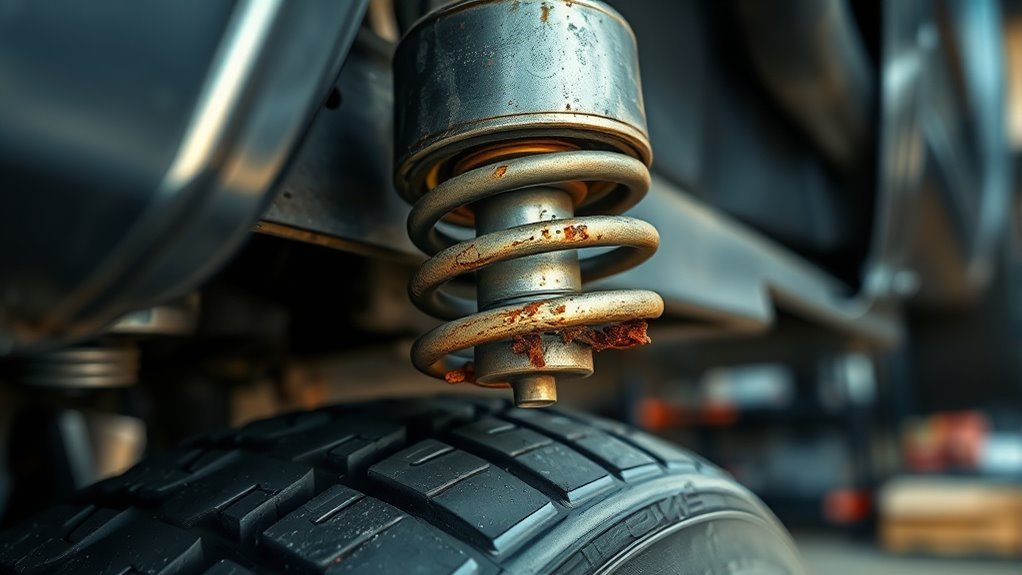
Strut maintenance is important; inspecting for leaks, worn mounts, and damaged springs guarantees peak performance and safety. Neglecting maintenance can lead to uneven tire wear and compromised handling.
Key Functional and Design Differences Between Shocks and Struts
You’ll notice that shocks and struts differ markedly in structural design, with struts integrating suspension components while shocks function independently.
Understanding their distinct functional roles is essential: shocks primarily control damping, whereas struts also support vehicle weight and influence alignment.
Let’s examine how these differences affect performance and maintenance.
Structural Design Differences
Although both serve to control vehicle suspension movements, shocks and struts differ markedly in their structural design and functional roles. A comparative analysis reveals that shocks are typically standalone components consisting of a piston and cylinder filled with hydraulic fluid or gas, designed solely to dampen oscillations.
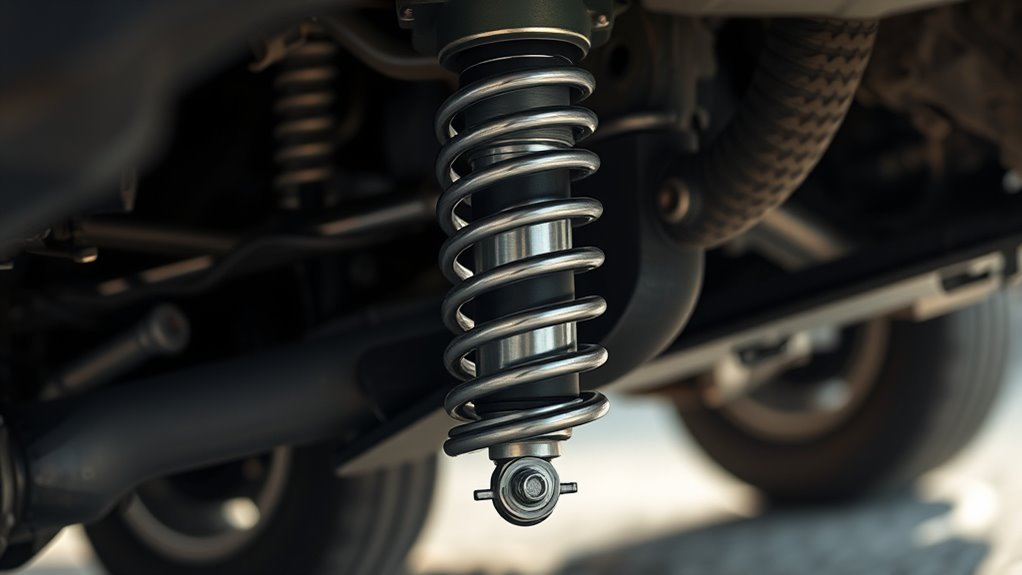
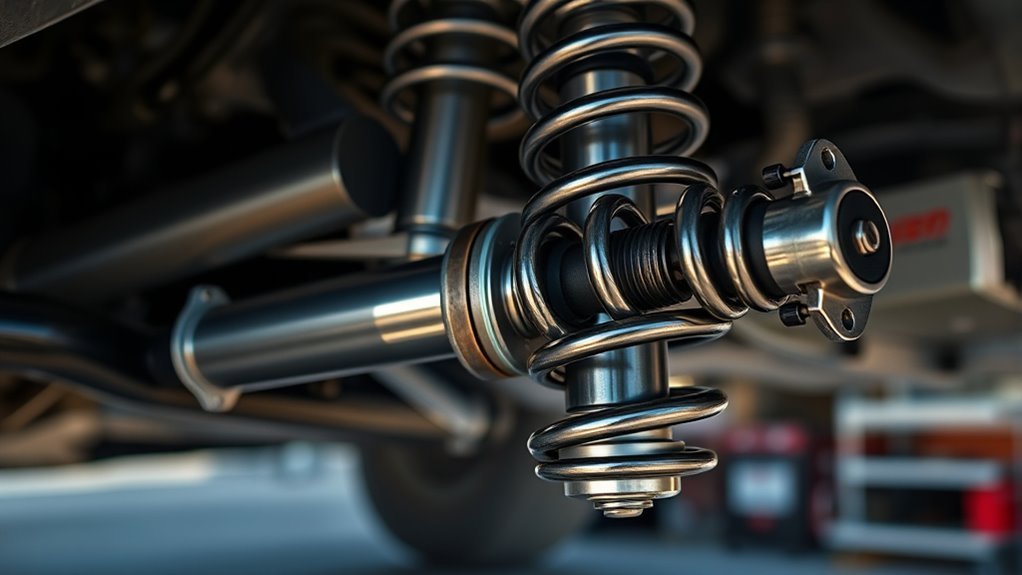
In contrast, struts integrate the shock absorber within a structural framework that often includes a coil spring and mounting hardware, effectively serving as a significant load-bearing part of the suspension. This integration means struts contribute to the vehicle’s alignment and overall structural integrity, whereas shocks do not.
Understanding these structural design distinctions is essential when diagnosing suspension issues or selecting replacement parts, as each component’s architecture directly influences its installation, performance, and interaction with other suspension elements.
Functional Roles Explained
Having recognized the structural differences between shocks and struts, it’s important to examine how these distinctions translate into their functional roles within the suspension system.
You’ll find that shocks primarily focus on shock absorption, controlling the oscillations of the springs to maintain tire contact with the road. They don’t provide structural support but serve to dampen motion and improve ride comfort.
Struts, on the other hand, combine shock absorption with strut support, acting as a critical load-bearing component. They integrate the shock absorber and a coil spring into a single assembly, supporting the vehicle’s weight and maintaining alignment.
This dual function means struts influence steering geometry and overall suspension performance more directly than shocks do, making their role both structural and damping in nature.
How Shocks and Struts Impact Ride Comfort and Handling
Because shocks and struts regulate the suspension system’s response to road conditions, they play a critical role in both ride comfort and handling.
By controlling the rate at which your vehicle’s springs compress and rebound, they directly influence ride quality, minimizing vibrations and jolts you feel over uneven surfaces.
Properly functioning shocks or struts stabilize the chassis, enhancing handling dynamics by reducing body roll, sway, and maintaining tire contact with the road.
Proper shocks or struts stabilize your chassis, reduce body roll and sway, and keep tires firmly on the road.
Struts, integrating shock absorption with structural support, contribute further to precise steering and alignment.
When these components perform effectively, you experience smoother rides and better control during acceleration, braking, and cornering.
Understanding their impact helps you appreciate how essential shocks and struts are for a balanced driving experience that prioritizes both comfort and safety.
Signs You Need to Replace Shocks or Struts
When your shocks or struts start to wear out, the effects on ride comfort and handling become noticeable. You’ll experience clear symptoms of failure and performance degradation that signal the need for replacement. These components directly affect vehicle stability and braking efficiency.
| Symptom | Description |
|---|---|
| Excessive bouncing | Vehicle continues to oscillate after bumps |
| Nose diving | Front end dips sharply during braking |
| Uneven tire wear | Tires show irregular tread wear |
| Fluid leaks | Visible oil on shocks or struts |
| Poor steering response | Difficulty maintaining control or drifting |
Monitoring these symptoms guarantees you address performance degradation promptly, maintaining safety and ride quality. Don’t ignore early signs of shocks or struts failure to avoid costly repairs.
Can You Swap Shocks and Struts When Replacing?
Although shocks and struts serve similar functions in your vehicle’s suspension system, you can’t simply swap one for the other during replacement without considering their distinct designs and mounting requirements.
Shocks compatibility depends on their role as standalone dampers, while struts integrate with the suspension’s structural components, including the coil spring and steering knuckle.
Because of these differences, struts interchangeability is limited to specific vehicle models designed for that configuration.
Struts interchangeability is restricted to models engineered for their unique design and mounting requirements.
Attempting to replace struts with shocks or vice versa can compromise suspension integrity, ride quality, and safety.
Always verify part specifications and mounting points to guarantee proper fitment.
Understanding shocks compatibility and struts interchangeability is essential to maintaining your vehicle’s handling characteristics and preventing premature wear or failure in the suspension system.
Choosing the Right Shocks or Struts for Your Car
Selecting the right shocks or struts for your car requires careful consideration of your vehicle’s suspension type, driving conditions, and manufacturer specifications.
You need to identify the correct shock absorber types compatible with your model, such as twin-tube or monotube designs, each offering distinct damping characteristics.
Additionally, assess strut assembly features like integrated coil springs or mounting plates, which affect installation and performance.
For vehicles with MacPherson strut suspensions, choosing a complete strut assembly guarantees structural integrity and proper ride height.
Consider your typical driving environment: heavy-duty shocks suit rough terrain, while standard units prioritize comfort on smooth roads.
Always consult your vehicle’s manual or a professional to match specifications precisely, promoting safety, longevity, and ideal suspension function.
Frequently Asked Questions
How Often Should Shocks and Struts Be Inspected for Maintenance?
You should perform inspection frequency every 12,000 to 15,000 miles to catch issues early. Regular maintenance tips include checking for leaks, unusual noises, and uneven tire wear to guarantee ideal suspension performance and safety.
Can Worn Shocks or Struts Affect Tire Wear?
Yes, worn shocks or struts can cause uneven tire wear by affecting tire alignment. You’ll likely notice suspension noise, signaling compromised damping performance.
This disruption reduces your vehicle’s stability and increases tire wear rates.
Do Shocks and Struts Influence Vehicle Braking Distance?
Think of shocks and struts as your vehicle’s heartbeat; they directly impact braking performance by maintaining vehicle stability.
If they’re worn, your stopping distance increases, compromising safety and control during emergency braking situations.
Are There Specific Brands Known for Better Shocks or Struts?
You’ll find performance comparison favors brands like Bilstein and KYB for shocks, while Monroe excels in struts. These brand recommendations consistently deliver superior durability, ride quality, and handling precision in various vehicle applications.
How Do Weather Conditions Impact Shocks and Struts Performance?
Weather effects cause performance variations in shocks and struts by altering fluid viscosity and component elasticity.
You’ll notice reduced damping efficiency in extreme cold or heat, which impacts ride comfort, handling, and overall suspension responsiveness.
Conclusion
Understanding shocks and struts is like knowing the difference between a compass and a map—they both guide your ride but in distinct ways. Shocks control movement, while struts provide structural support.
When you choose the right component, you’re tuning your car’s heartbeat for smoother handling and safer travels. Don’t ignore signs of wear; replacing them keeps your drive steady, precise, and reliable.
Ensuring your vehicle performs at its peak every mile means understanding that shocks and struts are not the same thing. Recognizing their differences helps you maintain optimal ride quality and safety.