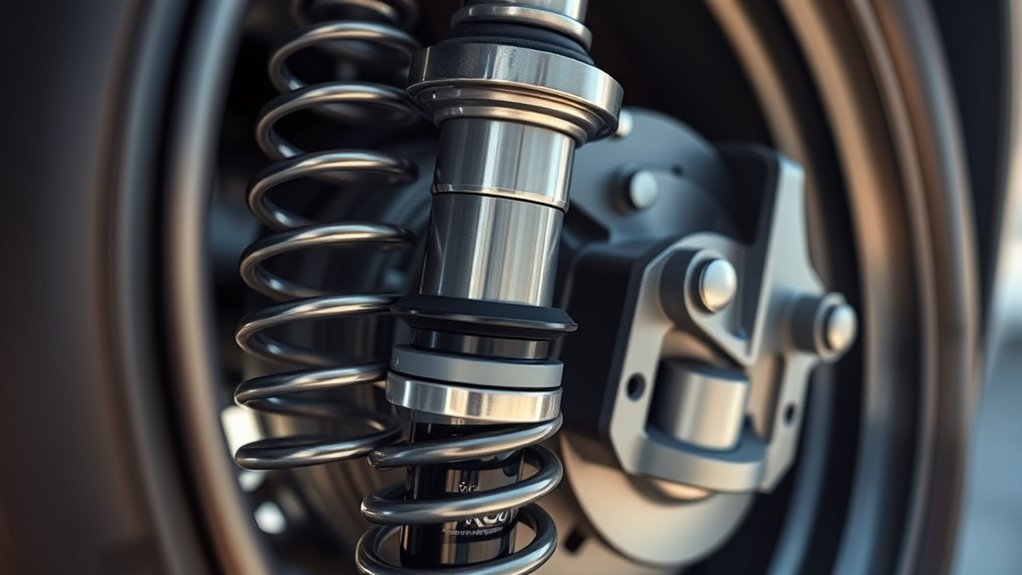
Tag: shocks vs struts

  • Does My Car Have Shocks or Struts

    Does My Car Have Shocks or Struts

    You can tell if your car has shocks or struts by inspecting the suspension near each wheel. If you see a simple cylinder mounted between the frame and axle or control arm, those are shocks—they absorb impacts but don’t support weight.

    If the component combines a shock absorber with a coil spring and attaches directly to the steering knuckle, you have struts. Struts also handle structural support and steering.

    Understanding these differences helps maintain your vehicle properly and improves ride quality, stability, and tire wear. Exploring further reveals signs of wear and replacement essentials.

    Key Takeaways

    • Shocks are separate components mounted between the frame and axle or control arm near each wheel.
    • Struts combine the shock absorber and coil spring into one assembly supporting vehicle weight.
    • Struts connect directly to the steering knuckle and extend upward into the engine bay or wheel well.
    • If your suspension part supports steering and has a coil spring integrated, your car has struts.
    • If the suspension part is a standalone damper without spring support, your car has shocks.

    How to Tell If Your Car Has Shocks or Struts

    How can you determine whether your car is equipped with shocks or struts? First, locate the suspension components near each wheel.

    Shock absorbers are typically separate from the suspension’s structural elements, mounted between the frame and the axle or control arm.

    Shock absorbers are usually separate, positioned between the frame and the axle or control arm.

    In contrast, a strut assembly integrates a shock absorber with a coil spring and serves as a key structural part of the suspension system.

    Check if the component supports the vehicle’s weight and connects directly to the steering knuckle; that indicates a strut assembly.

    Additionally, struts usually extend upward into the engine bay or wheel well, whereas shock absorbers remain lower and isolated.

    How Shocks or Struts Differ and Affect Your Ride

    Although shocks and struts both control your vehicle’s suspension movement, they perform distinct functions that impact handling and ride comfort.

    Shocks primarily absorb and dampen the impact from road irregularities, reducing vibrations and enhancing ride comfort by controlling rebound motion.

    Struts, meanwhile, combine this damping function with structural support, bearing some of your vehicle’s weight and affecting alignment settings. This integration means struts directly influence handling performance by contributing to steering precision and vehicle stability.

    When struts wear, you may notice changes in both ride comfort and handling, as they play a critical role in maintaining suspension geometry.

    Understanding this distinction helps you appreciate how each component affects your driving experience and why proper maintenance is essential for ideal ride comfort and handling performance.

    Signs Your Shocks or Struts Need Replacement

    When your shocks or struts begin to fail, you’ll notice specific symptoms that indicate it’s time for replacement. A bumpy ride and excessive bouncing after hitting a bump are clear signs your suspension isn’t absorbing impacts properly.

    Poor handling, such as difficulty steering or instability during turns, also suggests worn shocks or struts. Check your tires; uneven tire wear can result from inadequate suspension damping.

    Difficulty steering or uneven tire wear often signals worn shocks or struts affecting suspension performance

    Inspect the shocks or struts for fluid leaks, which indicate internal seal failure compromising performance. Additionally, noise issues like clunking or rattling during driving point to damaged components.

    Addressing these symptoms promptly guarantees vehicle safety and ride quality, preventing further damage to your suspension system and tires.

    What Happens When You Replace Shocks or Struts

    Replacing your shocks or struts restores your vehicle’s suspension system to ideal performance by improving ride comfort, handling stability, and tire longevity.

    When you replace these components, you directly impact performance by reestablishing proper damping force, which controls the up-and-down movement of the wheels. This stabilizes the vehicle during acceleration, braking, and cornering.

    The ride quality greatly improves as new shocks or struts absorb road irregularities more effectively, reducing vibrations and harshness felt inside the cabin.

    Additionally, proper suspension function guarantees even tire contact with the road, minimizing uneven tire wear and extending tire life.

    How Much Replacing Shocks or Struts Typically Costs

    Restoring your vehicle’s suspension with new shocks or struts greatly improves ride quality and safety, but understanding the cost involved is important for informed maintenance decisions.

    The replacement cost for shocks typically ranges from $150 to $300 per pair, depending on the make and model.

    Expect to pay between $150 and $300 for a pair of shock replacements, varying by vehicle type.

    Struts are generally more expensive due to their complex design, with average pricing between $300 and $700 per pair. Labor costs vary, usually adding $100 to $200 per axle.

    Keep in mind, premium or performance parts may elevate the price further.

    It’s wise to replace shocks or struts in pairs to maintain balanced handling and even wear.

    Accurate cost estimates depend on your vehicle’s specifications and local labor rates, so consult a trusted mechanic for a precise quote.

    Frequently Asked Questions

    Can Shocks or Struts Affect My Car’s Braking Distance?

    Yes, shocks or struts directly impact your car’s braking performance by stabilizing the suspension system. Worn components reduce tire contact, increasing braking distance and compromising control.

    Maintaining them guarantees ideal stopping power and safety.

    Are Shocks and Struts Covered Under Car Warranties?

    Warranty coverage for shocks and struts varies by manufacturer; some include them under limited warranties. Follow maintenance tips like regular inspections to detect wear early and guarantee your warranty remains valid and effective for repairs.

    Do All Vehicles Have Either Shocks or Struts, Not Both?

    Picture your vehicle’s suspension systems as a tailored suit; depending on vehicle types, you’ll have either shocks or struts, not both. This design optimizes performance and safety, ensuring they complement rather than duplicate function.

    Can I Replace Shocks or Struts Myself Without Professional Help?

    You can tackle DIY repairs for shocks or struts if you have the right tools, like a spring compressor and wrenches.

    Make certain you follow safety protocols precisely to avoid injury or improper installation during the process.

    How Do Weather Conditions Impact the Lifespan of Shocks or Struts?

    Weather effects hit your shocks and struts like a relentless storm, accelerating wear. You’ll want to inspect for leaks, corrosion, and damage regularly.

    Proper maintenance tips include cleaning and timely replacement to extend their lifespan effectively.

    Conclusion

    Understanding whether your car has shocks or struts is like identifying the pillars holding up a bridge—they silently bear the load and guarantee smooth passage. These components play a crucial role in your vehicle’s suspension system, absorbing impacts and ensuring a comfortable ride.

    When shocks or struts wear out, your car’s stability and comfort falter, signaling it’s time for replacement. Recognizing the signs early can help you maintain control and safety on the road.

    By acting promptly, you restore balance and control, maintaining the vehicle’s engineered harmony. Investing in these essential parts safeguards your drive’s safety and performance, much like reinforcing a significant support beam. Knowing if your car has shocks or struts is key to keeping your suspension system in top shape.