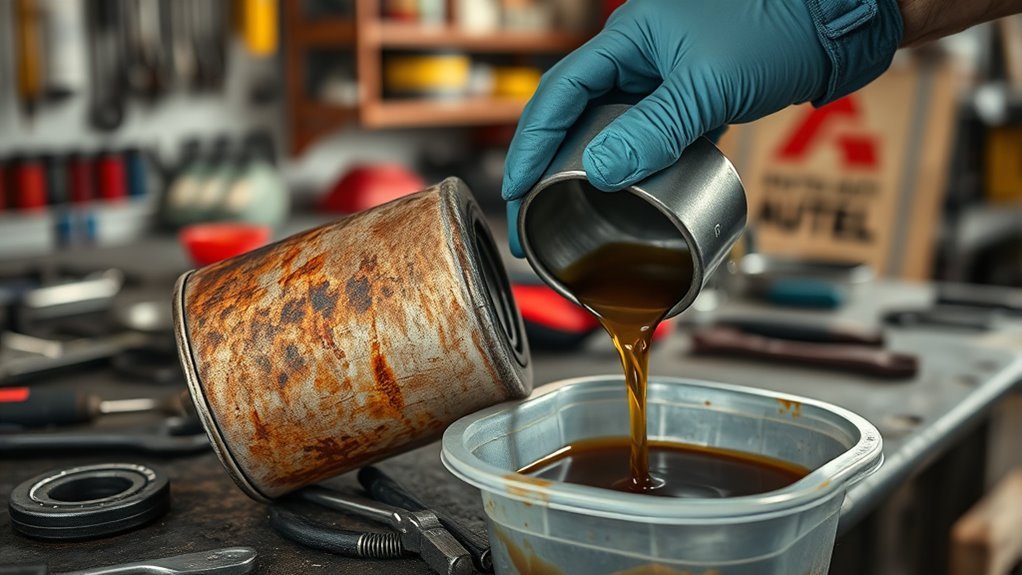
You shouldn’t throw old oil filters in the trash because they contain hazardous oil and metals that can harm the environment. Proper handling of old oil filters is essential to prevent pollution and recover valuable materials.
Instead, drain them by puncturing the dome end and letting oil drip into a pan for at least 12 hours. Store drained filters in a sealed container and take them to a certified recycling center or auto shop that accepts used filters.
Proper disposal protects ecosystems and recovers valuable materials. Keep going to find out more about recycling options and storage tips.
Key Takeaways
- Drain oil filters upside down over a pan for at least 12 hours to remove residual oil safely before disposal.
- Store drained filters in sealed, leak-proof containers labeled appropriately to prevent leaks and contamination.
- Take fully drained oil filters to certified recycling centers or hazardous waste facilities for proper processing.
- Avoid disposing of oil filters in regular trash to prevent soil and water pollution from toxic substances.
- Check with local auto shops or scrap yards for oil filter recycling programs and accepted preparation methods.
Why You Should Never Throw Old Oil Filters in the Trash
Although it might seem convenient, you should never throw old oil filters in the trash because they contain hazardous materials that can contaminate soil and water.
Oil filters retain residual motor oil, which contains heavy metals and toxic substances harmful to the environment. Disposing of these filters improperly leads to leaching of pollutants, negatively impacting ecosystems and groundwater quality.
To minimize environmental impact, you must prioritize safe disposal methods. Recycling programs and designated collection centers handle used oil filters, ensuring proper treatment and recovery of valuable materials.
By following recommended disposal protocols, you reduce hazardous waste exposure and promote sustainable resource management. Avoiding landfill disposal prevents contamination and supports environmental protection efforts.
Your responsible actions directly contribute to safeguarding natural resources and public health.
How to Safely Drain Oil From Your Used Oil Filter
Before you start, gather a drain pan, gloves, and safety glasses to protect yourself and catch the oil.
Position the used oil filter upside down over the pan to allow efficient draining of residual oil.
Once drained, transfer the collected oil to a sealed container for proper recycling or disposal.
Prepare Necessary Tools
Since handling used oil filters involves exposure to hazardous fluids, you’ll need specific tools to drain them safely and efficiently.
Start by assembling a tools checklist that includes oil filter wrenches, a drain pan with adequate capacity, and a funnel for controlled oil transfer.
Equip yourself with proper safety gear: nitrile gloves to protect your skin, safety goggles to guard your eyes, and protective clothing to prevent contamination.
A sturdy work surface and absorbent rags are essential for spill management.
Verify your tools are clean and in good condition to prevent accidents.
Having this organized setup will streamline the process and minimize exposure risks.
Drain Oil Efficiently
Start by securely positioning the used oil filter over your drain pan to catch all residual oil.
To drain oil efficiently, puncture the filter’s dome end with a sharp tool, allowing oil to flow freely.
Let it drain for at least 12 hours to guarantee minimal waste and safer handling. This process is essential in oil filter maintenance to prevent contamination and spills.
Avoid squeezing the filter, as this can cause splatter and injury.
If you’re considering oil filter alternatives, such as reusable or cartridge-style filters, these often simplify draining and reduce waste.
Regardless of the filter type, proper draining minimizes environmental impact and prepares the filter for responsible disposal or recycling.
Efficient draining is the first step in managing used oil filters safely and effectively.
Dispose Oil Responsibly
When you dispose of used oil filters, you must confirm that all residual oil is thoroughly drained to prevent environmental contamination.
Start by puncturing the filter’s dome end with a specialized tool to release trapped oil quickly.
Allow the filter to drain over a designated container for at least 12 hours to capture all remaining oil. This careful process minimizes environmental impact by preventing oil leaks during transportation or disposal.
Once fully drained, store the filter in a sealed, leak-proof container to confirm safe disposal.
Take the drained filters to a certified recycling or hazardous waste facility that complies with local regulations.
Following these steps confirms you handle used oil filters responsibly, reducing pollution risks and supporting effective environmental management practices.
Where to Recycle Old Oil Filters Near You
You can recycle old oil filters at local recycling centers that handle automotive waste.
Many auto shops also accept used filters for proper disposal and recycling.
Check with nearby facilities to confirm their acceptance policies and drop-off procedures.
Local Recycling Centers
Local recycling centers provide a straightforward solution for disposing of old oil filters responsibly.
These facilities are equipped to handle hazardous waste, ensuring oil residues are properly processed and metal components recycled.
To find nearby recycling locations, check your municipality’s website or contact local waste management services.
Many centers participate in community programs promoting safe disposal practices, often offering drop-off events or designated collection points.
Before you visit, confirm the center’s hours and any specific preparation requirements, such as draining filters to reduce contamination.
Utilizing local recycling centers helps prevent environmental damage and recovers valuable materials efficiently.
Auto Shops Accepting Filters
How can you conveniently recycle old oil filters while getting your vehicle serviced? Many auto shop locations accept used oil filters for recycling, streamlining the disposal process.
Before dropping off your filter, verify each shop’s filter disposal policies, as requirements can vary. Some shops may require filters to be drained of residual oil, while others handle this on-site.
Contacting the auto shop directly or checking their website can provide specific instructions and confirm acceptance. Utilizing these services not only guarantees compliance with environmental regulations but also supports proper hazardous waste management.
By integrating oil filter recycling into your routine vehicle maintenance, you reduce environmental impact and avoid improper disposal risks.
Seek out certified auto shops near you that participate in responsible filter recycling programs for efficient handling.
Can You Recycle Oil Filters at Scrap Yards?
Where can old oil filters be recycled effectively? Many scrap yards accept used oil filters, but you need to check their specific scrap yard policies first.
These policies vary; some require filters to be drained of oil, while others accept them as-is.
By recycling oil filters at scrap yards, you contribute to recovering valuable metals like steel, reducing landfill waste, and minimizing environmental contamination.
To participate, make certain you store and transport filters safely to prevent oil leaks.
Confirm if the scrap yard requires pre-treatment, such as puncturing or draining filters.
Recycling benefits extend beyond metal recovery; they also help conserve natural resources and reduce pollution.
Always follow the scrap yard’s guidelines to guarantee your filters are processed safely and efficiently.
How Auto Shops Dispose of Used Oil Filters Safely
Auto shops follow strict protocols to dispose of used oil filters safely, protecting both the environment and public health. When you bring your vehicle in, the shop adheres to specific auto shop procedures that begin with draining residual oil from the filters. This process minimizes hazardous waste.
Next, technicians use approved filter disposal methods, such as puncturing and crushing the filters to extract trapped oil, which is then collected for recycling or proper hazardous waste handling.
After oil extraction, the metal components are separated and sent to certified recycling facilities. These steps guarantee contaminants don’t leak into soil or water systems.
How to Use Oil Filter Recycling Kits at Home
Although handling used oil filters at home may seem challenging, oil filter recycling kits provide a straightforward and safe solution.
Handling used oil filters at home can be easy and safe with the right recycling kit.
These kits help you manage home maintenance efficiently while minimizing environmental impact.
To use one effectively:
- Secure the used oil filter in the kit’s containment unit to prevent leaks.
- Drain residual oil completely by puncturing the filter’s dome using the kit’s specialized tool.
- Seal the drained filter in the provided container or bag to avoid contamination.
- Transport the sealed filter to a designated recycling center as instructed by the kit.
What Happens to Oil Filters After Recycling
Once you’ve properly prepared and delivered your used oil filter for recycling, it undergoes a specialized process to extract valuable materials. The recycling process starts by draining residual oil, then shredding the filter to separate metal from filter media.
Steel and aluminum components are recovered for reuse, while the filter media is handled according to environmental guidelines.
| Oil Filter Materials | Recycling Process Step |
|---|---|
| Steel and Aluminum | Shredding and magnetic sorting |
| Filter Media | Safe disposal or repurposing |
| Residual Oil | Draining and refining |
Why Recycling Old Oil Filters Helps the Planet
Because oil filters contain hazardous materials and valuable metals, recycling them reduces environmental contamination and conserves natural resources.
Recycling oil filters prevents contamination and saves precious natural resources.
When you recycle old oil filters, you directly improve waste management efficiency and minimize their environmental impact.
Here’s why recycling helps the planet:
- Prevents toxic oil and metal leakage into soil and water.
- Recovers steel and aluminum, reducing the need for virgin mining.
- Lowers greenhouse gas emissions by cutting down energy-intensive metal production.
- Supports circular economy practices by turning used filters into raw materials.
Tips for Storing Old Oil Filters Before Recycling
Properly storing old oil filters before recycling is essential to prevent leaks and guarantee safe handling. Start by draining the filters thoroughly; place them upside down over a drip pan for at least 12 hours to remove residual oil.
Use a sealed, leak-proof container specifically designated for oil filter storage to avoid spills during transport. Label the container clearly to confirm proper identification and handling.
Store the container in a cool, dry area away from heat sources and direct sunlight to maintain structural integrity. Avoid stacking heavy objects on top to prevent damage and potential leaks.
Following these oil filter storage practices guarantees compliance with environmental regulations and promotes safe handling throughout the recycling process, minimizing contamination risks and facilitating efficient recycling operations.
Frequently Asked Questions
Can I Reuse an Old Oil Filter for a Different Vehicle?
You can’t reuse an old oil filter for a different vehicle unless filter compatibility is confirmed. Using incompatible filters risks engine damage.
Always prioritize proper vehicle maintenance by installing a new, correct filter each time.
How Often Should I Change My Oil Filter?
Imagine your engine seizing unexpectedly; that’s why you should follow the oil change frequency and filter replacement schedule precisely.
Typically, change your oil filter every 3,000 to 5,000 miles to guarantee peak engine performance and longevity.
Are All Oil Filters Compatible With All Types of Oil?
No, not all oil filter types match every oil compatibility. You need to check your vehicle’s specifications to guarantee the filter suits the oil type you use, preventing performance issues or potential engine damage.
What Tools Do I Need to Remove an Oil Filter?
You’ll need an oil filter wrench to grip and turn the filter effectively. Master removal techniques like twisting counterclockwise and using penetrating oil if it’s stuck.
Gloves and a drain pan also help during the process.
Can Old Oil Filters Be Used for DIY Projects?
You can turn old oil filters into creative oil filter crafts, transforming scrap into treasure.
Conclusion
Don’t toss old oil filters in the trash—they contain hazardous oil that harms the environment. You might think recycling is complicated or time-consuming, but it’s actually straightforward with proper draining and local drop-off points.
Using oil filter recycling kits or visiting scrap yards guarantees safe disposal and resource recovery. By recycling, you’re preventing pollution and conserving metals.
Store filters properly until recycling to keep leaks contained and make the process easier. Proper handling is key when deciding what to do with old oil filter to ensure environmental safety.