Tag: oil leak

  • Why Is There Oil on My Spark Plugs

    Why Is There Oil on My Spark Plugs

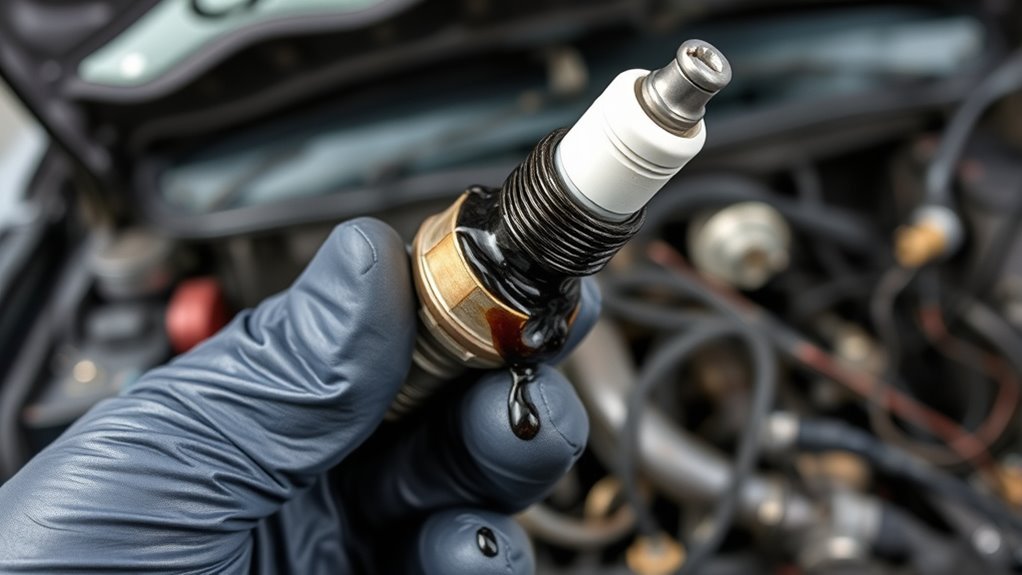
    You’re finding oil on your spark plugs because oil is leaking into the combustion chamber, which is often caused by worn piston rings, damaged valve seals, or a failing valve cover gasket.

    This oil disrupts spark generation, leading to misfires and reduced engine performance. Worn seals and gaskets let oil seep onto plugs or into the combustion area, which fouls plugs and degrades combustion efficiency.

    Understanding the root causes and their effects will help you address the problem effectively.

    Key Takeaways

    • Oil on spark plugs often indicates worn piston rings or valve seals allowing oil into the combustion chamber.
    • Damaged valve cover gaskets can leak oil into spark plug wells, contaminating the plugs.
    • Oil fouling reduces spark plug efficiency, causing misfires and poor engine performance.
    • Regular inspection and replacement of gaskets, seals, and spark plugs prevent oil contamination.
    • Engine compression tests help diagnose piston ring or valve guide wear causing oil leaks onto plugs.

    What Causes Oil on Spark Plugs?

    When oil appears on your spark plugs, it’s usually because oil is leaking into the combustion chamber, which interferes with the spark needed for ignition. This leakage often results from worn valve seals or damaged cylinder walls.

    Oil on spark plugs signals leaks into the combustion chamber, often due to worn valve seals or cylinder wall damage.

    Increased oil consumption caused by these issues allows oil to coat the spark plugs, reducing their efficiency. Different spark plug types, such as copper, platinum, or iridium, may show varying degrees of fouling, but all are susceptible to oil contamination.

    Identifying oil on spark plugs requires careful inspection, as excessive oil can cause misfires and engine performance issues.

    Monitoring oil consumption rates alongside spark plug condition helps diagnose the root cause, enabling proper maintenance to prevent further engine damage and guarantee peak combustion.

    How Worn Piston Rings Cause Oil Fouling

    Although piston rings are designed to seal the combustion chamber effectively, worn piston rings allow engine oil to seep past them and into the cylinder. This piston wear compromises the seal, causing oil leakage that contaminates the spark plugs.

    As oil accumulates on the plugs, it disrupts combustion and leads to misfires.

    Cause Effect
    Piston ring wear Decreased sealing
    Oil leakage past rings Oil fouling on spark plugs
    Oil in combustion Misfires and poor ignition
    Increased piston wear Accelerated oil leakage
    Fouled spark plugs Reduced engine performance

    You must address piston ring wear promptly to stop oil leakage and maintain proper engine function.

    Why Valve Cover Gasket Leaks Matter

    Since the valve cover gasket seals the top of the engine and prevents oil from escaping, a leak can allow oil to seep into areas where it shouldn’t be, including the spark plug wells.

    You need to understand that gasket materials degrade over time due to heat and pressure, compromising the seal’s integrity. This degradation leads to oil leaks that contaminate the spark plugs, causing misfires and reducing engine efficiency.

    Timely leak detection is essential; you can spot leaks by inspecting for oil residue around the valve cover or through diagnostic tools measuring engine performance.

    Addressing valve cover gasket leaks promptly prevents further engine damage and maintains peak combustion.

    Choosing high-quality gasket materials guarantees a durable seal, minimizing the risk of leaks and costly repairs down the line.

    Cylinder Head and Valve Seal Wear Explained

    Because the cylinder head houses critical components like the valves and valve seals, wear in these areas directly impacts engine performance and oil control.

    When valve seals degrade or harden, they lose the ability to prevent oil from seeping into the combustion chamber. This oil contamination can accumulate on spark plugs, causing fouling.

    Additionally, any damage to the cylinder head, such as warping or cracks, can compromise the sealing surfaces, exacerbating oil leakage past valve seals.

    If you notice oil on your spark plugs, inspecting the cylinder head and valve seals for wear or damage is essential.

    Replacing worn valve seals or repairing cylinder head defects restores proper oil control, preventing further spark plug fouling and maintaining engine efficiency.

    How Oil Fouling Impacts Engine Performance

    When oil fouls your spark plugs, it reduces combustion efficiency by disrupting the air-fuel mixture ignition.

    You’ll also face a higher risk of misfires, which can cause rough engine operation and loss of power.

    Additionally, oil contamination can degrade engine oil quality, leading to increased wear and potential damage.

    Reduced Combustion Efficiency

    Although oil fouling on spark plugs might seem minor, it greatly disrupts combustion efficiency by hindering proper spark formation. When oil coats the spark plugs, it interferes with the ignition process inside the combustion chamber, leading to incomplete fuel mixture combustion. This directly reduces engine power and increases fuel consumption.

    Here’s how oil fouling impacts combustion efficiency:

    1. Impaired spark generation: Oil deposits insulate the spark plug electrodes, weakening the spark needed to ignite the air-fuel mixture.
    2. Incomplete combustion: A compromised spark causes a richer or leaner fuel mixture burn, lowering overall energy output.
    3. Increased emissions: Unburned fuel and oil residues produce higher hydrocarbon and particulate emissions.

    Addressing oil fouling is essential to maintaining ideal combustion chamber performance and engine efficiency.

    Increased Misfire Risk

    If oil contaminates your spark plugs, it greatly increases the risk of engine misfires by disrupting the consistent ignition of the air-fuel mixture.

    Oil fouling forms a conductive layer that impedes the spark’s ability to jump the gap, leading to ignition issues.

    These ignition failures cause incomplete combustion cycles, manifesting as misfire symptoms such as rough idling, hesitation during acceleration, and decreased power output.

    When the spark plugs fail to ignite the mixture reliably, engine control modules detect irregular combustion patterns, triggering diagnostic trouble codes.

    Addressing oil fouling promptly prevents persistent misfires, which can damage catalytic converters and reduce fuel efficiency.

    Monitoring for misfire symptoms and inspecting spark plugs regularly guarantees excellent engine performance and prevents long-term mechanical issues caused by oil contamination.

    Engine Oil Contamination Effects

    Oil fouling not only triggers misfires but also degrades overall engine performance by interfering with combustion efficiency.

    When engine oil contaminates the spark plug, it creates a barrier that disrupts the spark generation necessary for ignition.

    This contamination leads to:

    1. Reduced power output due to incomplete combustion.
    2. Increased fuel consumption as the engine compensates for inefficient burning.
    3. Elevated emissions resulting from unburned fuel and oil residues.

    You’ll notice rough idling, hesitation during acceleration, and difficulty starting the engine.

    Additionally, oil on the spark plug can cause carbon buildup, further impairing ignition and accelerating wear on ignition components.

    Addressing oil contamination promptly is vital to maintain peak engine performance and prevent long-term damage.

    Regular inspection of spark plugs helps identify oil fouling early, allowing you to diagnose underlying issues like worn piston rings or valve seals causing oil leaks.

    How to Diagnose Oil on Spark Plugs

    How can you accurately identify oil contamination on your spark plugs? Begin by removing the plugs and inspecting the electrodes and insulator tips.

    Oil contamination appears as a wet, glossy coating or black, oily residue, distinct from carbon fouling.

    Different spark plug types, such as copper or iridium, may exhibit varying discoloration, but oil presence is consistent across types.

    Analyze the oil types involved; engine oil typically leaves a thick, viscous film, while transmission or gear oil might present differently if cross-contamination occurs.

    Use a magnifying glass for detailed inspection.

    Additionally, check for misfires or rough idling, which often accompany oil-fouled plugs.

    Combining visual inspection with performance symptoms helps you diagnose oil contamination precisely, enabling targeted maintenance decisions.

    How to Fix Oil on Spark Plugs

    When you find oil on your spark plugs, addressing the underlying cause is essential to prevent recurrence. The oil leak that contaminates the spark plug often originates from worn valve cover gaskets, piston rings, or valve guides.

    To fix the issue, follow these steps:

    1. Replace faulty gaskets or seals: Inspect and replace valve cover gaskets or seals causing the oil leak.
    2. Evaluate piston rings and valve guides: If oil leakage persists, test compression and consider replacing worn piston rings or valve guides.
    3. Clean or replace spark plugs: Remove oil-contaminated spark plugs and clean them thoroughly or install new ones to restore peak engine performance.

    Frequently Asked Questions

    Can Oil on Spark Plugs Cause My Car to Fail Emissions Tests?

    Yes, oil contamination on your spark plugs can cause your car to fail emissions tests. It disrupts combustion, increasing pollutants and preventing your vehicle from meeting strict emissions standards required by regulations.

    Address this promptly.

    Is Oil Fouling on Spark Plugs Covered Under Car Warranty?

    Warranty coverage for oil fouling on spark plugs varies by manufacturer and cause. If it’s due to a covered defect, repair costs may be included; otherwise, you’ll likely bear the expense.

    Always check your specific warranty terms.

    How Often Should Spark Plugs Be Replaced if Oil Fouling Occurs?

    If oil fouling coats your spark plugs like a thick, greasy blanket, replace them every 10,000 to 15,000 miles.

    Regular spark plug maintenance curbs excessive oil consumption and guarantees peak engine performance and fuel efficiency.

    Can Using Synthetic Oil Prevent Oil Fouling on Spark Plugs?

    Yes, using synthetic oil benefits your engine by reducing oil breakdown and leakage, which helps maintain spark plug performance. It provides better lubrication and cleaner combustion, decreasing the likelihood of oil fouling on your spark plugs.

    Does Oil on Spark Plugs Affect Fuel Efficiency?

    Oil on spark plugs is like smudged glass, obstructing clear fuel combustion. When you let oil coat your plugs, you disrupt engine performance, causing incomplete burning and lowering your fuel efficiency.

    Keep plugs clean for ideal results.

    Conclusion

    Finding oil on your spark plugs is like spotting smoke before a fire—it’s a clear warning sign your engine needs attention. Worn piston rings, leaking valve cover gaskets, or damaged valve seals allow oil to seep into areas where it shouldn’t be, compromising combustion.

    Ignoring this symptom can lead to poor engine performance or even severe damage. Prompt diagnosis and repair are essential to maintain your engine’s health and efficiency.

    By addressing the issue of oil on your spark plugs early, you can prevent costly repairs and keep your vehicle running smoothly. Recognizing and fixing the cause of oil on your spark plugs turns a warning into a solution.