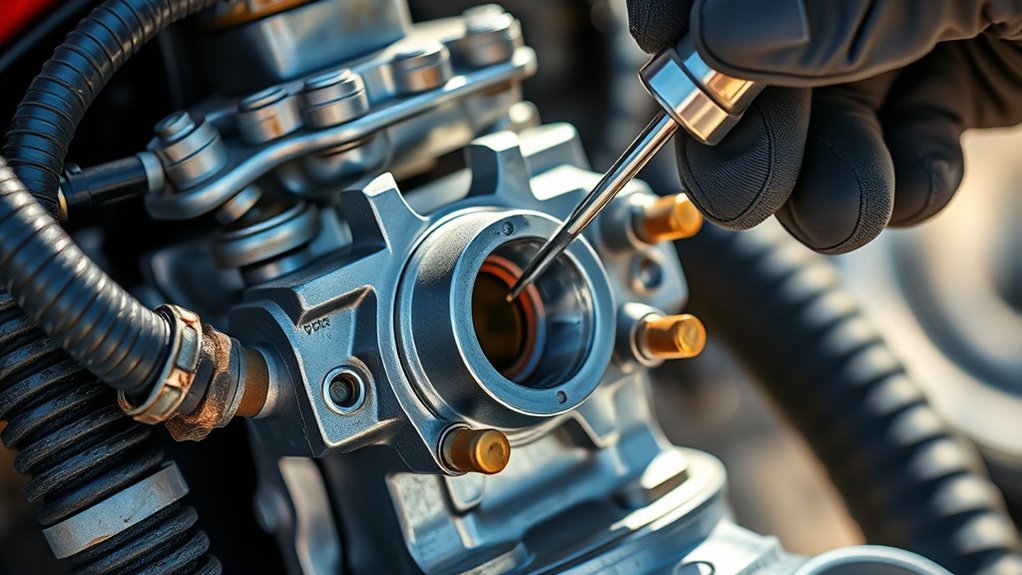
Tag: motorcycle carburetor

  • What Causes a Motorcycle Carburetor to Run Lean

    What Causes a Motorcycle Carburetor to Run Lean

    Your motorcycle carburetor runs lean when it delivers too little fuel compared to the air entering the engine. This imbalance in the air-fuel mixture is the primary cause of a lean-running carburetor. It often results from improper carburetor tuning, clogged or incorrectly sized jets, poor fuel quality, or air leaks around intake boots and gaskets.

    These issues disrupt the ideal air-fuel ratio, leading to engine overheating and a noticeable loss of power. The lean condition can cause the engine to run hotter than normal, potentially damaging internal components over time.

    To fix lean conditions, adjustments and cleaning are essential. Regular maintenance, including checking jets, seals, and fuel quality, helps keep the carburetor functioning properly. Keep exploring to understand the detailed causes and precise solutions.

    Key Takeaways

    • Air leaks around the carburetor or intake manifold introduce unmetered air, causing a lean fuel mixture.
    • Clogged or dirty jets restrict fuel flow, leading to insufficient fuel delivery.
    • Incorrect jet sizing limits fuel supply, resulting in a lean running condition.
    • Improper carburetor tuning, such as wrong pilot screw or needle adjustments, disrupts the air-fuel ratio.
    • Poor fuel quality or fuel delivery blockages reduce effective combustion, contributing to lean operation.

    How to Tell If Your Motorcycle Carburetor Is Running Lean

    How can you determine if your motorcycle carburetor is running lean? Start by observing engine performance during carburetor tuning. A lean fuel mixture means insufficient fuel relative to air, causing symptoms like engine overheating, hesitation on acceleration, and backfiring through the intake.

    You’ll notice a high-pitched exhaust sound and a lean spark plug color, usually white or light gray instead of tan.

    During carburetor tuning, monitor throttle response; if the engine stumbles or lacks power at mid-to-high RPMs, the mixture is likely lean.

    Use precise adjustments on the fuel mixture screws to correct this, ensuring a balanced air-fuel ratio.

    Regular checks and tuning can prevent damage caused by running lean, maintaining ideal engine efficiency and longevity.

    Common Causes of a Lean Motorcycle Carburetor

    Identifying that your motorcycle carburetor is running lean is only the first step; understanding the underlying causes allows you to address the issue effectively. Lean running often stems from improper carburetor tuning, which disrupts the ideal air-fuel mixture.

    Additionally, poor fuel quality can reduce combustion efficiency, contributing to lean conditions. Incorrect jet sizing or clogged jets also restrict fuel flow, worsening the lean state.

    Cause Effect on Carburetor
    Improper carburetor tuning Insufficient fuel delivery
    Low fuel quality Inconsistent combustion
    Incorrect jetting Restricted fuel flow

    How Air Leaks and Dirty Jets Cause Lean Running

    When air leaks develop around the carburetor or intake manifold, they introduce unmetered air that disrupts the fuel mixture, causing the engine to run lean. These leaks upset the air fuel balance, reducing fuel delivery relative to air intake.

    Similarly, dirty jets restrict fuel flow, further leaning out the mixture. To maintain peak performance, you must address these issues promptly.

    Key points to take into account:

    • Inspect intake boots and carburetor gaskets for cracks or gaps
    • Use carburetor cleaner to remove deposits from jets and passages
    • Verify jet orifices are clear to guarantee proper fuel flow
    • Check for vacuum leaks using a carburetor cleaner spray test
    • Confirm all carburetor components are correctly seated to prevent leaks

    Regular jet cleaning and leak inspection are essential to prevent lean running and maintain engine reliability.

    How Carburetor Settings Affect Lean Conditions

    Beyond air leaks and clogged jets, the carburetor’s adjustment settings play a significant role in lean running conditions.

    When you perform carburetor tuning, incorrect adjustments to the pilot screw, needle position, or main jet can reduce the fuel flow, causing a lean fuel mixture.

    For instance, tightening the pilot screw too much restricts fuel at idle and low throttle, while raising the needle clips lessens fuel delivery mid-throttle.

    Similarly, selecting a smaller main jet limits fuel at high RPMs.

    Each component affects the air-to-fuel ratio, so precise tuning is critical.

    If you don’t adjust these settings correctly, the engine will run hotter and risk damage due to insufficient fuel.

    Understanding how carburetor tuning influences the fuel mixture helps you prevent lean conditions effectively.

    Diagnosing Lean Running: Symptoms and Tests

    Because a lean fuel mixture can cause engine damage, you need to recognize its symptoms early and perform targeted tests. Lean running often leads to reduced fuel efficiency and noticeable performance issues.

    Recognize lean fuel mixture symptoms early to avoid engine damage and performance problems.

    To diagnose, watch for these indicators:

    • Overheating engine or spark plug discoloration (white or light gray)
    • Hesitation or stumbling during acceleration
    • Rough idling or frequent stalling
    • Poor throttle response and power loss
    • Exhaust backfiring or popping sounds

    You should also perform a spark plug inspection and use an exhaust gas analyzer if available. Checking air-fuel ratios with a carburetor tuning tool helps confirm lean conditions.

    Diagnosing lean running accurately allows you to maintain ideal fuel efficiency and prevent costly engine damage.

    Effective Fixes to Prevent and Correct a Lean Motorcycle Carburetor

    To fix a lean carburetor, start by precisely adjusting the air-fuel mixture screws to achieve the correct balance.

    Next, thoroughly clean all carburetor components to remove deposits that restrict fuel flow.

    Finally, inspect the entire fuel delivery system for blockages or leaks that could cause insufficient fuel supply.

    Adjusting Air-Fuel Mixture

    When you adjust the air-fuel mixture on your motorcycle carburetor, you directly influence the engine’s combustion efficiency and overall performance.

    Precise mixture adjustments guarantee the correct air fuel ratios, preventing a lean condition that can cause overheating and engine damage.

    To enhance the mixture:

    Locate the air-fuel mixture screw on the carburetor body. Turn the screw incrementally, noting the engine response at each step. Aim for the highest stable idle RPM without hesitation or bogging.

    Use a tachometer or exhaust gas analyzer to verify ideal air fuel ratios.

    Recheck adjustments after warming the engine to operating temperature.

    Cleaning Carburetor Components

    Adjusting the air-fuel mixture sets the stage for ideal engine performance, but persistent lean conditions often stem from issues within the carburetor itself.

    Begin your carburetor cleaning by disassembling key components such as jets, float bowl, and needle valves.

    Use a carburetor cleaner to dissolve varnish and deposits that restrict fuel flow. During component inspection, look for clogged jets, damaged gaskets, or warped parts that can disrupt air-fuel balance.

    Pay close attention to the pilot and main jets, as blockages here commonly cause lean running.

    After thorough cleaning and inspection, reassemble all parts carefully, ensuring seals are intact to prevent air leaks.

    Regular carburetor cleaning and component inspection are essential to maintaining proper fuel delivery and eliminating lean conditions effectively.

    Inspecting Fuel Delivery System

    Although cleaning the carburetor is essential, inspecting the entire fuel delivery system is equally important to prevent and correct lean conditions.

    You’ll want to guarantee consistent fuel flow and eliminate any system blockages that restrict it.

    Start by checking the fuel tank for debris or rust, then inspect the fuel lines for cracks or kinks that could impede flow.

    Next, examine the fuel filter for clogging and replace it if necessary.

    Don’t overlook the petcock valve; verify it opens fully and isn’t partially blocked.

    Finally, inspect the fuel pump (if applicable) for proper operation and pressure output.

    Addressing these areas systematically helps maintain ideal fuel delivery and prevents lean running conditions that can cause engine damage.

    Frequently Asked Questions

    Can Fuel Type Affect Carburetor Lean Conditions?

    Yes, using fuel with improper fuel octane or high ethanol content can cause your carburetor to run lean by altering combustion characteristics and air-fuel mixture. Always choose fuel matching your motorcycle’s specifications for peak performance.

    How Does Altitude Impact Carburetor Air-Fuel Mixtures?

    You’ll notice altitude reduces air density, so less oxygen enters the carburetor. This alters fuel vaporization, causing a leaner air-fuel mix.

    Adjustments are necessary to maintain proper combustion and engine performance at higher elevations.

    Are Lean Carburetor Conditions Harmful to Engine Longevity?

    You know what they say: “A stitch in time saves nine.” Lean carburetor conditions cause engine wear and performance issues, so you should address them promptly.

    Doing so will help you avoid costly damage and maintain your motorcycle’s reliability and efficiency.

    Can Riding Style Cause a Carburetor to Run Lean?

    Yes, your riding habits and throttle control directly affect carburetor mixture. Abrupt throttle changes can create lean conditions by drawing more air than fuel, so smooth, consistent throttle inputs help maintain proper fuel-air balance.

    How Often Should Carburetor Maintenance Be Performed?

    You should perform carburetor maintenance and tuning every 3,000 to 5,000 miles based on your maintenance schedule. Regular checks guarantee ideal fuel-air mixture, preventing lean conditions and maintaining engine performance and efficiency.

    Conclusion

    If your motorcycle carburetor runs lean, you’re likely dealing with a 15-20% increase in air-to-fuel ratio, which can cause engine overheating and reduced performance.

    Regularly inspecting for air leaks, cleaning jets, and fine-tuning carburetor settings are essential steps to prevent lean conditions that stress your engine.

    Diagnosing symptoms like backfiring or hesitation helps you act quickly to avoid further damage.

    Staying proactive guarantees ideal combustion, prolonging engine life and maintaining smooth rides every time you hit the throttle. Understanding what causes a motorcycle carburetor to run lean is key to keeping your bike in top condition.