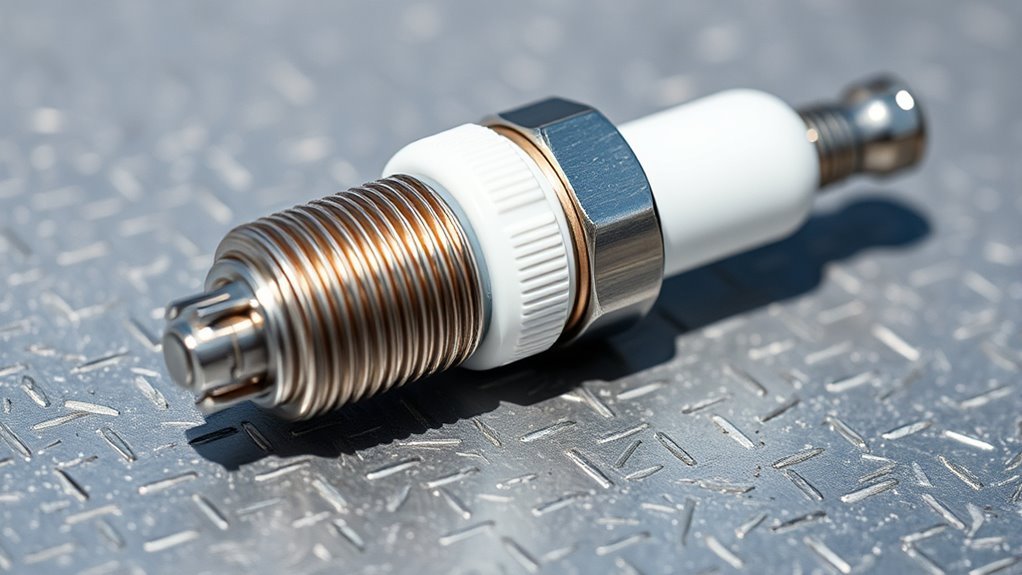
Spark plugs are made of several key materials designed to ensure optimal performance and durability. At the core, they feature a copper electrode coated with durable metals like iridium or platinum, which provide excellent conductivity and resistance to wear.
They also use ceramic insulators to prevent electrical leakage and to withstand the extreme heat generated by the engine. The metal shell, typically made of nickel-plated steel, helps resist corrosion and dissipate heat effectively.
These carefully chosen materials impact ignition efficiency, spark plug lifespan, and overall engine performance. Understanding what spark plugs are made of can help you make more informed decisions about spark plug selection and maintenance.
Key Takeaways
- Spark plugs have a central electrode typically made of copper, coated with nickel, platinum, or iridium for durability and conductivity.
- Ceramic insulators surround the central electrode to provide electrical insulation and withstand high temperatures and thermal cycling.
- The ground electrode is made from durable metal alloys like nickel or chromium to resist wear and maintain structural integrity.
- The metal shell is usually nickel-plated steel, protecting against corrosion and helping dissipate heat during engine operation.
- Material choices affect spark plug lifespan, ignition efficiency, heat resistance, and maintenance intervals based on engine requirements.
What Are the Core Materials in a Spark Plug?
The core materials in a spark plug play a crucial role in its performance and durability. When selecting spark plug types, manufacturers prioritize metals that withstand extreme temperatures and corrosion.
Typically, the central electrode consists of copper for its excellent conductivity, often coated with nickel or precious metals like platinum or iridium to enhance material durability. Iridium, in particular, offers superior wear resistance, extending the plug’s lifespan.
The ground electrode, similarly crafted from durable alloys, must maintain structural integrity under frequent electrical discharge. These material choices directly influence ignition efficiency and maintenance intervals.
Why Do Spark Plugs Use Ceramic Insulators?
Because spark plugs must operate under intense heat and electrical stress, ceramic insulators are vital for their function. You rely on the ceramic properties, such as high dielectric strength and excellent thermal conductivity, to guarantee the insulator function effectively isolates the central electrode from the metal shell. This prevents electrical leakage and maintains a stable spark.
Additionally, ceramic materials withstand rapid temperature fluctuations without cracking, essential for durability under engine cycling. Their low thermal expansion minimizes mechanical stress, preserving the structural integrity of the spark plug.
How Does the Metal Shell Protect the Spark Plug?
You rely on the metal shell to shield the spark plug from corrosive gases and combustion byproducts, ensuring durability.
It also plays an essential role in dissipating heat to maintain ideal operating temperatures.
Additionally, the shell provides structural integrity, securing the plug within the engine cylinder.
Corrosion Resistance Benefits
Although spark plugs operate under extreme conditions, their metal shells effectively shield internal components from corrosion. You’ll find these shells typically made from corrosion-resistant alloys like nickel-plated steel, which provide a robust barrier against moisture, chemical exposure, and combustion byproducts.
This corrosion prevention is essential because any degradation could compromise the spark plug’s performance and lifespan. By maintaining the shell’s integrity, you enhance the durability of the entire spark plug assembly, preventing rust and pitting that might lead to electrical failure or mechanical breakdown.
When you consider corrosion resistance, the metal shell’s role is fundamental; it safeguards the internal electrodes and insulator from harsh environments, ensuring consistent operation and extending service intervals without sacrificing reliability or efficiency.
Heat Dissipation Role
When spark plugs operate, they generate significant heat that must be effectively managed to prevent damage. The metal shell plays a critical role in dissipating this heat, utilizing its high thermal conductivity to transfer heat away from the ceramic insulator and electrode.
This heat transfer prevents overheating, which could degrade the spark plug’s performance or cause premature failure. Additionally, the metal shell’s material durability guarantees it withstands continuous thermal cycling and mechanical stress without warping or cracking.
Structural Integrity Support
Because spark plugs endure constant mechanical and thermal stresses, the metal shell provides essential structural integrity support by shielding the internal components from external impacts and vibrations. You rely on the shell’s structural durability, which stems from its carefully selected material properties like tensile strength and corrosion resistance.
This guarantees the spark plug maintains its shape and function under harsh engine conditions.
| Feature | Role in Structural Integrity |
|---|---|
| Material Composition | Enhances tensile strength |
| Corrosion Resistance | Prevents material degradation |
| Mechanical Strength | Resists impact and vibration |
| Thermal Expansion | Matches internal components’ rates |
| Protective Coating | Adds durability against wear |
What Metals Are Used in Spark Plug Electrodes?
Spark plug electrodes rely on specific metals to provide ideal conductivity, durability, and resistance to high temperatures. Choosing the right spark plug alloys directly impacts electrode durability and performance under extreme conditions.
Selecting the right metals for spark plug electrodes ensures optimal conductivity and durability under extreme heat.
Here are the primary metals used:
- Copper: Offers excellent electrical conductivity but lower durability due to rapid wear.
- Nickel: Common in standard alloys, balances cost and electrode durability.
- Silver: Enhances conductivity and heat dissipation but is less common due to cost.
- Alloy Combinations: Manufacturers blend metals like nickel with chromium or iron to optimize strength and lifespan.
Understanding these metals helps you appreciate how spark plug electrodes maintain consistent ignition performance, resist corrosion, and withstand continuous thermal cycling within the combustion chamber.
How Do Copper, Platinum, and Iridium Spark Plug Materials Compare?
Although copper, platinum, and iridium all serve as electrode materials, their distinct physical and chemical properties significantly affect performance characteristics like conductivity, durability, and cost.
Copper advantages include superior electrical conductivity, which provides efficient spark generation and ideal engine performance; however, copper electrodes wear faster due to lower melting points.
Platinum longevity stems from its higher resistance to oxidation and erosion, enabling extended service intervals compared to copper, though at a higher material cost.
Iridium surpasses both in hardness and melting point, delivering exceptional durability and consistent spark quality over time, albeit with the highest expense.
When choosing spark plugs, you must weigh copper’s conductivity benefits against the extended life and reliability offered by platinum and iridium, tailoring your selection to engine demands and maintenance preferences.
Why Does Heat Resistance Matter for Spark Plug Materials?
Understanding the material properties like conductivity and durability naturally leads to examining heat resistance, a key factor that directly influences spark plug performance and lifespan.
When you select spark plug materials, their thermal stability under extreme engine temperatures is critical. Here’s why heat resistance matters:
- Prevents electrode degradation caused by high thermal stress.
- Maintains consistent spark gap by resisting material erosion.
- Guarantees stable ignition by avoiding overheating and melting.
- Enhances overall durability, reducing the frequency of replacements.
Materials with superior heat resistance withstand combustion chamber conditions without compromising structural integrity.
This thermal stability helps you avoid misfires and engine inefficiencies. Thus, prioritizing spark plug materials with high heat resistance is essential for ideal engine functionality and longevity.
How Do Electrode Materials Affect Spark Plug Lifespan?
Because electrode materials directly influence wear rates and thermal conductivity, they play an essential role in determining spark plug lifespan. When you select electrodes with superior material durability, you effectively enhance electrode longevity by reducing erosion caused by high voltage discharges and combustion chamber conditions.
Materials like iridium and platinum exhibit higher melting points and resist oxidation, which minimizes electrode degradation over time. Conversely, standard copper electrodes wear faster due to lower durability, shortening spark plug service intervals.
By understanding how material properties affect electrode erosion and heat dissipation, you can predict lifespan more accurately.
Ultimately, optimizing electrode composition guarantees consistent spark formation and reduces maintenance frequency, making material durability a critical factor for reliable, long-lasting spark plugs.
How Spark Plug Materials Impact Engine Performance and Fuel Economy
When you choose spark plug materials with superior conductivity and heat resistance, you directly influence your engine’s combustion efficiency and fuel economy. The material affects how effectively the spark ignites the air-fuel mixture, impacting overall performance.
Consider these key factors:
- Ignition Consistency: High-quality materials provide stable sparks, enhancing fuel combustion and reducing misfires.
- Thermal Conductivity: Efficient heat dissipation prevents overheating, maintaining ideal combustion temperatures.
- Spark Plug Longevity: Durable materials resist electrode wear, preserving ignition quality over time and sustaining fuel efficiency.
- Electrical Conductivity: Superior conductivity minimizes energy loss, guaranteeing maximum energy reaches the combustion chamber.
Selecting the right spark plug material guarantees precise ignition timing and improves fuel combustion, directly boosting engine performance and reducing fuel consumption.
How Are Spark Plug Materials Manufactured?
You’ll start by selecting materials based on durability, thermal conductivity, and resistance to corrosion.
Then, precise manufacturing techniques like sintering and electrode welding shape these materials into spark plug components.
Understanding this process helps you appreciate how each step guarantees peak engine performance.
Material Selection Process
Although selecting materials for spark plugs involves multiple factors, manufacturers prioritize properties such as thermal conductivity, durability, and electrical efficiency.
You need to understand that the material selection process hinges on rigorous material sourcing and adherence to strict manufacturing standards.
The process typically follows these steps:
- Evaluate thermal and electrical properties to guarantee peak spark generation.
- Assess mechanical strength and corrosion resistance for long-term durability.
- Verify compliance with industry manufacturing standards and quality certifications.
- Source raw materials from reliable suppliers to maintain consistency and performance.
Manufacturing Techniques Overview
After selecting materials based on their thermal, electrical, and mechanical properties, manufacturers apply specialized techniques to shape and assemble spark plug components.
You’ll encounter manufacturing processes such as powder metallurgy for electrode fabrication, where fine metal powders are pressed and sintered to achieve precise density and conductivity.
Ceramic insulators undergo injection molding followed by high-temperature firing to guarantee structural integrity and insulation.
The metal shell is typically stamped and threaded through automated machining.
Throughout these steps, rigorous quality control measures monitor dimensional accuracy, material consistency, and surface finish to prevent defects that could impair performance.
How to Choose the Right Spark Plug Materials for Your Vehicle
When selecting spark plug materials for your vehicle, consider factors such as engine type, operating conditions, and manufacturer specifications to confirm peak performance.
Confirming spark plug compatibility is essential for performance optimization and engine longevity. Use this approach:
- Identify your engine’s heat range requirements to match thermal conductivity.
- Analyze operating conditions. High mileage or high performance demands may require iridium or platinum.
- Consult manufacturer specifications to confirm dimension and material compatibility.
- Evaluate cost versus durability trade-offs. Precious metals offer longer life but at a premium.
Frequently Asked Questions
Can Spark Plugs Be Recycled After Use?
Yes, you can recycle spark plugs through specialized spark plug recycling programs. Doing so reduces environmental impact by recovering valuable metals and preventing hazardous waste. This makes spark plug recycling both technically feasible and environmentally responsible.
How Often Should Spark Plugs Be Replaced?
Like a heartbeat for your engine, spark plugs need replacing every 30,000 to 100,000 miles depending on spark plug lifespan and vehicle specs.
Adhering to manufacturer’s replacement intervals guarantees peak performance and prevents engine misfires.
What Causes Spark Plugs to Foul or Wear Out?
Fouling causes include oil contamination, carbon buildup, and fuel additives, while wear factors involve electrode erosion and heat stress. You’ll notice spark plugs degrade faster under poor combustion or incorrect heat range conditions.
Are Spark Plugs Universal for All Engine Types?
Only about 10% of spark plug types fit all engines, so you can’t assume universal compatibility. You must analyze engine compatibility carefully, matching spark plug types to specific engine requirements for ideal performance and longevity.
How Do Spark Plugs Influence Engine Starting Issues?
You’ll face starting difficulties if spark plugs don’t generate a strong spark, impairing engine performance. Worn or fouled plugs reduce ignition efficiency, causing misfires and poor combustion. This directly impacts your engine’s ability to start reliably.
Conclusion
Now that you’ve explored the intricate materials inside a spark plug—from the tough ceramic insulator to the durable iridium electrode—you can picture how each component withstands intense heat and pressure to ignite your engine efficiently.
Choosing the right spark plug material isn’t just about durability; it’s about optimizing performance and fuel economy.
With this knowledge, you’re equipped to make an informed decision, ensuring your engine fires smoothly and reliably every time you turn the key.
Understanding what spark plugs are made of helps you select the best option for your vehicle’s needs.