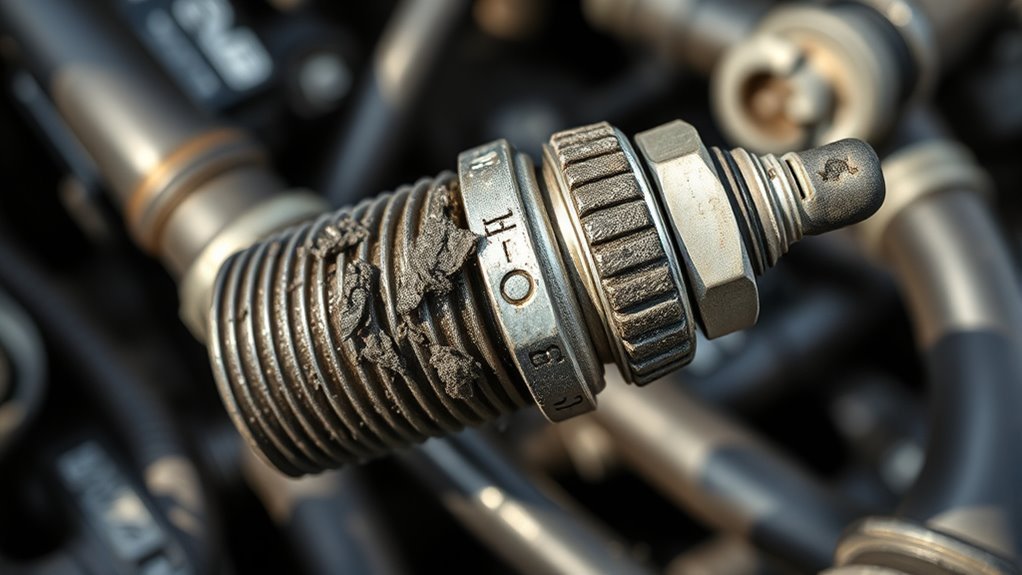
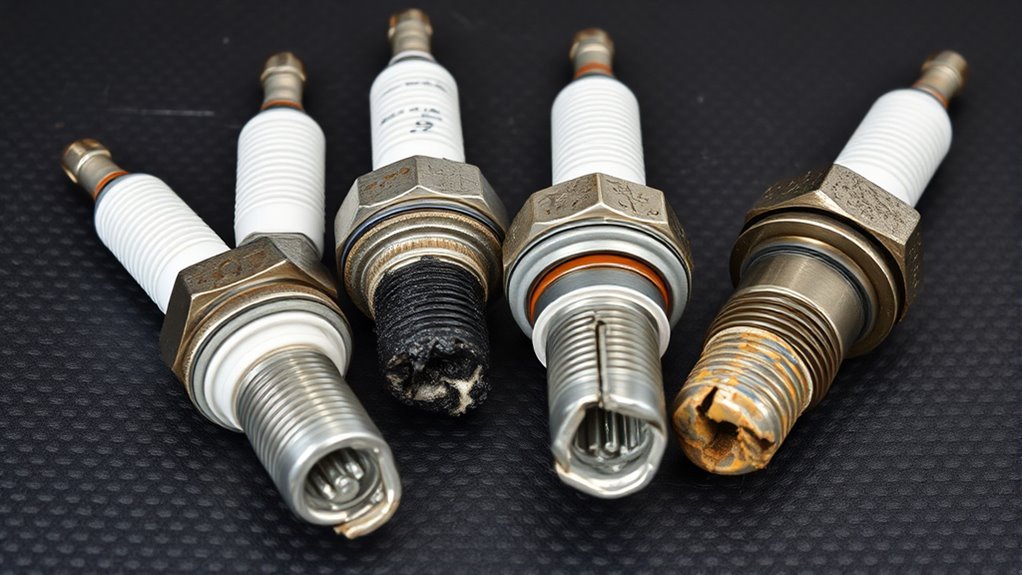
If you want to know what bad spark plugs look like, there are several signs to watch for. Black and sooty plugs usually indicate fouling from a rich fuel mixture or incomplete combustion.
White, blistered insulators point to overheating issues, while oily, wet deposits suggest oil leaking into the combustion chamber.
Worn electrodes often appear rounded or eroded, and incorrect gap sizes—either too wide or too narrow—can lead to misfires and reduced engine performance.
Recognizing these signs helps keep your engine running efficiently. Explore more about identifying spark plug wear and when to replace them to avoid bigger engine problems.
Key Takeaways
- Bad spark plugs show discoloration like white blistering or black soot indicating overheating or rich fuel mixture.
- Electrodes with rounded, melted, or eroded tips signal excessive wear and poor spark generation.
- Presence of oily, wet deposits indicates oil fouling caused by oil entering the combustion chamber.
- Cracked insulators or chipped electrodes reveal physical damage requiring immediate replacement.
- Excessive gap widening or heavy carbon buildup leads to misfires and reduced engine performance.
Identifying Bad Spark Plugs by Appearance
When you inspect spark plugs, you can often identify problems by their appearance. Different spark plug types, copper, platinum, and iridium, have distinct electrode designs, so understanding these helps you assess wear accurately.
Look for discoloration, buildup, or erosion on the electrodes and insulator. Proper maintenance tips include regularly checking for deposits that indicate fuel mixture issues or overheating.
You should also examine the gap between electrodes; an increased gap can cause misfires. Comparing your spark plugs’ condition to manufacturer specifications is essential for accurate diagnosis.
By knowing what normal wear looks like on each spark plug type, you can prevent performance loss and engine damage.
Regular visual inspections are a simple but effective maintenance step to keep your engine running efficiently.
Key Visual Signs of Worn or Damaged Spark Plugs
You’ll want to inspect your spark plugs for discoloration and unusual deposits, as these often indicate combustion issues or fuel mixture problems.
Check for physical damage like cracked insulators or worn electrodes, which can disrupt proper spark generation.
Recognizing these visual cues helps you determine when replacement is necessary to maintain engine performance.
Discoloration and Deposits
Discoloration and deposits on spark plugs serve as clear indicators of engine performance issues or combustion irregularities. When you inspect your spark plugs, note that discoloration causes often stem from fuel mixture imbalances, overheating, or oil contamination.
For example, a white or blistered appearance typically points to excessive heat, while a black, sooty coating indicates a rich fuel mixture or incomplete combustion.
Understanding deposit types is essential: carbon deposits appear as dry, black soot, suggesting poor fuel burn, whereas oily, wet deposits signal oil leakage into the combustion chamber.
You might also encounter ash deposits—light tan or grayish layers that result from fuel additives or oil burning.
Identifying these discoloration causes and deposit types helps you accurately diagnose engine problems and maintain ideal spark plug function.
Physical Damage Indicators
Beyond discoloration and deposits, physical damage on spark plugs offers immediate visual cues about wear or malfunction.
You should look for cracked insulators, chipped electrodes, or bent components, as these indicate that the spark plug has exceeded its ideal spark plug lifespan or suffered mechanical stress.
Burnt or melted electrodes suggest overheating, often a sign of incorrect heat range or ignition timing.
Consistent maintenance tips include inspecting spark plugs regularly, replacing them within manufacturer-recommended intervals, and avoiding overtightening during installation to prevent cracking.
Physical damage compromises the spark plug’s ability to generate a reliable spark, leading to misfires, reduced fuel efficiency, and engine performance issues.
Recognizing these physical damage indicators early helps you maintain engine health and avoid costly repairs.
What Black or Sooty Spark Plugs Mean
When spark plugs appear black or covered in soot, it usually indicates an overly rich fuel mixture or incomplete combustion in the engine. This black soot on the spark plug can interfere with proper ignition and engine performance.
You should consider these factors:
- Fuel Mixture Issues: Excess fuel causes carbon deposits, leading to black soot accumulation on the spark plug tip.
- Ignition Problems: Weak or inconsistent sparks fail to burn the air-fuel mixture completely, producing soot.
- Engine Conditions: Frequent short trips or clogged air filters can cause incomplete combustion, resulting in black soot.
Identifying black soot on your spark plug helps pinpoint combustion inefficiencies, enabling you to address fuel system or ignition faults before they degrade engine performance further.
Spotting Oil Fouling on Spark Plugs
You’ll recognize oil fouling on spark plugs by a wet, oily residue coating the electrodes and insulator.
This condition usually results from worn piston rings or valve seals allowing oil into the combustion chamber.
Oil fouling reduces spark efficiency, causing misfires and decreased engine performance.
Identifying Oil Fouling Symptoms
Although oil fouling can sometimes be subtle, you can identify its presence on spark plugs by looking for specific signs such as wet, oily deposits on the electrode and insulator tip. This oil residue interferes with proper sparking, leading to misfires or poor engine performance.
When inspecting, focus on these symptoms:
- Glossy, dark coating: Unlike carbon fouling, oil fouling appears wet and shiny rather than dry and powdery.
- Persistent misfires: Repeated misfires despite spark plug cleaning often indicate oil contamination.
- Strong oil smell: A noticeable oil odor near the spark plug suggests oil seepage affecting combustion.
Spotting these signs helps you determine when spark plug cleaning won’t suffice and replacement or engine repair is necessary.
Causes Of Oil Fouling
Since oil fouling directly impacts spark plug performance, understanding its causes is essential for accurate diagnosis and effective repair. Oil contamination shortens spark plug lifespan by coating electrodes and insulating against the spark.
Common causes include worn valve guides, piston rings, and turbocharger seals, each allowing oil to enter the combustion chamber.
| Cause | Description |
|---|---|
| Worn Valve Guides | Oil seeps past guides into combustion chamber |
| Damaged Piston Rings | Oil bypasses rings, contaminates spark plug |
| Turbocharger Seals | Faulty seals leak oil into intake air |
| PCV Valve Failure | Excessive crankcase pressure forces oil past plugs |
| Cylinder Wall Wear | Oil leakage due to worn cylinder walls |
Identifying these causes helps you prevent oil contamination and extend your spark plug lifespan effectively.
Effects On Engine Performance
When oil fouls your spark plugs, it directly disrupts the ignition process, causing misfires, rough idling, and reduced fuel efficiency. The contamination coats the electrodes, severely diminishing spark plug efficiency, which is critical for peak combustion.
This inefficiency leads to poor engine acceleration and increased fuel consumption. You’ll notice decreased responsiveness and power output.
Specifically, oil fouling impacts your engine in three main ways:
- Ignition Failure: Oil deposits prevent consistent spark generation, causing frequent misfires.
- Combustion Inefficiency: Fuel-air mixture burns incompletely, reducing power and increasing emissions.
- Engine Wear: Misfires and inefficient combustion contribute to long-term engine damage.
Spotting oil fouling early helps maintain engine performance and prevents costly repairs.
What Overheated Spark Plugs Look Like
Overheated spark plugs exhibit distinct physical signs that you can identify during inspection. Typically, their insulator nose appears white or blistered, indicating extreme heat exposure. The electrode may look rounded or melted, which reduces its ability to create a proper spark.
Overheating causes often include incorrect spark plug heat range, lean air-fuel mixture, or ignition timing issues. These conditions increase combustion temperatures, accelerating plug wear.
Proper spark plug maintenance involves regularly checking for these signs to prevent engine damage. If you spot glazed or cracked insulators, it’s a clear indication that your spark plugs have endured excessive heat.
Addressing overheating promptly guarantees efficient combustion and prolongs engine life, so never ignore these visual cues during routine inspections.
How Corrosion and Rust Hurt Spark Plugs
Beyond heat damage, corrosion and rust also greatly impair spark plug performance. You need to recognize how different corrosion types and rust effects can degrade your spark plugs to maintain engine efficiency.
- Electrochemical corrosion occurs when moisture and contaminants cause metal degradation on the spark plug surface, leading to poor conductivity and misfires.
- Rust effects, primarily iron oxide buildup, weaken the electrode structure, increasing resistance and reducing spark intensity.
- Galvanic corrosion arises from contact between dissimilar metals, accelerating wear and potentially causing electrode pitting that disrupts the spark gap uniformity.
What Changes in Spark Plug Gaps Look Like
If you examine your spark plugs closely, you’ll notice that changes in the spark plug gap can greatly impact engine performance. The gap, the distance between the center and ground electrodes, must fall within specific tolerances for ideal spark generation.
Spark plug gap size is crucial for optimal engine performance and efficient spark generation.
Over time, this gap can widen due to electrode erosion or narrow from deposit buildup. When you perform spark plug adjustments, precise gap measurement is essential. Use a feeler gauge to verify the gap matches manufacturer specifications.
An excessively wide gap causes weak or inconsistent sparks, while a too-narrow gap can lead to misfires. Visual inspection reveals these changes: a visibly larger space between electrodes indicates wear, whereas deposits may obscure the gap.
Maintaining accurate gap measurement and adjustments guarantees efficient combustion and prolongs spark plug life.
Symptoms of Bad Spark Plugs
You’ll notice engine misfires when spark plugs fail to ignite the fuel-air mixture consistently, causing rough idling or hesitation during acceleration.
Poor fuel efficiency often follows, as incomplete combustion wastes fuel and reduces power output.
Recognizing these symptoms early can help you address spark plug issues before they lead to more serious engine problems.
Engine Misfire Signs
How can you tell when your engine is misfiring due to bad spark plugs? Misfires occur when the spark plugs fail to ignite the air-fuel mixture consistently, directly impacting engine performance and signaling a reduced spark plug lifespan.
Pay attention to these key signs:
- Rough Idle and Hesitation: The engine runs unevenly at idle, and acceleration feels sluggish or jerky.
- Check Engine Light Activation: The onboard diagnostics detect misfires, triggering the warning light.
- Increased Exhaust Emissions: Unburned fuel from incomplete combustion causes noticeable smoke or odor.
These symptoms indicate your spark plugs aren’t delivering the precise ignition needed.
Addressing them promptly preserves engine integrity and restores ideal performance.
Poor Fuel Efficiency
When spark plugs fail to ignite the air-fuel mixture efficiently, your engine burns more fuel than necessary, causing a noticeable drop in fuel economy.
Faulty spark plugs increase fuel consumption because they produce incomplete combustion, meaning your engine struggles to convert fuel into usable energy.
As a result, you lose engine power, forcing the system to work harder and consume extra fuel to maintain performance. This inefficiency directly impacts your vehicle’s miles per gallon (MPG), making each tank of gas less effective.
Monitoring your fuel consumption closely can help you identify spark plug issues early.
Replacing worn or damaged spark plugs restores ideal combustion, improving engine power and reducing unnecessary fuel use, ultimately saving you money and enhancing overall vehicle efficiency.
When to Replace Spark Plugs
Determining the right time to replace your spark plugs depends on several factors, including your vehicle’s make, model, and driving conditions.
Manufacturers specify a spark plug lifespan that guides replacement intervals, typically ranging from 30,000 to 100,000 miles.
To optimize performance, monitor these key indicators:
- Mileage: Replace spark plugs once you approach the manufacturer’s recommended replacement intervals to prevent misfires and poor combustion.
- Engine Performance: Noticeable drops in acceleration or rough idling often signal worn spark plugs.
- Visual Inspection: Signs of electrode erosion, heavy carbon buildup, or glazing indicate the need for replacement.
Adhering to these guidelines guarantees efficient combustion, reduces emissions, and maintains your engine’s reliability.
Safe Tips for Inspecting Spark Plugs
Regularly checking your spark plugs guarantees they perform at their best and helps you catch issues early.
For effective spark plug inspection, first verify the engine is completely cool to avoid burns. Disconnect the battery to prevent electrical shocks.
Use the proper socket wrench designed for spark plugs to avoid damage during removal. Inspect each plug under good lighting, checking for signs of wear such as carbon deposits, oil fouling, or electrode erosion.
Refer to your vehicle’s manual for specific gap measurements and compare them with a feeler gauge.
Keep your workspace clean to prevent debris from entering the combustion chamber. These maintenance tips verify your spark plug inspection is safe and accurate, extending engine life and optimizing performance.
Frequently Asked Questions
How Often Should Spark Plugs Be Cleaned or Maintained?
You should perform spark plug maintenance, including cleaning frequency, every 30,000 to 50,000 miles. Regular inspections help prevent fouling and guarantee peak engine performance.
This practice prolongs spark plug life and maintains efficient combustion.
Can Bad Spark Plugs Affect Fuel Efficiency?
Yes, poor spark plug performance increases fuel consumption, decreases engine power, and raises emissions. When your spark plugs misfire or foul, they disrupt combustion efficiency. This forces your engine to burn more fuel to maintain performance and power output.
What Tools Are Needed to Replace Spark Plugs?
You’ll need a spark plug socket, ratchet wrench, extension, and gap gauge. Consider spark plug types like iridium or copper.
Follow replacement tips: check the gap, torque properly, and replace plugs one at a time for accurate installation.
Are Spark Plug Issues Covered Under Vehicle Warranties?
You’ll find warranty coverage varies by spark plug types and vehicle brand. Typically, standard plugs have limited coverage, while premium or OEM spark plugs might be covered longer.
Always check your specific warranty terms carefully.
How Do Different Engine Types Affect Spark Plug Wear?
You’ll notice wear patterns vary by engine types; for instance, high-performance engines can cause spark plugs to wear 30% faster due to higher combustion temperatures. This affects electrode erosion and necessitates more frequent inspections.
Conclusion
Just like a detective reads clues at a crime scene, you can diagnose your engine’s health by examining spark plugs. Black soot, oil deposits, or melted electrodes aren’t just cosmetic—they signal underlying issues that demand prompt attention. Ignoring these signs is like ignoring a warning light on your dashboard.
By regularly inspecting and replacing bad spark plugs, you keep your engine running smoothly and avoid costly repairs down the road. Stay vigilant and proactive. Recognizing what bad spark plugs look like is essential for maintaining optimal engine performance.