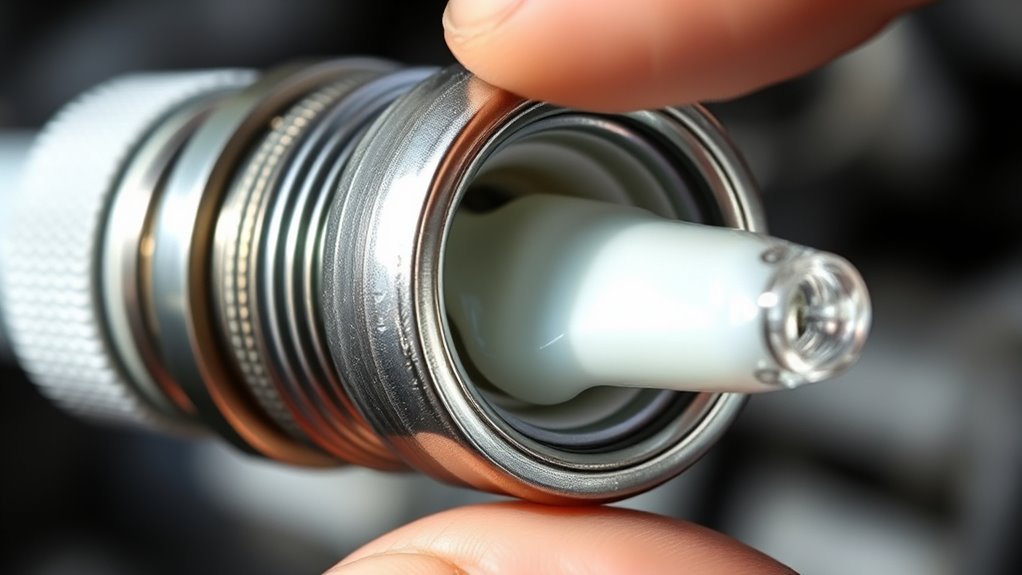
You should apply dielectric grease on spark plugs inside the spark plug boot around the terminal, not on the spark plug electrode or threads. This ensures a secure, moisture-resistant connection that prevents corrosion and electrical misfires.
Use a thin, even layer on the boot’s interior surface to seal gaps and avoid excess grease, which can impair contact. Proper application protects the ignition system and makes future maintenance easier.
Understanding the correct technique helps maximize spark plug performance and longevity. Applying dielectric grease correctly is key to maintaining a reliable ignition system.
Key Takeaways
- Apply dielectric grease inside the spark plug boot’s interior surface to seal out moisture and prevent corrosion.
- Avoid putting grease directly on the spark plug electrodes or threads to maintain proper electrical contact and torque.
- Spread a thin, even layer of grease on the boot’s terminal connection area where it contacts the spark plug tip.
- Use a small amount of silicone-based dielectric grease to prevent drying and cracking of the rubber boot.
- Clean the spark plug surface before application to ensure effective sealing and electrical performance.
What Is Dielectric Grease And Why Use It On Spark Plugs
Dielectric grease is a non-conductive silicone-based lubricant designed to prevent moisture and corrosion in electrical connections.
When performing spark plug maintenance, applying dielectric grease offers several benefits. It guarantees a secure connection between the spark plug boot and terminal, reducing the risk of electrical arcing.
This grease also helps maintain the integrity of the rubber boot, preventing it from drying out and cracking over time.
Additionally, dielectric grease simplifies future spark plug removal by preventing parts from seizing together.
While it doesn’t conduct electricity, it protects the connection from contaminants that could degrade performance.
Using dielectric grease during spark plug maintenance enhances reliability and longevity, making it an essential step in preserving your engine’s ignition system efficiency.
How Dielectric Grease Prevents Moisture And Corrosion
By creating a protective barrier, the silicone-based grease blocks moisture and contaminants from reaching the spark plug terminal and boot interface.
When you apply dielectric grease, it forms a moisture barrier that effectively prevents water and humidity infiltration.
This barrier is essential because moisture can lead to corrosion, which degrades the metal contacts and impairs electrical conductivity.
The grease’s corrosion resistance properties inhibit oxidation and rust formation, extending the spark plug’s lifespan.
Dielectric grease prevents oxidation and rust, significantly prolonging the life of your spark plugs.
To maintain peak performance, verify the grease covers the contact surfaces evenly, sealing gaps where moisture might enter.
Applying dielectric grease correctly enhances the spark plug’s durability by stopping corrosion before it starts, guaranteeing reliable ignition and minimizing electrical misfires caused by corrosion-related resistance increases.
Where To Apply Dielectric Grease On Spark Plugs (And Where Not To)
Although applying grease can enhance spark plug performance, you need to be careful about where you put it.
The best practices for using dielectric grease involve applying a thin layer inside the spark plug boot, where it contacts the spark plug terminal. This prevents moisture intrusion and guarantees a reliable electrical connection.
However, avoid applying grease directly on the spark plug electrodes or threads. Grease on the electrodes can interfere with the spark, reducing ignition efficiency, while on threads, it may affect torque accuracy during installation.
Use dielectric grease exclusively on the boot’s interior surface and the terminal connection. Following these guidelines guarantees you protect components without compromising function.
Sticking to these best practices helps maintain spark plug performance and longevity.
How To Apply Dielectric Grease Correctly Without Overdoing It
When applying grease, you need to use just enough to coat surfaces lightly without creating excess buildup that could interfere with connections.
Start by selecting the right grease type. Silicone-based dielectric grease works best for spark plugs due to its non-conductive and heat-resistant properties.
Choose silicone-based dielectric grease for spark plugs because it is non-conductive and withstands high heat effectively.
Use a small dab on your fingertip or a clean applicator to spread a thin, even layer on the inside of the spark plug boot or ignition coil terminal. Avoid applying grease directly onto the electrode or threads.
Focus on application techniques that prevent pooling or dripping; excessive grease can trap dirt or moisture, reducing effectiveness.
Troubleshooting Common Issues With Dielectric Grease On Spark Plugs
Applying dielectric grease correctly minimizes many common problems, but you may still encounter issues affecting spark plug performance. To troubleshoot, first review your application for common mistakes and verify you’re following proper techniques.
Check these points:
- Excessive grease causing poor electrical contact
- Applying grease on the electrode rather than the boot
- Using incompatible grease types that degrade under heat
- Neglecting to clean the spark plug surface before application
- Failing to seat the boot properly, leading to moisture intrusion
Addressing these issues helps maintain peak spark plug function. If you spot excessive grease, clean it off and reapply a thin layer only on the boot’s inside surface.
Always use high-temperature silicone-based dielectric grease compatible with ignition systems. Following these proper techniques prevents misfires and guarantees reliable engine performance.
Why You Should Never Put Dielectric Grease On The Spark Plug Electrode
You should never apply dielectric grease to the spark plug electrode because it directly affects the electrode’s ability to generate a strong spark.
The grease acts as an insulator, reducing spark efficiency and causing misfires or poor engine performance.
Always keep the electrode clean and free from any grease to maintain ideal ignition function.
Spark Plug Electrode Function
Understanding the critical role of the spark plug electrode clarifies why dielectric grease must never contact this component. The electrode is essential in the ignition system, generating the necessary spark by allowing electricity to jump the electrode gap.
Spark plug materials, often iridium or platinum, ensure durability and efficient conductivity. Applying dielectric grease here would insulate the electrode, preventing spark formation.
Key functions of the spark plug electrode include:
- Conducting high voltage from the ignition coil
- Creating a precise spark gap for ignition
- Withstanding extreme heat and pressure
- Resisting corrosion and wear due to specialized spark plug materials
- Maintaining reliable electrical conductivity in the ignition system
Avoiding dielectric grease on the electrode preserves its function and prevents ignition failure.
Impact On Spark Efficiency
The electrode’s ability to generate a reliable spark depends on direct electrical contact and a clean, unobstructed gap. When you apply dielectric grease to the spark plug electrode, you create an insulating barrier that hinders spark formation, negating any spark efficiency improvement.
Dielectric grease benefits are best realized on the spark plug boot, where it prevents moisture and corrosion without affecting the electrode’s function. Avoid placing grease on the electrode to maintain peak combustion performance.
| Aspect | Dielectric Grease on Electrode | Dielectric Grease on Boot |
|---|---|---|
| Electrical Contact | Impaired | Maintained |
| Spark Efficiency | Reduced | Enhanced |
| Moisture Protection | Minimal | High |
| Corrosion Prevention | None | Effective |
Frequently Asked Questions
Can Dielectric Grease Improve Spark Plug Performance?
Yes, dielectric grease improves spark plug performance by enhancing spark plug maintenance. When you apply grease correctly, it prevents moisture and corrosion, ensuring better electrical insulation and consistent ignition.
This results in smoother engine operation and longer component life.
Is Dielectric Grease Safe for All Engine Types?
Think of dielectric grease as a universal key, but not every lock matches. You’ll find its dielectric properties suit most engines, yet always verify engine compatibility. Some designs may react differently, demanding precise application for peak performance and safety.
How Often Should Dielectric Grease Be Reapplied?
You should reapply dielectric grease during routine spark plug maintenance or replacement, typically every 30,000 to 50,000 miles.
Regular application frequency prevents moisture and corrosion; follow maintenance tips to guarantee peak engine performance.
Can Dielectric Grease Prevent Spark Plug Misfires?
Dielectric grease can help prevent spark plug misfires by improving spark plug maintenance through proper grease application. It seals out moisture and contaminants, ensuring consistent electrical conductivity and preventing corrosion that could disrupt ignition performance.
Will Dielectric Grease Damage Ignition Wires?
Think of dielectric grease as a shield, not a threat. With proper ignition wire maintenance and precise grease application techniques, you won’t damage wires.
Instead, you’ll protect connections from moisture and corrosion, ensuring peak electrical performance.
Conclusion
Now that you know where to apply dielectric grease on your spark plugs, you can keep your engine’s spark reliable and protected from moisture and corrosion. Just remember, a little goes a long way—avoiding the electrode guarantees everything runs smoothly without hiccups.
Treat your spark plugs with this simple step, and you’ll quietly extend their life and performance, preventing those frustrating misfires that sneak up when you least expect them. Properly applying dielectric grease on spark plugs is a small task that makes a big difference in engine reliability.