Tag: cleaning tips

  • How to Use Carburetor Cleaner

    How to Use Carburetor Cleaner

    To use carburetor cleaner effectively, first disconnect the fuel supply and remove the carburetor from your engine. Carefully disassemble key components, making sure to keep track of small parts.

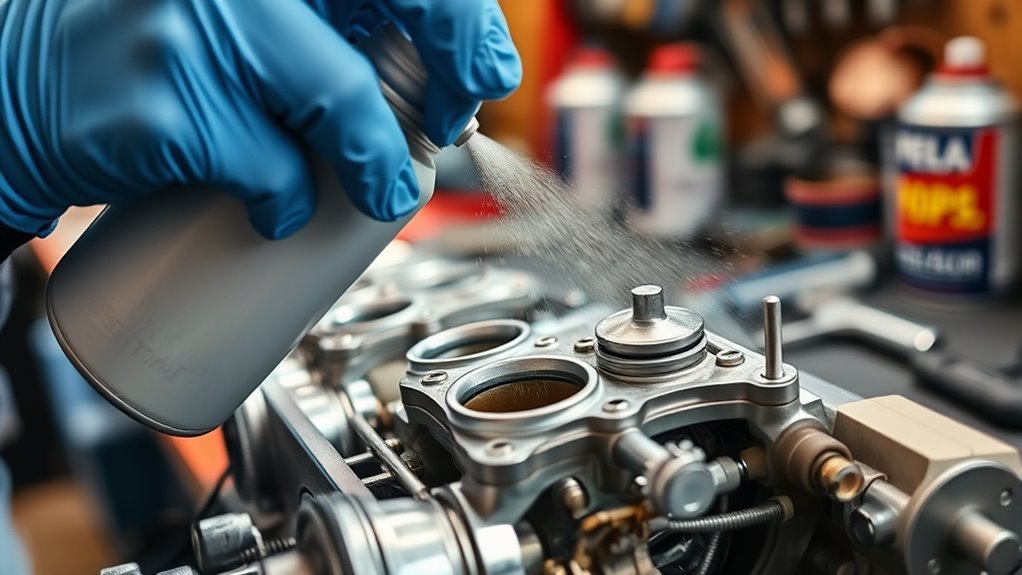
    Spray the cleaner onto jets, passages, and the throttle body to dissolve varnish and deposits that block fuel flow. Use a soft brush to tackle stubborn buildup.

    Make sure all parts dry completely before reassembling. Proper use of carburetor cleaner restores performance and efficiency. For detailed cleaning techniques and troubleshooting tips, you’ll find valuable guidance ahead.

    Key Takeaways

    • Disconnect the fuel supply and remove the carburetor from the engine before cleaning.
    • Spray carburetor cleaner into jets, passages, and throttle body to dissolve deposits.
    • Use a soft brush to gently scrub stubborn varnish and gum without damaging parts.
    • Soak metal components in cleaner solution and use compressed air to clear passages.
    • Reassemble only after all parts are dry and verify proper throttle and choke movement.

    How to Use Carburetor Cleaner: A Step-by-Step Guide

    Before you begin cleaning your carburetor, make certain you have the necessary tools and safety equipment ready, including gloves and eye protection.

    Start by disconnecting the fuel supply and removing the carburetor from the engine. Place it on a clean, well-lit workspace.

    Use a screwdriver to carefully disassemble the carburetor, keeping track of all small parts. Apply carburetor cleaner to each component, focusing on jets, passages, and the throttle body.

    Use a soft brush to remove stubborn deposits without damaging delicate parts. Rinse with cleaner and dry completely before reassembling.

    Throughout the process, follow strict safety precautions: work in a ventilated area, avoid skin contact with chemicals, and dispose of waste properly.

    This method guarantees effective carburetor cleaning and peak engine performance.

    What Is Carburetor Cleaner and When to Use It

    Although carburetor cleaner comes in various formulations, its primary function is to dissolve and remove varnish, gum, and carbon deposits that accumulate inside carburetors. You use it to restore peak carburetor function, improving fuel atomization and engine performance. Regular cleaning prevents clogging and inefficient fuel flow, delivering clear cleaning benefits.

    Issue Effect on Carburetor Function Cleaning Benefits
    Varnish buildup Restricts fuel passages Restores smooth fuel flow
    Gum deposits Causes sticking throttle plates Enhances throttle response
    Carbon deposits Impairs air-fuel mixture Improves combustion efficiency
    Dirt and debris Blocks jets and valves Prevents engine stalling

    Use carburetor cleaner when you notice rough idling, poor acceleration, or decreased fuel efficiency.

    Preparing Your Engine for Carburetor Cleaning

    When you prepare your engine for carburetor cleaning, ensuring it’s cool and the battery is disconnected will prevent accidents and damage.

    Begin engine preparation by removing any covers or air filters obstructing access to the carburetor. Use gloves and safety glasses to maintain cleaner safety standards throughout the process.

    Carefully inspect hoses and connections for wear or leaks, as damaged components can hinder effective cleaning.

    Ventilate your workspace to avoid inhaling fumes. Place a drip pan beneath the carburetor to catch any solvent runoff.

    Avoid open flames or sparks near the cleaning area, since carburetor cleaner is highly flammable.

    Deep Cleaning Techniques and Maintenance Tips

    Since carburetor efficiency depends heavily on thorough cleaning, you should focus on removing all deposits, varnish, and debris from jets, passages, and throttle plates.

    Carburetor efficiency relies on removing deposits, varnish, and debris from jets, passages, and throttle plates.

    Use carburetor cleaner to dissolve stubborn buildup inside hard-to-reach areas. Establish a cleaning frequency based on your usage and operating conditions to optimize performance and prevent clogging.

    Stick to a maintenance schedule for consistent care.

    For effective deep cleaning and maintenance, follow these steps:

    • Disassemble the carburetor carefully, noting jet sizes and positions.
    • Soak metal parts in carburetor cleaner solution to break down varnish.
    • Use compressed air to clear passages and dry components thoroughly before reassembly.

    Maintaining this routine guarantees smooth fuel flow, prolongs carburetor life, and minimizes engine issues.

    Troubleshooting Common Issues After Using Carburetor Cleaner

    If you notice performance issues after using carburetor cleaner, you’ll need to systematically identify the cause to restore proper function.

    First, verify that all carburetor jets and passages are free of residual cleaner or loosened debris; blockages can impair carburetor performance.

    Next, check the throttle linkage and choke for proper movement, as cleaner residue can cause sticking.

    Inspect fuel lines for cracks or leaks introduced during cleaning.

    Assess the cleaning frequency. Excessive use can degrade seals and gaskets, leading to air leaks and poor engine response.

    Finally, confirm the idle mixture and speed settings remain within specifications, as aggressive cleaning may alter calibration.

    Addressing these factors methodically will help you troubleshoot effectively and maintain ideal carburetor performance.

    Frequently Asked Questions

    Is Carburetor Cleaner Safe for All Engine Types?

    Carburetor cleaner isn’t safe for all engine types; you need to check carburetor compatibility carefully. Some engines, especially those with sensitive materials, can be damaged, so always verify the cleaner suits your specific engine types before use.

    Can Carburetor Cleaner Damage Rubber or Plastic Parts?

    Yes, carburetor cleaner can cause rubber degradation and plastic brittleness. You should avoid prolonged contact with these materials to prevent damage.

    Always use cleaner sparingly and rinse affected parts promptly to maintain component integrity.

    How Often Should I Use Carburetor Cleaner on My Vehicle?

    You should follow frequency guidelines in your maintenance schedule, typically using carburetor cleaner every 12,000 to 15,000 miles or annually. Adjust based on driving conditions and engine performance for best results.

    Are There Eco-Friendly Alternatives to Traditional Carburetor Cleaners?

    When it comes to eco-friendly options, you shouldn’t put all your eggs in one basket. Biodegradable options using natural solvents like citrus-based cleaners effectively dissolve grime while minimizing environmental impact. Choose these for responsible carburetor maintenance.

    You should wear protective gloves and safety goggles to shield your skin and eyes from harmful chemicals.

    Additionally, use a respirator mask in poorly ventilated areas to avoid inhaling toxic fumes when handling carburetor cleaner.

    Conclusion

    Using carburetor cleaner is like giving your engine a fresh breath—clearing away the grime that blocks its pulse. By following the steps carefully, you restore smooth fuel flow and ideal performance.

    Remember, a clean carburetor is the engine’s heartbeat, so treat it with precision and regular maintenance. This guarantees your machine runs efficiently, preventing issues before they start.

    Keeping your carburetor spotless is key to optimal engine function. Using carburetor cleaner regularly helps maintain reliability and ensures your ride performs at its best every time you turn the key.