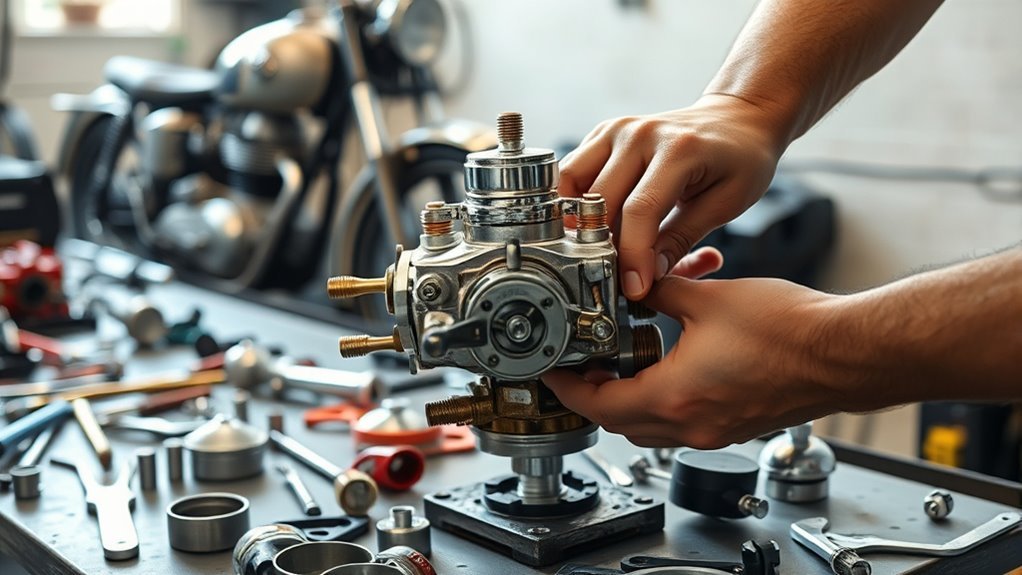
To fix your carburetor, start by disconnecting the battery and carefully removing the carburetor itself. Make sure to label all linkages and hoses for easy reassembly.
Clean clogged jets and passages thoroughly using carburetor cleaner. Inspect all parts for wear or damage during the cleaning process.
Replace any faulty components such as gaskets or needles with OEM parts to ensure proper fit and function. Once reassembled, adjust the idle speed and fuel-air mixture for smooth engine performance.
Proper tuning of the carburetor is essential for both efficiency and power. Follow detailed steps for cleaning, repairing, and tuning to restore your engine to peak function.
Key Takeaways
- Clean the carburetor thoroughly using carburetor cleaner to remove grime and deposits from jets and passages.
- Inspect all parts for wear, cracks, or corrosion and replace damaged components with OEM or compatible parts.
- Adjust the idle speed and mixture screws to achieve the manufacturer’s recommended RPM and optimal fuel-air ratio.
- Check choke operation and throttle linkage for smooth movement and proper function to ensure consistent fuel delivery.
- Troubleshoot common issues like fuel leaks, clogged jets, and float levels, and seek professional help for persistent or complex problems.
What Is a Carburetor and Why It Matters
A carburetor is a mechanical device that mixes air and fuel in the correct ratio for internal combustion engines. Understanding carburetor basics is crucial because this precise mixture directly impacts engine performance.
If the air-to-fuel ratio is off, your engine can run inefficiently, causing rough idling, poor acceleration, or increased emissions. The carburetor controls fuel delivery through jets and throttle valves, adjusting based on engine demand.
When functioning correctly, it guarantees smooth combustion and maximum power output. As you maintain or repair your carburetor, focusing on these principles helps you diagnose issues and restore proper engine function.
Mastering carburetor basics equips you to improve fuel efficiency and maintain reliable engine performance across various operating conditions.
How to Identify Common Carburetor Problems
Symptoms like rough idling, stalling, or hesitation during acceleration often indicate carburetor issues.
To identify common carburetor problems, start by observing carburetor symptoms such as inconsistent engine speed, black smoke from the exhaust, or flooding.
These signs usually stem from improper fuel delivery caused by clogged jets, worn gaskets, or air leaks.
Check for fuel leaks or a strong fuel odor, which suggests fuel overflow or needle valve failure.
Additionally, inspect the choke operation. If it sticks open or closed, it disrupts the air-fuel mixture.
Pay attention to engine backfiring or hard starts, as these also point to carburetor malfunction.
Tools and Materials Needed for Carburetor Repair
You’ll need a set of essential tools like screwdrivers, wrenches, and a carburetor cleaner to get started on the repair.
Having recommended replacement parts such as gaskets, jets, and needles on hand will guarantee you can address common issues efficiently.
Preparing these materials beforehand streamlines the repair process and helps avoid interruptions.
Essential Repair Tools
Five essential tools will help you efficiently repair a carburetor: a set of precision screwdrivers, a carburetor cleaner spray, a small wire brush, a gasket scraper, and a compression tester.
These are the core components of your essential repair supplies. Using the right tools enhances accuracy and prevents damage during carburetor maintenance.
- Precision Screwdrivers are vital for adjusting screws without stripping heads.
- Carburetor Cleaner Spray removes varnish and deposits effectively.
- Small Wire Brush scrubs away stubborn grime from metal parts.
- Gasket Scraper safely removes old gasket material without scratching surfaces.
Incorporate these tools into your repair toolkit, and follow carburetor maintenance tips to guarantee peak performance and longevity.
Recommended Replacement Parts
Alongside the right tools, having the proper replacement parts is key to restoring your carburetor’s function accurately. Start by identifying your carburetor brand. Popular ones like Holley, Edelbrock, or Rochester have specific replacement options tailored to their models.
Focus on critical components such as gaskets, float valves, jets, and needles. Ensure you source OEM or high-quality aftermarket parts to maintain performance. Avoid generic kits that don’t specify compatibility with your carburetor brand.
When selecting replacement options, check the specifications carefully: dimensions, material quality, and compatibility with your engine’s fuel system.
Keeping a detailed parts list based on your carburetor model will help you order precisely what you need, minimizing delays and ensuring a smooth repair process.
How to Safely Remove the Carburetor
Begin by disconnecting the battery to prevent any electrical hazards during the removal process. Following proper safety precautions guarantees you avoid injury or damage.
Use precise removal techniques to detach the carburetor efficiently.
- Label and disconnect all linkages and hoses to guarantee proper reassembly and prevent damage.
- Remove mounting bolts carefully using the correct tools to avoid stripping or breaking fasteners.
- Support the carburetor as you loosen bolts to prevent it from dropping and causing damage.
- Inspect the gasket and mounting surface for damage before complete removal.
How to Clean a Dirty Carburetor Step-by-Step
Start by carefully removing the carburetor components to access all areas prone to buildup.
Use carburetor cleaner to thoroughly spray and dissolve grime from jets, passages, and surfaces.
Make certain each part is completely clean before reassembling to guarantee peak performance.
Removing Carburetor Components
Carefully detach each component of the carburetor to guarantee thorough cleaning and avoid damage.
Mastering carburetor disassembly techniques is essential for accessing all necessary parts.
Focus on removing vital carburetor components systematically to prevent loss or breakage.
Follow these steps:
- Disconnect the throttle linkage carefully to avoid bending or breaking.
- Remove the float bowl by unscrewing the retaining screws; handle the float gently.
- Extract the jets using the appropriate screwdriver; keep track of their sizes.
- Detach the choke assembly, noting its position for correct reassembly.
Applying Carburetor Cleaner
Once you’ve removed the carburetor components, apply carburetor cleaner directly to the affected areas to dissolve deposits and buildup. Focus on jets, throttle plates, and passages where varnish and dirt accumulate.
Use a precision straw attachment to target hard-to-reach spots, ensuring thorough saturation without overspray.
Let the cleaner sit for several minutes to break down grime effectively. After soaking, employ a soft brush or compressed air to dislodge loosened debris.
Repeat the process if necessary to maintain ideal flow. This step is vital in carburetor maintenance, as deposits impair fuel flow and engine performance.
Adhering to these cleaning techniques prolongs carburetor life and enhances reliability. Always work in a well-ventilated area and wear protective gloves to handle solvents safely.
How to Inspect Carburetor Parts for Damage
A thorough inspection of each carburetor component is essential to identify wear, cracks, or corrosion that could impair performance.
During your carburetor inspection, focus on precise part evaluation to guarantee reliable operation.
Accurate evaluation of each carburetor part is crucial to ensure dependable and efficient engine performance.
- Examine the float for punctures or deformation that could disrupt fuel level regulation.
- Inspect the throttle shaft and bore for excessive wear or scoring, which may cause air leaks.
- Check all gaskets and seals for brittleness or tears that compromise airtightness.
- Assess the jets and passages for clogs or corrosion that restrict fuel flow.
Use magnification if needed to detect subtle damage.
Document any defects, as accurate part evaluation guides effective repair decisions and prevents further issues.
How to Replace Carburetor Parts You Can’t Fix
If inspection reveals parts with irreparable damage, replacing them guarantees the carburetor functions properly. You’ll want to source OEM or compatible parts that match your carburetor model.
Prioritize carburetor maintenance tips such as cleanliness and correct installation to avoid future issues. Common replacement components include floats, gaskets, and jets. Use the table below as a quick reference:
| Component | Function | Replacement Tip |
|---|---|---|
| Float | Regulates fuel level | Verify correct float height |
| Gasket | Seals surfaces | Use new gasket to prevent leaks |
| Jet | Controls fuel flow | Clean or replace for consistent mixture |
Replacing these parts requires careful disassembly and reassembly. Follow manufacturer torque specs and inspect all connections after replacement for peak performance.
How to Adjust Carburetor Settings for Best Performance
Although replacing damaged parts restores basic functionality, fine-tuning your carburetor settings is vital to achieve peak engine performance.
Replacing parts restores function, but tuning your carburetor unlocks optimal engine performance.
Carburetor tuning directly impacts fuel-air mixture and engine responsiveness, essential for performance enhancement.
Follow these steps for precise adjustment:
- Set Idle Speed Adjust the idle screw to reach the manufacturer’s recommended RPM for stable idle.
- Adjust Idle Mixture Turn the idle mixture screw slowly to find the richest mixture without causing engine bogging.
- Fine-Tune Main Jet Modify the main jet size or needle position for ideal fuel delivery under load.
- Test and Reassess Run the engine through various throttle positions and recheck adjustments for consistent performance.
This systematic approach guarantees your carburetor delivers efficient combustion, improving power and fuel economy.
Carburetor Troubleshooting and When to Get Professional Help
When your engine exhibits irregular idling, hesitation, or stalling despite proper adjustments, it’s time to troubleshoot the carburetor systematically.
Start by checking for common carburetor symptoms such as fuel leaks, clogged jets, or worn gaskets.
Inspect the float level and confirm the choke operates smoothly. Use a carburetor cleaner to remove deposits that may obstruct fuel flow.
If these steps don’t resolve the issue, test the throttle linkage and verify that all seals are intact.
Persistent problems like unpredictable engine performance or fuel flooding indicate internal damage or wear.
At this point, don’t hesitate to seek a professional inspection. Experienced technicians can perform detailed diagnostics and rebuild or replace components to restore peak functionality, saving you time and preventing further engine damage.
Frequently Asked Questions
Can Ethanol Fuel Damage My Carburetor Over Time?
Yes, ethanol effects can degrade your carburetor over time by attracting moisture and causing corrosion. You’ll need regular carburetor maintenance to clean and replace seals to prevent damage and guarantee peak engine performance.
How Often Should I Service My Carburetor for Optimal Performance?
You should perform carburetor maintenance every 6 to 12 months, depending on usage and fuel quality. Regular service intervals help prevent buildup, guarantee ideal fuel flow, and maintain engine performance effectively and reliably.
Are There Any Carburetor Additives That Improve Fuel Efficiency?
When it comes to improving fuel efficiency, carburetor cleaners and fuel additives can help, but don’t count your chickens before they hatch.
They clean deposits, enhancing performance, but results vary; always choose reputable products and follow instructions carefully.
Can a Carburetor Cause Engine Backfiring?
Yes, a faulty carburetor can cause engine backfiring by creating improper air-fuel mixtures, leading to engine misfire. Common backfire causes include incorrect timing, lean mixtures, or clogged jets, so adjust or clean your carburetor accordingly.
What Are the Differences Between Carbureted and Fuel-Injected Engines?
You’ll find carburetor types mix air and fuel mechanically, while fuel injection delivers precise fuel electronically. Fuel injection improves engine performance and efficiency, whereas carburetors offer simpler, less expensive setups but less precise control.
Conclusion
Now that you know what a carburetor does, how to spot issues, and the tools you need, you can confidently remove, clean, inspect, and replace parts. You’ll adjust settings to optimize performance and troubleshoot effectively.
Remember, maintaining your carburetor means improving engine efficiency, preventing breakdowns, and extending equipment life. When problems persist, don’t hesitate to seek professional help.
Take control, stay precise, and keep your engine running smoothly by knowing how to fix a carburetor.