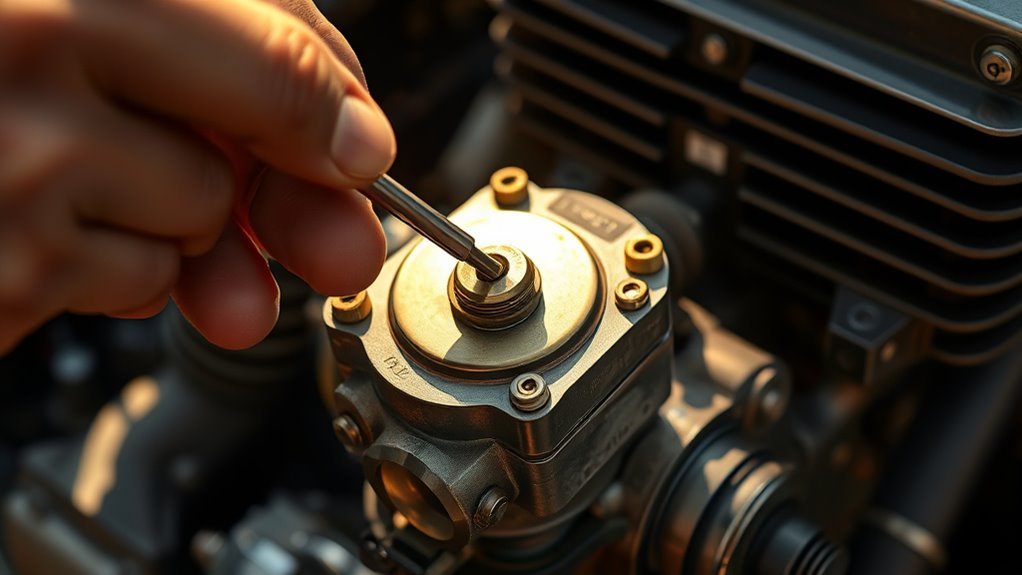
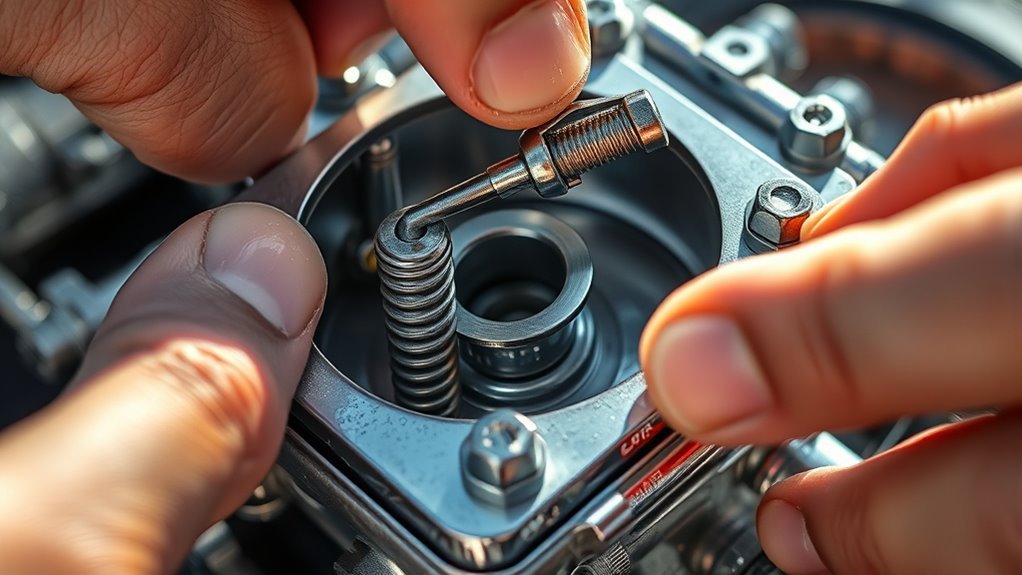
To adjust the float on your carburetor, first turn off the fuel supply to prevent any spills. Carefully remove the carburetor bowl, making sure to catch any fuel that may leak out during the process.
Next, measure the float height from the gasket surface using a precise caliper. Gently bend the float arm to raise or lower the fuel level according to the manufacturer’s specifications.
Once adjusted, reassemble the carburetor bowl securely. Finally, test your engine to ensure it idles smoothly and there are no fuel leaks. Following these steps ensures accurate fuel regulation and optimal engine performance.
Key Takeaways
- Remove the carburetor bowl carefully, using proper tools and a container to catch any fuel spills.
- Measure the float height from the gasket surface to the top of the float using a caliper or float gauge.
- Adjust the float by gently bending the float arm up to raise or down to lower the fuel level.
- Recheck the float height after adjustment to ensure it matches manufacturer specifications and moves freely.
- Reassemble the carburetor, start the engine, and test for smooth idling, acceleration, and absence of fuel leaks.
Signs Your Carburetor Float Needs Adjustment
How can you tell when your carburetor float needs adjustment? One clear indicator is float sticking, which causes inconsistent fuel levels in the carburetor bowl. If the float sticks, it fails to rise and fall properly, disrupting fuel flow.
Another sign is fuel overflow; you may notice fuel leaking from the carburetor or pooling beneath the engine. This overflow results from the float not closing the inlet valve at the correct level.
Fuel overflow, seen as leaks or pooling under the engine, signals the float isn’t closing the inlet valve properly.
Additionally, engine performance issues like rough idling or flooding often accompany float problems. To confirm, inspect the float for physical damage or wear that could cause sticking.
Identifying these symptoms early prevents engine damage and guarantees peak fuel-air mixture. When you observe float sticking or fuel overflow, adjusting the carburetor float becomes necessary.
Tools Needed for Carburetor Float Adjustment
To properly adjust a carburetor float, you’ll need a specific set of tools to secure accuracy and avoid damage.
Start with a precision ruler or caliper to measure float height accurately. A small screwdriver, preferably flathead, helps you bend the float tab gently without cracking or deforming it.
Use a clean container or magnetic tray to hold small parts during carburetor maintenance, preventing loss. Needle-nose pliers assist in fine adjustments and handling delicate components.
Additionally, keep a flashlight handy to illuminate tight spaces within the carburetor.
Having a repair manual or float specification sheet guarantees you follow manufacturer guidelines during float troubleshooting.
Using these tools will streamline the adjustment process, maintain carburetor integrity, and improve overall engine performance.
Removing the Carburetor Bowl Safely
Before you begin removing the carburetor bowl, make sure the engine is cool and the fuel supply is turned off to prevent spills.
Start by placing a clean container or rag beneath the carburetor to catch any residual fuel.
Use the correct screwdriver or wrench to carefully loosen and remove the screws or bolts securing the bowl. Avoid forcing parts to prevent damage.
Gently detach the bowl, watching for the float and needle valve inside. Handle these components with care to maintain proper carburetor function.
As part of routine carburetor maintenance, inspect the bowl for debris or corrosion that could affect fuel system performance.
Properly removing the bowl guarantees you can safely proceed with float adjustment without introducing contaminants or risking fuel leakage.
Measuring the Float Height Correctly
You’ll need a caliper or a specialized float gauge to measure the float height accurately.
Position the float as specified by your carburetor’s manual, then measure from the gasket surface to the top of the float.
Keep in mind common float height values vary by model, so verify the exact specification before making adjustments.
Tools Needed
Accurate measurement of the float height requires specific tools to guarantee proper carburetor function.
For precise carburetor maintenance, you’ll need a set of feeler gauges to measure the gap accurately between the float and the carburetor body.
A small ruler or caliper can help verify exact float height dimensions as specified by the manufacturer.
Additionally, a flat, stable surface to rest the carburetor float bowl guarantees consistent readings.
Using a magnifying glass or good lighting can aid visibility during measurement.
These tools are essential for implementing effective float adjustment tips, preventing improper fuel levels that cause performance issues.
Avoid guessing measurements; having these tools on hand enhances accuracy and reliability during your float height inspection and adjustment process.
Proper Measurement Technique
Having the right tools in place sets the foundation for measuring the float height correctly. To guarantee accuracy, follow these float measurement techniques precisely.
First, remove the carburetor bowl carefully to expose the float.
Second, use a precision gauge or a calibrated ruler to measure the distance from the float’s highest point to the carburetor seat.
Third, hold the float gently in the natural resting position without applying pressure that could alter its height.
Fourth, verify the measurement multiple times to confirm consistency.
Remember, precise float height measurement directly affects fuel delivery and engine performance.
Common Float Height Values
Several common float height values apply to most carburetors, but you should always verify the specifications for your particular model.
Typical float heights range from 5/16 inch to 7/16 inch, depending on the carburetor design and float needle types.
To measure accurately, refer to the manufacturer’s float adjustment specifications, which provide exact values for your carburetor.
Incorrect float height can cause fuel overflow or starvation, affecting engine performance.
When measuring, verify the float rests naturally without pressure on the needle valve.
Use a calibrated ruler or gauge to check the distance from the gasket surface to the float’s top edge, aligning with the specified height.
Adjust carefully, considering the float needle type, as different designs may require slight variations in settings.
Always double-check your adjustments before reassembly.
Adjusting the Float Arm for Correct Fuel Level
Before you can set the fuel level correctly, you need to understand how the float arm influences the carburetor’s operation. The float arm controls the needle valve, regulating fuel flow into the bowl.
Proper float adjustment techniques guarantee ideal fuel levels, preventing flooding or fuel starvation.
Correct float adjustment ensures optimal fuel levels, avoiding both flooding and fuel starvation for smooth engine operation.
Follow these steps to adjust the float arm:
- Remove the carburetor bowl and locate the float arm.
- Gently bend the float arm upward to raise the fuel level or downward to lower it.
- Use a calibrated gauge or ruler to measure the float height against manufacturer specifications.
- Recheck the float movement to confirm the needle valve seats properly without binding.
Precise adjustments here maintain consistent fuel delivery and efficient engine performance.
Reassembling the Carburetor Properly
When reassembling the carburetor, make certain all components align precisely to avoid misfits.
Check that the float and needle valve seat correctly to maintain a proper seal.
Tighten screws evenly to prevent leaks and guarantee peak performance.
Aligning Components Correctly
A critical step in reassembling the carburetor properly is aligning all components with exact precision.
To guarantee peak performance, apply float alignment techniques and conduct a thorough float component inspection before assembly.
Follow these steps carefully:
- Position the float so it sits parallel to the carburetor body, avoiding any tilt or obstruction.
- Check the float hinge pin for smooth movement; it should pivot without binding.
- Align the needle valve tip precisely with the float arm to control fuel flow accurately.
- Verify that the float height matches manufacturer specifications, adjusting as needed.
Ensuring Proper Seal
Although aligning components correctly is essential, guaranteeing a proper seal during reassembly is equally critical to prevent fuel leaks and maintain peak carburetor function.
Start by inspecting the float seal integrity; replace any worn or damaged seals to avoid float chamber leaks.
When reinstalling the float bowl, position the gasket evenly without folds or damage.
Tighten screws gradually in a crisscross pattern to distribute pressure evenly, preventing warping that could compromise the seal.
Avoid over-tightening, which can deform the gasket or housing.
After assembly, visually inspect the joint for gaps or misalignment.
Finally, test for float chamber leaks by applying light pressure or running a fuel flow test.
A secure, leak-free seal guarantees accurate float operation and consistent carburetor performance.
Testing Your Engine After Adjustment
After completing the float adjustment, you’ll need to verify the engine’s performance under typical operating conditions. Proper testing guarantees the carburetor float is set correctly and prevents future issues.
Follow these steps:
- Start the engine and let it idle. Observe the idle speed and listen for any irregular sounds.
- Gradually increase throttle to check for smooth acceleration without hesitation or stalling.
- Inspect for fuel leaks around the carburetor, indicating an improper seal or float level.
- If engine performance is inconsistent, refer to troubleshooting tips such as rechecking float height or cleaning the carburetor.
Performing these tests confirms the adjustment’s accuracy and helps maintain peak engine function, preventing common performance problems.
Avoid These Common Float Adjustment Mistakes
When you adjust the carburetor float, overlooking small details can lead to improper fuel levels and engine issues.
One common float adjustment error is failing to measure the float height accurately; always use a precise gauge or ruler to guarantee exact settings.
Avoid bending the float arm excessively, as this can distort readings and cause fuel overflow or starvation.
Another misconception is assuming all floats are the same; verify your float’s specifications before adjustment.
Don’t ignore the float’s condition. Damaged or saturated floats can mislead your adjustments.
Finally, don’t rush the process; take time to recheck your measurements and confirm the float moves freely without sticking.
These steps will help you avoid common float adjustment errors and guarantee peak carburetor performance.
When to Replace a Faulty Carburetor Float
Even with careful adjustments, a carburetor float can wear out or become damaged over time, impacting fuel regulation.
You need to recognize when float replacement is necessary to maintain peak carburetor performance and avoid engine issues.
During routine carburetor maintenance, look for these signs:
- Fuel flooding or leakage from the carburetor bowl.
- Erratic engine idling or stalling due to inconsistent fuel levels.
- Visible float damage, such as cracks, warping, or fuel absorption.
- Difficulty adjusting the float height to manufacturer specifications.
If you observe any of these symptoms, replace the float immediately to guarantee precise fuel control and prevent engine damage.
Adhering to these guidelines keeps your carburetor functioning efficiently and prolongs engine life.
Frequently Asked Questions
What Causes a Carburetor Float to Malfunction Initially?
You’ll find that debris or varnish buildup often causes a carburetor float to malfunction initially, disrupting fuel delivery and skewing float height. Regular cleaning and inspection help maintain precise fuel flow and proper float operation.
Can Float Adjustment Fix All Carburetor-Related Engine Problems?
Only about 30% of carburetor issues are solved by float adjustments. You can’t fix all engine performance problems by tweaking floats; some require cleaning, gasket replacement, or jet tuning for precise fuel-air mixture control.
How Often Should Carburetor Float Adjustments Be Performed?
You should perform carburetor float adjustments during routine maintenance or performance tuning, typically every 12 months or 12,000 miles.
Regular checks guarantee ideal fuel levels, preventing flooding or starvation, and maintaining efficient engine operation.
Are There Different Float Types for Various Carburetor Models?
Like choosing between a feather and a bullet, float materials and float designs vary across carburetor models. You’ll find plastic, brass, or foam floats, each tailored to specific fuel types and engine requirements for ideal performance.
Does Ethanol Fuel Affect Carburetor Float Performance?
Yes, ethanol impacts carburetor float performance by reducing fuel stability, causing corrosion or swelling. You should regularly inspect and adjust the float to maintain proper fuel level and prevent engine running issues.
Conclusion
Now that you know how to spot float issues, gather the right tools, measure precisely, and adjust carefully, you’re ready to improve your carburetor’s performance.
Remember to reassemble securely, test thoroughly, and avoid common mistakes to guarantee smooth operation. If the float shows persistent problems, don’t hesitate to replace it.
By following these steps methodically, you’ll maintain ideal fuel levels, enhance engine efficiency, and extend your carburetor’s lifespan. Adjusting the float on the carburetor is key to ensuring your engine runs smoothly and efficiently.