Tag: car safety

  • What Are Shocks on a Car

    What Are Shocks on a Car

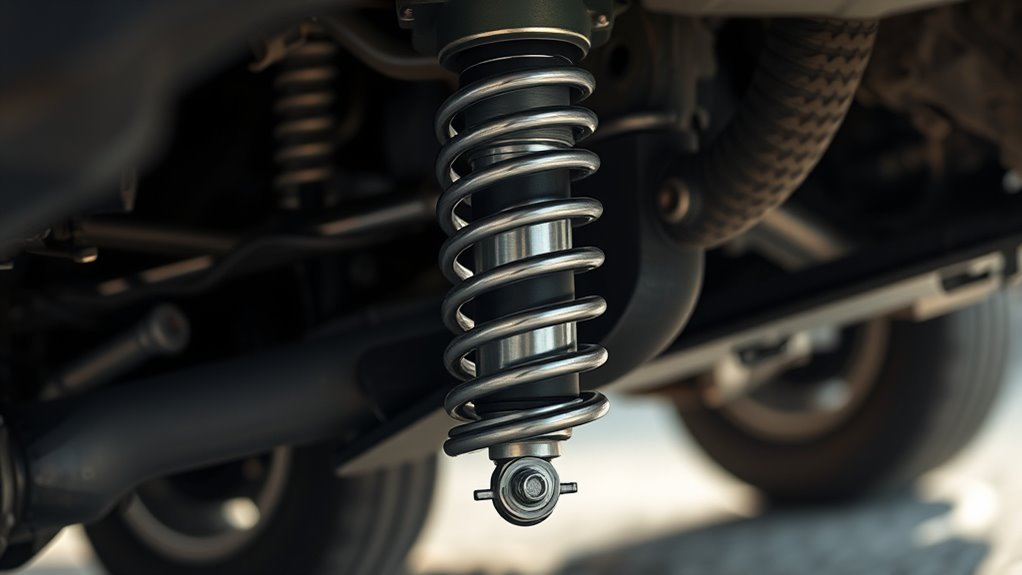
    Shocks on your car are essential components that control suspension movement by absorbing and dampening impacts from road irregularities. They use hydraulic fluid or gas to convert kinetic energy into heat, stabilizing your ride and improving handling, braking, and safety.

    Worn shocks reduce tire contact, causing poor control and uneven wear. Understanding how different types work and when to replace them guarantees your vehicle remains safe and stable on every journey.

    You’ll find more details on their role and maintenance next.

    Key Takeaways

    • Shocks are components that control the impact and rebound movement of a car’s suspension system. They use hydraulic or gas-charged mechanisms to dampen and absorb kinetic energy from road irregularities.
    • Shocks maintain tire contact with the road, improving traction, handling, and braking performance.
    • Proper shocks contribute to vehicle stability and enhanced ride comfort by controlling spring oscillations.
    • Worn shocks cause excessive bouncing, poor steering response, and increased braking distance, reducing overall safety.

    What Are Shock Absorbers and How Do They Work?

    Although you mightn’t notice them at first glance, shock absorbers play an essential role in your car’s suspension system by controlling the impact and rebound movement of the vehicle’s springs and suspension.

    Shock absorber types primarily include hydraulic systems, which use fluid-filled cylinders to dampen motion. When your car encounters a bump, the hydraulic fluid resists the piston’s movement inside the shock absorber, converting kinetic energy into heat. This resistance slows down and controls spring oscillations, preventing excessive bouncing.

    Hydraulic shock absorbers use fluid resistance to control spring movement and minimize vehicle bounce.

    Other variants, like gas-charged shocks, enhance performance by reducing aeration in hydraulic fluid.

    Understanding these shock absorber types helps you appreciate how they maintain vehicle stability and improve ride comfort by managing suspension dynamics precisely and efficiently.

    Why Are Shock Absorbers Important for Your Vehicle?

    Because shock absorbers regulate the movement of your vehicle’s suspension, they directly affect handling, braking, and overall safety. They control the oscillations of springs, ensuring your tires maintain consistent contact with the road surface.

    This contact optimizes traction, improving safety performance during acceleration, cornering, and emergency braking. Without effective shocks, your vehicle can experience excessive body roll, increased stopping distances, and reduced steering precision.

    Additionally, shock absorbers absorb road irregularities, considerably enhancing ride comfort by minimizing vibrations and harsh impacts felt inside the cabin.

    Fundamentally, they provide a controlled, stable driving experience that protects both you and your vehicle’s components.

    Maintaining functional shock absorbers is critical to preserving these safety and comfort benefits, ensuring your vehicle performs reliably under various driving conditions.

    How Can You Tell When Your Shock Absorbers Need Replacing?

    To maintain ideal handling and safety, you need to recognize when your shock absorbers no longer perform effectively. Identifying symptoms of failure early through proper inspection techniques can prevent further vehicle damage and guarantee your safety.

    Symptom Inspection Technique
    Excessive bouncing Push down on the vehicle’s corners; observe rebound speed
    Uneven tire wear Visual tire inspection for irregular patterns
    Fluid leaks Check shocks for oil residue or wetness
    Nose diving when braking Test brake response during a controlled stop
    Poor steering response Evaluate steering during turns at low speed

    Regularly using these inspection techniques helps you detect shock absorber wear and know when replacement is necessary.

    What Types of Shock Absorbers Are Available and Which Should You Choose?

    What shock absorber type suits your vehicle best depends on your driving needs and conditions.

    If you prioritize comfort and daily commuting, the twin tube design offers reliable performance with a dual-chamber system that enhances durability and absorbs road irregularities smoothly.

    However, if you seek enhanced handling and quicker response, monotube performance shocks provide superior heat dissipation and consistent damping under demanding conditions due to their single high-pressure gas chamber.

    Monotube shocks are ideal for sporty driving or heavy-duty use, delivering precise control and stability.

    Choose twin tube for everyday reliability and cost-effectiveness, or opt for monotube if performance and ride quality under stress are critical.

    Understanding these differences helps you select shocks that optimize your vehicle’s dynamics and safety.

    What Happens if You Drive With Worn or Damaged Shock Absorbers?

    If you continue driving with worn or damaged shock absorbers, your vehicle’s stability and safety will deteriorate considerably. This directly impacts your driving experience and raises serious safety concerns.

    Here’s what you can expect:

    1. Reduced control: The vehicle will respond poorly to steering inputs, increasing the risk of skidding or losing control, especially on uneven roads or during emergency maneuvers.
    2. Increased braking distance: Worn shocks cause uneven tire contact with the road, leading to longer stopping distances, which compromises your ability to react quickly.
    3. Accelerated tire and suspension wear: Damaged shocks fail to absorb impacts properly, resulting in premature tire degradation and added strain on suspension components.

    Addressing worn shock absorbers promptly is vital to maintain vehicle safety and guarantee a stable, predictable driving experience.

    Frequently Asked Questions

    How Often Should Shock Absorbers Be Inspected by a Mechanic?

    You should schedule a shock inspection every 50,000 miles or as your maintenance schedule suggests. Regular checks guarantee your shock absorbers function correctly, preventing wear and maintaining peak vehicle handling and safety on the road.

    Can Faulty Shocks Affect Your Car’s Fuel Efficiency?

    Even like a knight’s worn armor, shock wear increases your car’s fuel consumption by causing inefficient suspension movement. When shocks degrade, your vehicle uses more energy to maintain control, directly reducing fuel efficiency during driving.

    Are Shock Absorbers Covered Under Typical Vehicle Warranties?

    You typically get shock warranty coverage on new cars, but coverage limits vary by manufacturer and model. Check your specific shock warranty for details. It often excludes wear-and-tear or damage from improper use or road hazards.

    Do All Vehicles Use the Same Type of Shock Absorbers?

    No, you won’t find all vehicles using the same shock absorber types. Different vehicle suspension systems require specific shocks tailored for performance, load capacity, and ride comfort.

    Choosing the right one matters for your car’s handling.

    Can Aftermarket Shocks Improve My Car’s Off-Road Performance?

    You can definitely give your ride a smoother journey through rough terrains. Aftermarket benefits include improved damping and durability.

    These off-road enhancements optimize traction, control, and comfort, letting you confidently tackle challenging trails with technical precision.

    Conclusion

    Now that you understand how shock absorbers work to keep your ride smooth and safe, remember that worn shocks can increase your stopping distance by up to 20%. That’s a significant safety risk.

    By regularly checking and replacing your shocks, you maintain better control, improve tire life, and guarantee your vehicle performs at its best. Don’t ignore the signs of wear.

    Taking care of your shocks protects both you and your car on every drive. Understanding what are shocks on a car is key to keeping your vehicle safe and comfortable.