Tag: adjustable shocks

  • How Do Air Shocks Work

    How Do Air Shocks Work

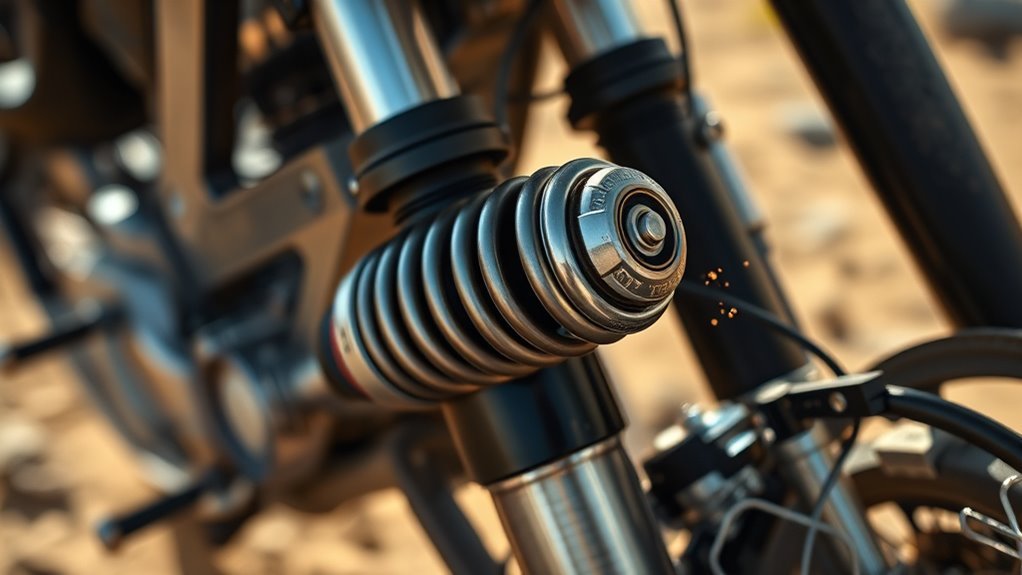
    How Do Air Shocks Work? You rely on air shocks to absorb impacts by compressing pressurized air inside a sealed chamber. As your vehicle encounters bumps, the piston compresses the air, which resists motion and cushions the ride dynamically.

    This air pressure adjustment lets you fine-tune suspension stiffness for varying terrain, improving traction and comfort. Unlike fixed coil springs, air shocks offer customizable damping but require maintenance to prevent leaks.

    Understanding how air pressure influences performance can further optimize your suspension. This knowledge helps ensure your vehicle handles smoothly and safely across different driving conditions.

    Key Takeaways

    • Air shocks use compressed air inside a sealed chamber to absorb and dissipate energy from impacts.
    • Piston movement compresses the air, creating resistance that cushions and controls suspension motion.
    • The compressed air acts like a spring, storing and slowly releasing energy to smooth out bumps.
    • Adjusting the air pressure changes the spring rate, allowing customizable suspension stiffness.
    • This dynamic air compression provides precise control over ride comfort and handling performance.

    What Are Air Shocks and How Do They Differ?

    Air shocks utilize compressed air as their primary damping medium, distinguishing them from traditional hydraulic shocks that rely on fluid displacement.

    When you examine air shock types, you’ll notice variations like coil-over air shocks and monotube air shocks, each optimized for specific performance parameters.

    These differences enable you to select air shocks tailored to your vehicle’s requirements and operating conditions.

    Choosing the right air shock ensures optimal performance for your vehicle’s unique needs and driving environment.

    With regard to air shock applications, they’re prevalent in off-road vehicles, motorcycles, and mountain bikes, where variable load handling and ride adjustability are critical.

    Unlike hydraulic shocks, air shocks offer tunable spring rates through air pressure adjustments, allowing you to fine-tune suspension stiffness dynamically.

    This capability enhances ride comfort and traction control, making air shocks a versatile solution for diverse mechanical systems requiring adaptive damping characteristics.

    How Air Shocks Use Compressed Air to Absorb Impact

    When you compress air inside a shock absorber, it acts as a highly responsive spring that absorbs and dissipates energy from impacts. The core of this process lies within the air chamber, a sealed space filled with pressurized air.

    As the vehicle encounters a bump, the compression mechanism forces the piston to move, compressing the air inside the chamber. This compressed air resists the piston’s movement, storing energy temporarily and then releasing it slowly, which cushions the impact.

    The air’s compressibility allows for variable spring rates, enabling the shock to adjust dynamically under different loads. By precisely controlling the air pressure in the air chamber, you can fine-tune the shock’s responsiveness and damping characteristics, optimizing performance for diverse driving conditions.

    The ability to adjust air pressure inside the shock chamber gives you precise control over suspension behavior, which is why these shocks have gained traction in off-road and performance vehicles.

    Adjusting air pressure in the shock chamber offers precise suspension control for off-road and performance driving.

    This adaptability delivers key off road benefits and performance enhancement by:

    1. Customizable Damping: You can fine-tune the shock’s responsiveness to varying terrains, optimizing traction and ride comfort.
    2. Weight Reduction: Air shocks typically weigh less than traditional coil springs, improving vehicle agility and acceleration.
    3. Progressive Spring Rate: The air chamber’s compressibility provides a variable spring rate, allowing smoother absorption of both small bumps and large impacts.

    These technical advantages enable you to maintain stability and control in challenging environments, directly contributing to enhanced off-road capability and superior on-road performance.

    Comparing Air Shocks With Other Suspension Systems

    Although traditional coil springs and hydraulic shocks have been the standard for decades, you’ll find that air shocks offer distinct advantages and trade-offs that merit careful comparison.

    When you evaluate suspension comparison, air shocks provide superior adjustability through variable air pressure, allowing you to fine-tune ride stiffness and load capacity dynamically. This flexibility is a key air shock benefit not present in fixed-rate coil springs or purely hydraulic designs.

    However, air shocks may require more maintenance due to potential air leaks and are generally more sensitive to temperature changes. Conversely, coil springs deliver consistent performance with less upkeep but lack adaptive tuning.

    Understanding these distinctions helps you select the ideal suspension system for your vehicle’s specific demands, balancing performance, durability, and customization effectively.

    How Air Pressure Affects Air Shock Performance

    You need to set the air pressure in your shock precisely to match your weight and riding style for ideal performance.

    Pressure directly influences ride quality by controlling firmness and responsiveness.

    Adjusting pressure based on terrain guarantees you maintain control and comfort across varying conditions.

    Optimal Pressure Settings

    Since air pressure directly influences the stiffness and responsiveness of an air shock, adjusting it precisely is essential for enhancing suspension performance.

    Achieving the ideal pressure requires careful pressure calibration based on rider weight, terrain, and riding style.

    You should:

    1. Measure rider weight accurately to establish a baseline pressure.
    2. Adjust pressure incrementally, testing responsiveness and ensuring the shock doesn’t bottom out or feel overly stiff.
    3. Recalibrate regularly, especially when changing terrain or after temperature variations, as air density affects pressure.

    Impact On Ride Quality

    Fine-tuning air pressure directly shapes how your air shock responds to varying trail conditions, influencing ride quality considerably.

    Increasing air pressure stiffens the shock, reducing its travel and limiting compression under load. This adjustment enhances stability but can diminish ride comfort by transmitting more trail vibrations.

    Conversely, lowering air pressure softens the suspension, improving shock absorption and smoothing out irregularities for better ride comfort. However, too little pressure risks bottoming out, compromising control and potentially damaging components.

    Finding the right balance guarantees your air shock provides ideal shock absorption without sacrificing responsiveness.

    By precisely calibrating air pressure, you control the suspension’s compliance and damping characteristics, directly affecting how effectively it mitigates impacts and maintains traction.

    This interplay is critical for sustained ride comfort and performance.

    Adjusting For Terrain

    Three key terrain types, smooth, rocky, and uneven, demand specific air pressure adjustments to optimize your air shock’s performance.

    Proper pressure adjustment enhances terrain adaptability by tailoring shock response to surface conditions.

    1. Smooth Terrain: Increase air pressure to stiffen the shock, reducing unnecessary compression and maintaining efficiency on flat surfaces.
    2. Rocky Terrain: Lower air pressure slightly to allow more shock absorption, improving traction and control over irregular, jagged rocks.
    3. Uneven Terrain: Fine-tune air pressure to balance firmness and compliance, enabling the shock to adapt dynamically to mixed obstacles without bottoming out.

    Maintaining and Troubleshooting Air Shocks

    Although air shocks are designed to be durable, regular maintenance is essential to guarantee peak performance and longevity. Start by inspecting seals and valves for leaks and verify the air pressure aligns precisely with your vehicle’s specifications.

    Use recommended lubricants to prevent corrosion and wear. Employ maintenance tips such as cleaning dust boots and checking for physical damage regularly.

    Troubleshooting techniques involve monitoring ride quality changes, unusual noises, or rapid pressure loss, which often indicate internal issues or leaks. If you detect inconsistent damping or a sagging suspension, recheck air pressure and seals immediately.

    Properly maintaining air shocks not only extends their lifespan but also preserves their adaptive responsiveness, ensuring reliable shock absorption across varying terrains.

    Consistent, precise care will keep your air shocks functioning effectively.

    Frequently Asked Questions

    Can Air Shocks Be Used on Motorcycles?

    Yes, you can use air shocks on motorcycles, but you’ll need to verify motorcycle compatibility for maximum shock absorption. Properly tuned air shocks enhance ride comfort and performance by adjusting pressure to fit specific riding conditions.

    How Do Temperature Changes Affect Air Shock Performance?

    You’ll notice temperature impact causes pressure variation inside air shocks, altering their firmness. As temperature rises, air expands, increasing pressure; as it drops, pressure decreases, affecting suspension performance and requiring you to adjust settings accordingly.

    Are Air Shocks Compatible With All Vehicle Brands?

    Air shock compatibility varies by vehicle brand and model. You’ll need to verify specs to guarantee peak vehicle performance.

    Using incompatible air shocks can compromise handling, safety, and suspension efficiency, so always confirm fitment before installation.

    What Is the Average Lifespan of Air Shocks?

    Think of air shocks as your vehicle’s lungs, lasting 50,000 miles with proper air shock maintenance. Neglecting care accelerates wear, forcing earlier air shock replacement to preserve ride quality and suspension performance.

    Can Air Shocks Improve Fuel Efficiency?

    Yes, air shocks can improve fuel efficiency by optimizing air pressure and enhancing weight distribution. This reduces rolling resistance and vehicle drag, allowing your engine to operate more efficiently and consume less fuel during driving conditions.

    Conclusion

    If you think air shocks are just fancy springs, think again—they’re the superheroes of suspension, using precise air pressure to crush impacts and deliver unparalleled control. Without them, your ride would feel like a bumpy nightmare.

    Understanding how they function, adjust, and maintain them means you’re not just driving—you’re mastering the art of performance and comfort. Ignore air shocks, and you might as well be riding a pogo stick on steroids.

    In the end, knowing how air shocks work is key to ensuring your vehicle handles every road with ease and precision.